
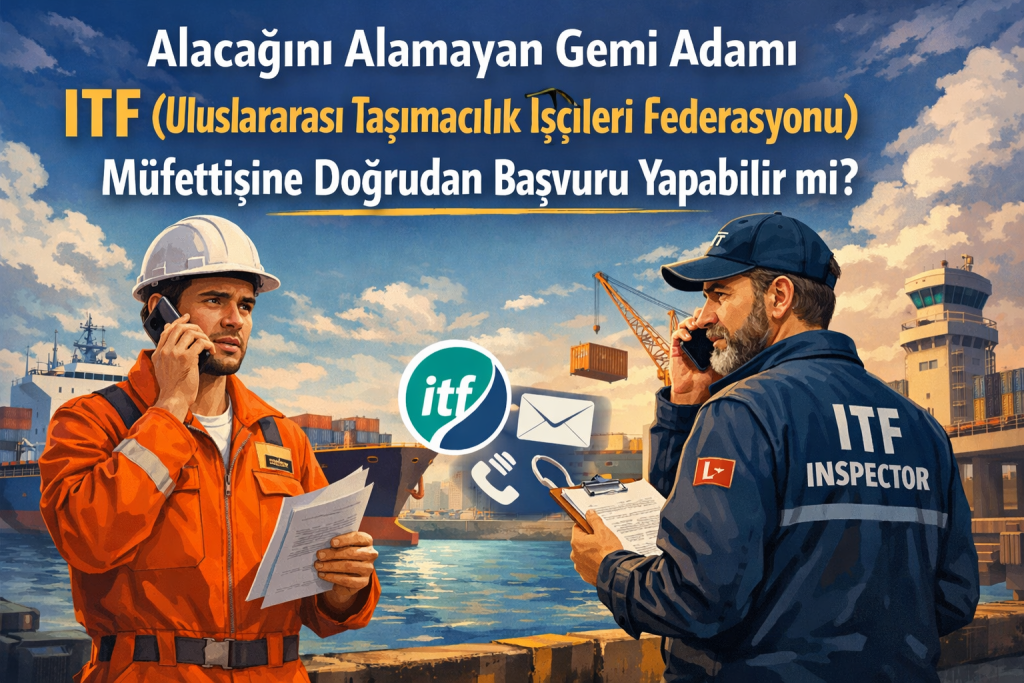
One of the most common problems faced by seafarers working in the maritime sector is the non-payment of wages they are entitled to (salary, overtime, bonuses, leave pay, etc.). In such situations, one of the most effective international mechanisms seafarers can resort to are the inspectors working within the ITF (International Transport Workers’ Federation). So, can a seafarer who has not received their dues directly apply to an ITF inspector? Is there a specific condition or fee required for this application? We examine the issue with its legal and practical dimensions.
What is the ITF (International Transport Workers’ Federation) and its Importance for Seafarers
The ITF (International Transport Workers’ Federation) is an international trade union federation that aims to protect the rights of workers in the transport sector worldwide, especially seafarers. The ITF plays an active role particularly in protecting seafarers’ wages, working conditions, and contractual rights. Within this framework, inspection and intervention activities are carried out through ITF inspectors working in many ports worldwide.
Can a Seafarer Directly Apply to an ITF (International Transport Workers’ Federation) Inspector?
Yes, seafarers can directly apply to ITF inspectors. Moreover, it is not a requirement for the ship to be covered by an ITF agreement for this application. In practice, seafarers can directly contact inspectors via email, phone, or message using the contact information available on the ITF’s official website. Applications made especially while the ship is in port yield very effective results, as they allow the inspector to board the ship and conduct an on-site inspection.
Is it Possible to Apply for Ships Not Covered by ITF (International Transport Workers’ Federation)?
Even if the ship is not subject to an ITF agreement, a seafarer can apply to the ITF. However, in such cases, the ITF’s power to intervene may be more limited compared to ships covered by an ITF agreement. Nevertheless, inspectors can inspect the ship, contact the employer, inform port state authorities, and activate trade union pressure mechanisms. Therefore, even for ships not covered by the ITF, an application often creates a significant impact.
Is there a Fee for an ITF (International Transport Workers’ Federation) Application?
Applying to an ITF inspector is entirely free of charge. No fee is requested from seafarers for applying, inspecting, or processing. The primary aim of the ITF is not commercial gain, but the protection of workers’ rights. Therefore, it should be remembered that if any fee is requested during the application process, it is not an official practice and should be evaluated carefully.
In Which Cases Do ITF (International Transport Workers’ Federation) Inspectors Intervene?
ITF inspectors can intervene in many situations where seafarers’ rights are violated. Especially situations such as non-payment of wages, underpayment, non-payment of overtime wages, poor living and working conditions, practices contrary to the contract, and treatment on board that violates human dignity, are the main cases requiring ITF intervention. Upon application, inspectors can board the vessel to conduct an investigation and exert significant pressure on the employer.
Suggestions for an Effective ITF (International Transport Workers’ Federation) Application
For an ITF application to be effective, it is crucial for the seafarer to apply, if possible, while continuing to work on board and while the ship is in port. Furthermore, supporting the application with documentation (employment contract, payroll, correspondence, etc.) expedites and strengthens the process. A joint application by the crew is also an important factor that increases the ITF’s power of intervention.
How to Contact ITF (International Transport Workers’ Federation) Inspectors in Turkey?
It is possible to directly contact ITF inspectors working in Turkey. You can access the current list of inspectors and their contact information via the official link below:
👉 https://lookup.itfglobal.org/country/Türkiye/inspectors
This page contains the contact information of inspectors working in Istanbul, Mersin, and other ports, and seafarers can apply by contacting them directly.
Conclusion
A seafarer who has not received their dues can apply directly and free of charge to an ITF (International Transport Workers’ Federation) inspector. This application is possible even if the ship is not covered by the ITF, and in most cases, it yields effective results. Especially for seafarers working in international waters, the ITF offers a powerful and practical mechanism in the process of seeking their rights. Therefore, in cases of violations of wages and working conditions, an ITF application is an important legal and practical avenue that should not be overlooked.
Frequently Asked Questions
ITF (Uluslararası Taşımacılık İşçileri Federasyonu) başvurusu ile alacağımı ne kadar sürede tahsil edebilirim?

ITF başvurularında süre, geminin bulunduğu liman, armatörün yaklaşımı ve alacağın niteliğine göre değişiklik gösterir. Eğer gemi limandaysa ve ITF müfettişi gemiye hızlı şekilde çıkabilirse, bazı durumlarda alacaklar birkaç gün içinde dahi tahsil edilebilmektedir. Ancak geminin seferde olması veya işverenin direnç göstermesi halinde süreç haftalar hatta aylar sürebilir. Bu noktada sürecin hızlandırılması için başvurunun doğru hazırlanması ve gerektiğinde hukuki yollarla desteklenmesi büyük önem taşır.
ITF başvurusu yaptıktan sonra ayrıca dava açmak gerekir mi?

Her durumda dava açmak zorunlu değildir. ITF süreci çoğu zaman işveren üzerinde ciddi bir baskı oluşturarak alacakların mahkemeye gerek kalmadan ödenmesini sağlar. Ancak işverenin ödeme yapmaması, eksik ödeme teklif etmesi veya uyuşmazlığın büyümesi halinde gemi alacağı davası, ihtiyati haciz veya icra takibi gibi hukuki yolların devreye alınması gerekebilir. Bu nedenle ITF süreci ile hukuki sürecin birlikte değerlendirilmesi, hak kaybını önlemek açısından kritik öneme sahiptir.
ITF başvurusu tek başına yeterli mi yoksa avukatla birlikte mi yapılmalı?
ITF başvurusu bireysel olarak yapılabilir; ancak özellikle yüksek tutarlı alacaklarda ve karmaşık uyuşmazlıklarda uzman avukat desteği ile yapılması çok daha etkili sonuçlar doğurur. Çünkü alacak kalemlerinin doğru hesaplanması, başvurunun hukuki dayanaklarla güçlendirilmesi ve gerektiğinde hızlıca dava/icra sürecine geçilebilmesi profesyonel bir yaklaşım gerektirir. ITF süreci ile hukuki sürecin birlikte yürütülmesi, gemi adamının alacağını en kısa sürede ve eksiksiz şekilde tahsil etmesini sağlar.
Why is Expert Lawyer Support Necessary?
Although an application to the ITF (International Transport Workers’ Federation) is a highly effective way for seafarers to seek their rights, correctly and strategically managing the process is of great importance. In practice, many seafarers may suffer a loss of rights or cause the process to be prolonged due to incomplete or erroneous applications. At this point, the support of a lawyer specializing in maritime labor law ensures that the process is effectively managed, both before the ITF and, if necessary, before national and international judicial authorities.
Especially the correct calculation of receivables (salary, overtime, holiday pay, compensation), the proper collection of evidence, and the preparation of the application to the ITF inspector within a legal framework are critically important for the successful conclusion of the process. Furthermore, in some cases, legal avenues such as precautionary attachment, maritime claim lawsuits, or enforcement proceedings may need to be initiated concurrently with the ITF process. The professional management of such complex processes ensures that the seafarer receives their dues in the quickest and safest way possible.
Strengthen Your Process with 2M Hukuk Law Office
2M Law Office, specializing in maritime labor law, international contracts, and ship claims, offers professional legal support for the collection of seafarers’ wages and compensation claims. It operates with an experienced team in correctly managing ITF application processes, establishing effective communication with inspectors, and, when necessary, simultaneously conducting court and enforcement proceedings.