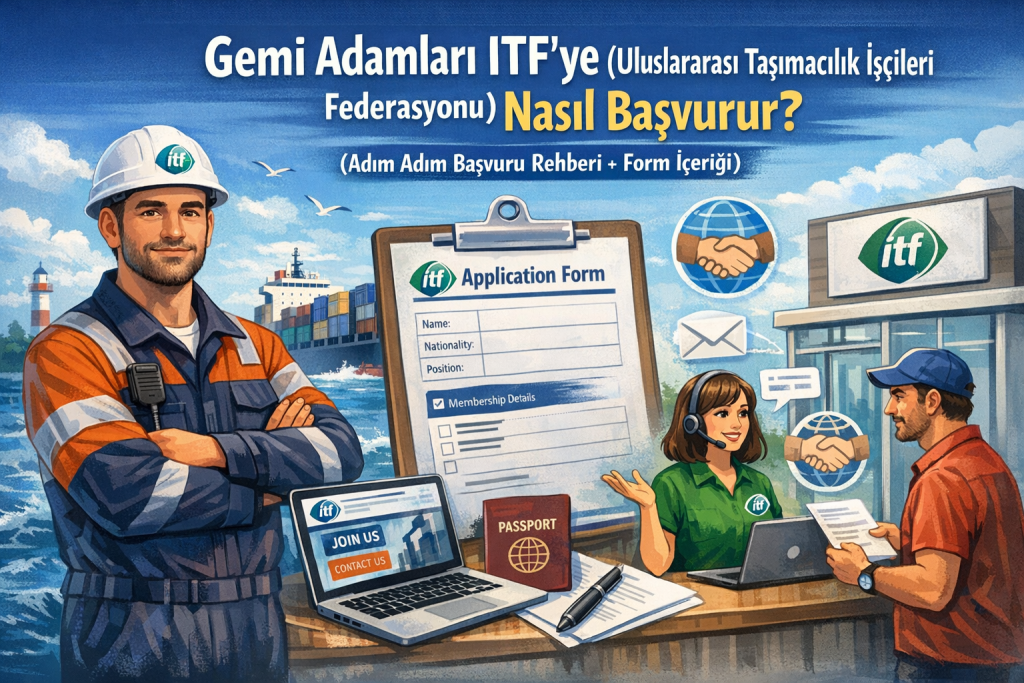
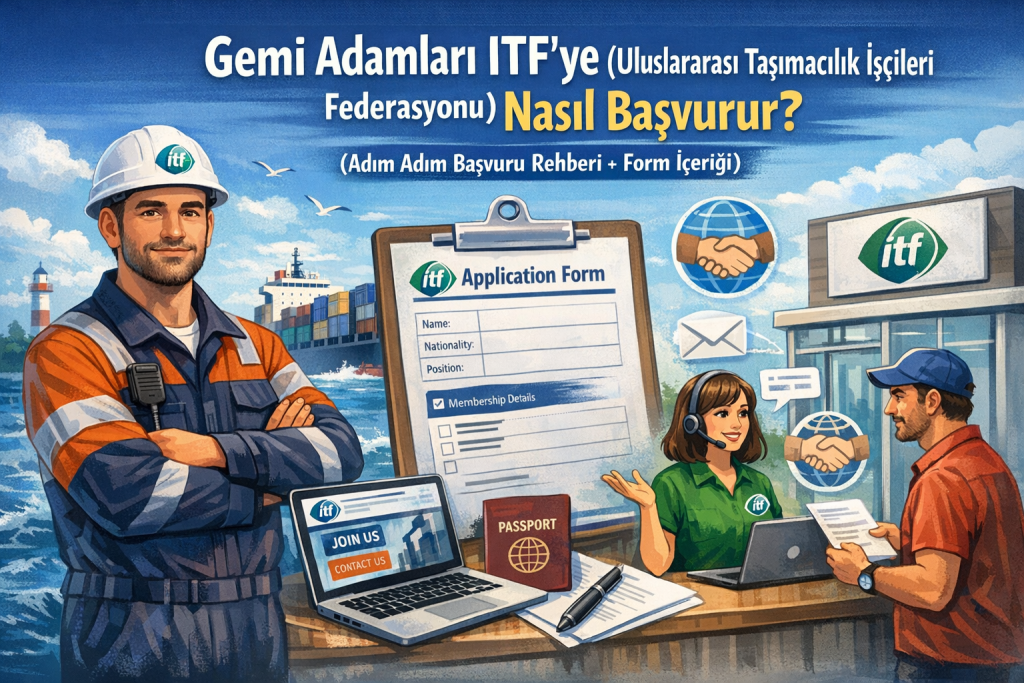
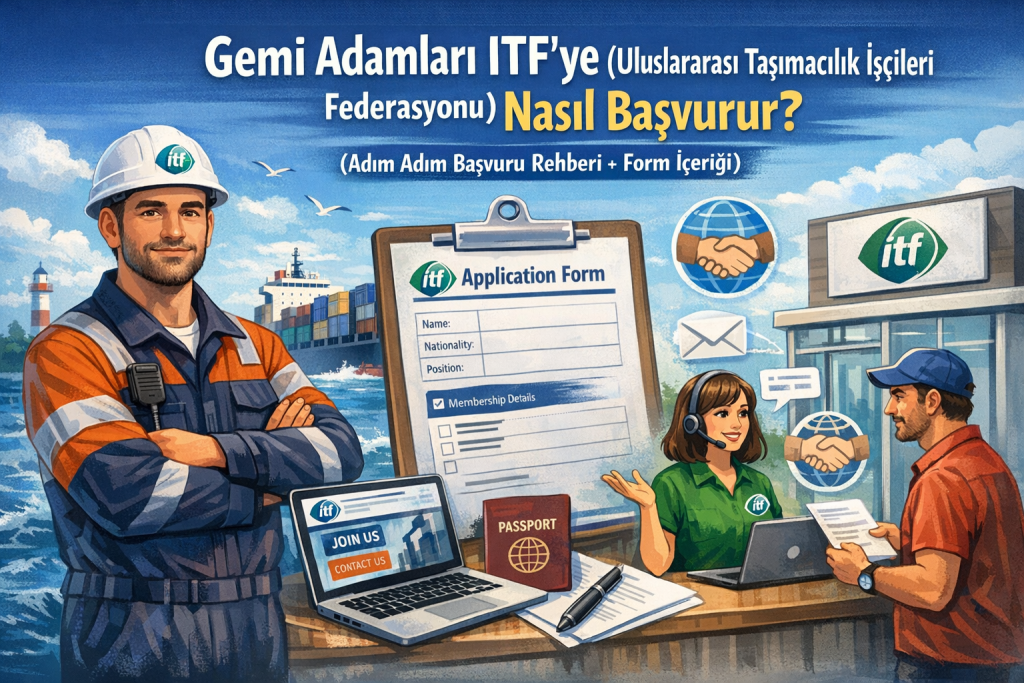
Is there an ITF Application Form?
The ITF application system does not proceed via a single type of PDF form in the classical sense. Instead, the ITF has adopted a more flexible and faster application model in line with the requirements of the digital age. In this model, applications are generally made via online “help forms”, email, or direct communication channels. The aim of the ITF is to enable seafarers to access it quickly, no matter where they are in the world. For this reason, instead of a rigid form, the submission of certain basic information is essential. In practice, this system effectively functions like an “application form” because the same data set is requested for every application, and the ITF process cannot be initiated without this information.
Brief Summary:
No standard PDF form
Online help form + email system exists
Certain information is mandatory (works like a form)

Information Required in the ITF Application Form
When applying to the ITF, the complete submission of certain information is of great importance. This is because the ITF evaluates the seriousness of the application and whether intervention is required based on this information. During the application, the seafarer’s identity, position, technical information related to the ship (ship name, flag, IMO number), and a detailed description of the incident are required. Additionally, information about the ship’s current port or route is critically important for expediting the process. Incomplete or superficial applications often lead to delays or being excluded from evaluation. Therefore, when submitting an application, a concrete, documented, and detailed explanation should be provided as much as possible.
Brief Summary:
Identity + assignment information
Vessel information (IMO, flag, etc.)
Detailed description of the incident
Port / location information
Ways to Apply to the ITF
There isn’t just one way to apply to the ITF; instead, a multi-channel system is in place. The most common method is applying via email, which is the most reliable method as it is both fast and creates an official record. In addition, phone and WhatsApp lines are actively used for emergencies. However, in practice, the most effective method is to directly contact an ITF inspector while the ship is in port. This is because inspectors can physically board the vessel and expedite the process by conducting on-site inspections. Furthermore, access to inspectors is also possible via the ITF’s mobile application. This multi-channel structure is one of the most important reasons for the ITF’s effectiveness on a global scale.
Brief Summary:
Email (most common)
WhatsApp / phone (emergency)
ITF inspector (most effective way)
Mobile app support
How Does the ITF Application Process Work?
The ITF process has a systematic structure consisting of certain stages. In the first stage, a complaint is made by the seafarer or crew. Subsequently, the ITF subjects the application to a preliminary review to assess whether intervention is necessary. If deemed appropriate, the nearest ITF inspector is dispatched to the vessel. On board, the inspector thoroughly examines contracts, wage records, and working conditions. If a violation is detected, a negotiation process is initiated with the employer. If a solution cannot be reached, pressure may be exerted on the vessel’s commercial activities. This process often concludes without litigation and ensures that the seafarer collects their receivables quickly.
Which Websites Can Be Used to Access ITF Application Forms and Communication Channels?
For seafarers wishing to apply to the ITF, the most reliable and official source is the digital platforms specifically created by the ITF for seafarers. Applications are not made directly by downloading a classic form, but through the “help form” (assistance request form) and contact pages on the ITF’s official websites. In this context, the most important address is the <a href="http:// 🚢 Apply to ITF Now “>itfseafarers.org website, which provides services specifically for seafarers. Through this site, seafarers can; access the help request form, find the nearest ITF inspector, and create a direct support request. Furthermore, detailed information about the organization and contact channels can be accessed through ITF’s main corporate website, itfglobal.org. Using these sites during the application process ensures that the application is directly submitted to the ITF system and helps the process proceed more quickly.
Brief Summary:
www.itfseafarers.org → Application (help form) and support
www.itfglobal.org → Corporate information and communication
Form + email redirection is done via the site

👉<a href="http:// 🚢 Apply to ITF Now “> Apply to ITF Now
👉 <a href="http:// 🚢 Apply to ITF Now “>Create an ITF Support Request for Your Wage Claim
👉<a href="http:// 🚢 Apply to ITF Now “> Protect Seafarers’ Rights – Make an ITF Application
👉 <a href="http:// 🚢 Apply to ITF Now “>Go to ITF Help Form (Official Application)
👉 <a href="http:// 🚢 Apply to ITF Now “>If You Haven’t Received Your Salary, Apply Immediately
What You Need to Know Before Applying to the ITF
An ITF application is a powerful mechanism for seeking rights, but its injudicious use can lead to serious legal risks. Not every application is considered justified, and applications based on unfounded or incomplete information, in particular, can lead to legal disputes with the employer. Furthermore, payments made as a result of the ITF process can, in some cases, be subject to a clawback claim under the pretext of “payment under duress.” Therefore, preparing evidence before applying is of great importance. Payroll slips, contracts, correspondence, and witness statements play a critical role in strengthening the application. A well-informed and documented application ensures the process is concluded quickly and effectively.
ITF Application Example (Practical Use)
In applications to the ITF, using clear, concise, and professional language is of great importance. Submitting the application in English helps to expedite the process. The application must include personal information, vessel details, and a detailed explanation of the problem encountered. Specifically, issues related to wage claims, contract breaches, and working conditions should be clearly stated. The example text below reflects the commonly used format for ITF applications.
Why Expert Legal Assistance is Necessary?
While the ITF process offers a practical and swift solution, the legal outcome of each specific case varies. Risks such as the application becoming the subject of future litigation, the demand for repayment of sums made at the end of the ITF process, or the incorrect determination of the competent court can lead to serious loss of rights. Especially within the scope of international maritime trade law; the calculation of foreign currency receivables, the application of precautionary attachment (lien) on a vessel, the determination of the shipowner’s liability, and the identification of the applicable law are matters requiring technical knowledge and expertise. Therefore, it is of great importance that the process is managed with professional support from the very beginning.
Especially the support of an Istanbul maritime lawyer provides a significant advantage in Istanbul, one of Turkey’s busiest maritime trade centers. Lawyers with Istanbul lawyer experience can manage the process correctly by mastering both international and local legislation. Furthermore, working with a Tuzla maritime lawyer provides practical knowledge and field experience regarding shipyards and maritime practices. In disputes arising in areas with intensive maritime activities, such as Tuzla, Ambarlı, Haydarpaşa, especially Istanbul ports, and also Yalova shipyards and Gebze region, legal support familiar with the region contributes to expediting the process and achieving effective results.
At this point, working with a team specialized in maritime law plays a critical role not only for the collection of receivables but also in preventing potential legal risks. Operating in Istanbul, 2M Hukuk Law Office offers effective, fast, and reliable solutions to its clients with its experience in seafarer claims, ITF processes, and international maritime trade disputes.