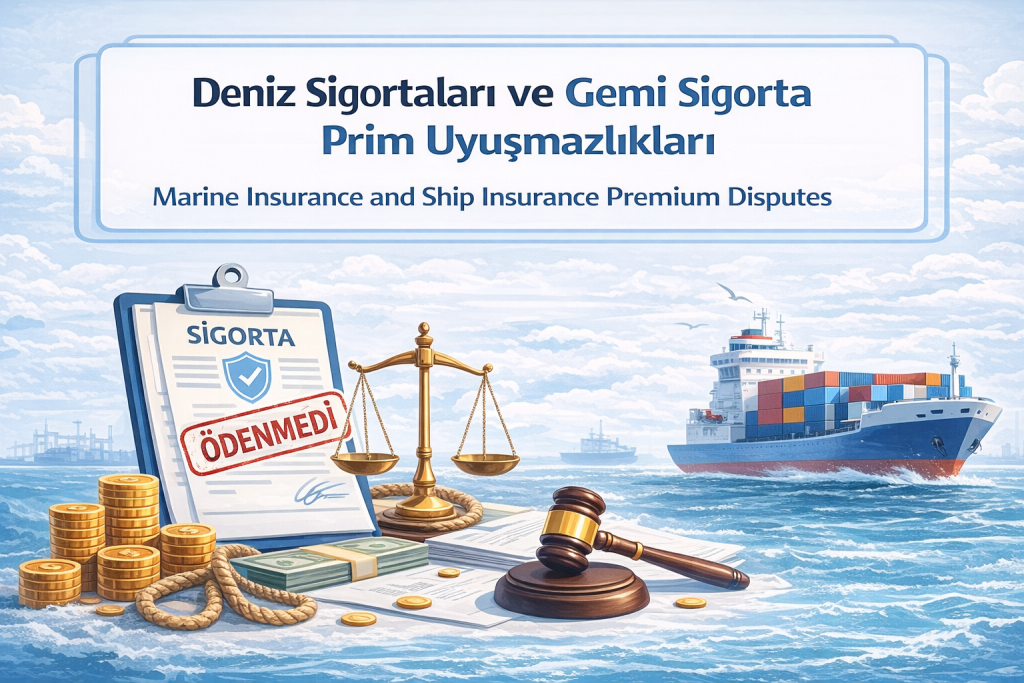
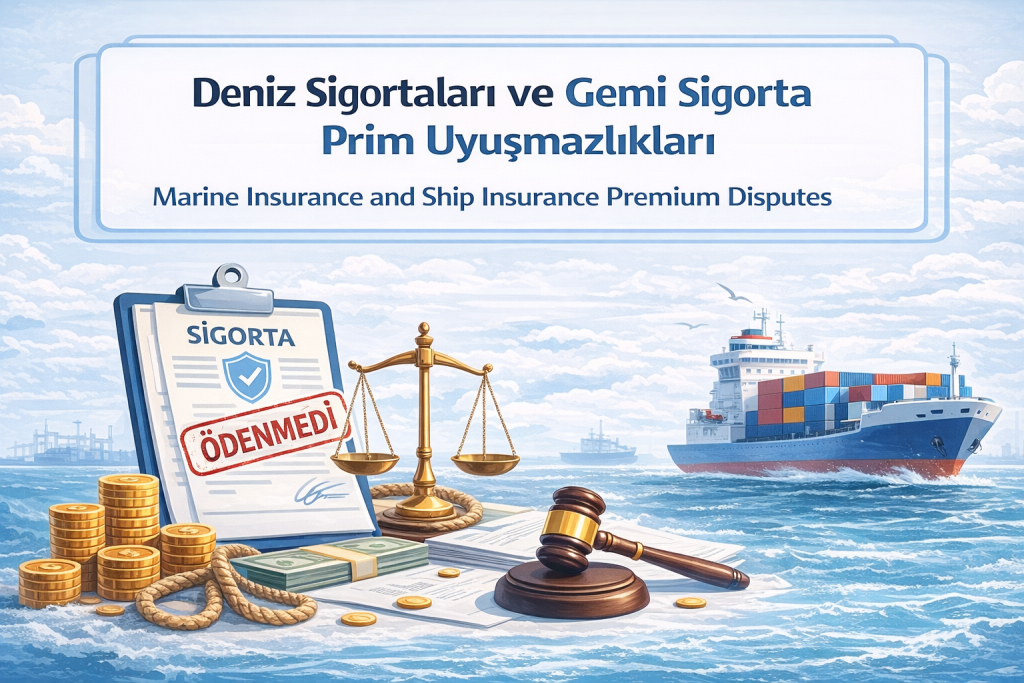
Marine Insurance and Ship Insurance Premium Disputes
Marine Insurance and Ship Insurance Premium Disputes
1. Introduction and Legal Framework
1. Introduction and Legal Framework
In maritime trade, various types of marine insurance are applied to secure the operation of ships, protect transported cargo, and cover liabilities for damages that may be caused to third parties. Within the framework of the Turkish Commercial Code’s provisions regarding maritime trade and international marine insurance practices, ship insurances include; hull insurance (Hull & Machinery), liability insurances (P&I), cargo insurance, and other special insurance types. Premium debts and coverage disputes arising from these insurance relationships constitute one of the most important legal conflict areas in maritime commerce.
In maritime trade, various types of marine insurance are applied to secure the operation of ships, protect transported cargo, and cover liabilities arising from damages to third parties. Within the framework of the Turkish Commercial Code and international marine insurance practices, ship insurance includes hull and machinery insurance, protection and indemnity (P&I) insurance, cargo insurance, and other specialized insurance types. Premium debts and coverage disputes arising from these insurance relationships constitute one of the most significant areas of legal conflict in maritime commerce.
Claims arising from marine insurance may, depending on the nature of the specific case, be considered within the scope of a maritime claim and may be subject to various legal remedies, including the provisional arrest of a vessel. Therefore, the nature of the insurance contract, the scope of coverage, and the obligations of the parties play a decisive role in resolving the dispute.
Claims arising from marine insurance may, depending on the nature of the case, qualify as maritime claims and may be subject to various legal remedies, including the arrest of ships. Therefore, the nature of the insurance contract, the scope of coverage, and the obligations of the parties play a decisive role in resolving disputes.
2. Types of Marine Insurance and Their Main Characteristics
2. Types of Marine Insurance and Their Main Characteristics
2.1 Hull & Machinery Insurance
Hull insurance is a type of property insurance that covers physical damages that may occur to the ship’s hull, machinery, and equipment. Risks such as collision, grounding, fire, machinery breakdown, and similar risks are covered under this insurance.
Hull and machinery insurance is a type of property insurance covering physical damage to the ship’s hull, machinery, and equipment. Risks such as collision, grounding, fire, and machinery failure fall within this coverage.
Failure to pay premiums under this insurance may lead to the suspension of coverage or the termination of the contract.
Failure to pay insurance premiums under this policy may result in suspension of coverage or termination of the contract.
2.2 Protection and Indemnity Insurance (P&I Insurance)
P&I insurance is a liability insurance that covers the shipowner’s liability towards third parties. It covers risks such as cargo damage, environmental pollution, passenger claims, salvage expenses, and crew claims.
Protection and indemnity insurance covers the shipowner’s liability toward third parties. It includes risks such as cargo damage, environmental pollution, passenger claims, salvage expenses, and crew claims.
Failure to pay premiums may terminate club coverage and expose the shipowner to significant liability risks.
Failure to pay premiums may terminate club coverage and expose the shipowner to significant liability risks.
2.3 Cargo Insurance (Cargo Insurance)
Cargo insurance, covers damages that goods may incur during maritime transportation. This insurance is usually taken out by the cargo owner or the shipper.
Cargo insurance covers damage to goods during maritime transportation. It is typically obtained by the cargo owner or shipper.
The scope of insurance coverage can lead to disputes regarding whether the damage resulted from the transportation process or the inherent nature of the cargo itself.
The scope of coverage often gives rise to disputes regarding whether the damage resulted from transportation or from the inherent nature of the cargo.
3. Types of Ship Insurance Premium Disputes
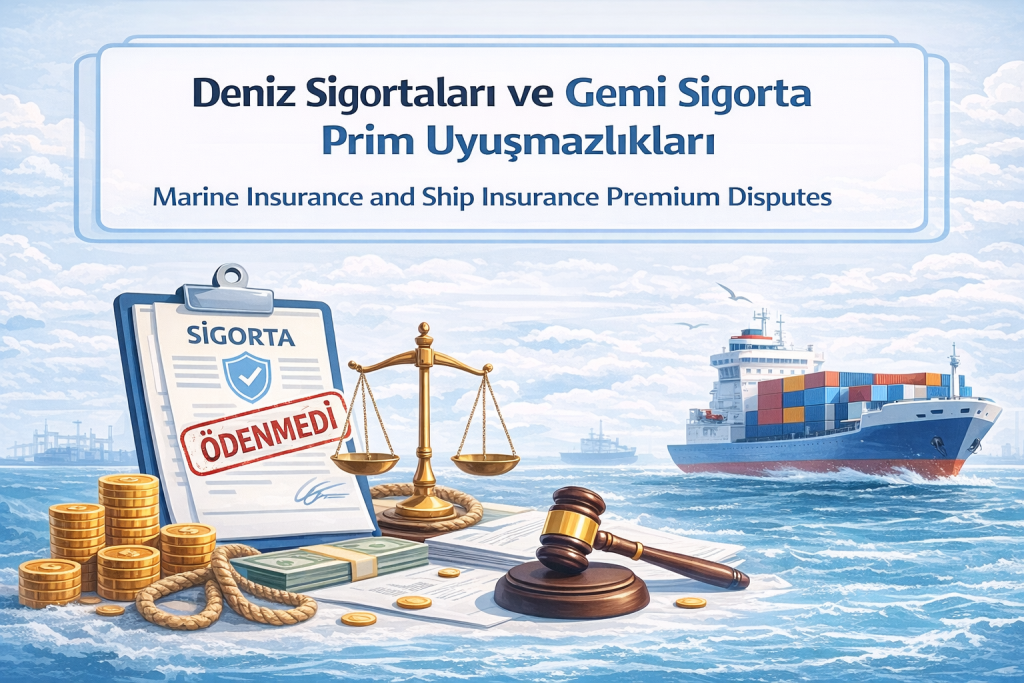
3. Types of Ship Insurance Premium Disputes
Disputes arising in marine insurance relationships generally stem from the non-payment of insurance premiums, scope of coverage, insurer’s liability, and recourse claims.
Disputes in marine insurance relationships generally arise from non-payment of premiums, scope of coverage, insurer liability, and recourse claims.
The main types of disputes include:
The main types of disputes include:
Non-payment of insurance premiums
Suspension or termination of coverage
Scope of the insurer’s indemnity obligation
Insurer’s recourse claims
Termination of the insurance contract
Disputes regarding the interpretation of insurance coverage
Non-payment of insurance premiums; suspension or termination of coverage; scope of the insurer’s indemnity obligation; recourse claims of the insurer; termination of insurance contracts; and disputes regarding interpretation of policy coverage.
4. Legal Consequences of Insurance Premium Debts
4. Legal Consequences of Insurance Premium Debts
In case of non-payment of insurance premiums, the insurer’s obligation to provide coverage may terminate or be suspended. This situation causes damages that may arise during the operation of the vessel to become the direct responsibility of the shipowner.
Failure to pay insurance premiums may result in termination or suspension of the insurer’s obligation to provide coverage. This may lead to damages arising during ship operations becoming the direct responsibility of the shipowner.
In some cases, insurance premium claims may be considered maritime claims, making it possible to request an interim attachment (arrest) on the vessel to secure the claim.
In certain cases, insurance premium claims may qualify as maritime claims, allowing the arrest of the vessel to secure the debt.
5. Insurance Coverage and Liability Disputes
5. Insurance Coverage and Liability Disputes
One of the most common issues in marine insurance disputes is determining whether the damage falls within the scope of policy coverage. Exception clauses, coverage limits, and fault assessments included in the insurance policy are important in resolving the dispute.
One of the most common issues in marine insurance disputes is determining whether the damage falls within policy coverage. Policy exclusions, coverage limits, and fault assessments are critical in resolving disputes.
The insurer’s liability is determined based on whether the insured has fulfilled their obligations and the manner in which the risk occurred.
The insurer’s liability is determined based on whether the insured fulfilled contractual obligations and the manner in which the risk occurred.
6. Evidence and Proof in Marine Insurance Disputes
6. Evidence and Proof in Marine Insurance Disputes
Technical evidence plays a crucial role in marine insurance disputes. Survey reports, expert examinations, classification records, ship logs, insurance policies, and payment records play a decisive role in resolving the dispute.
Technical evidence plays a crucial role in marine insurance disputes. Survey reports, expert examinations, classification records, ship logs, insurance policies, and payment records are decisive in resolving disputes.
Courts frequently resort to expert examinations based on technical assessments in insurance disputes.
Courts frequently rely on expert examinations based on technical assessments in insurance disputes.
7. Importance of Expert Legal Assistance in Marine Insurance Disputes
7. Importance of Expert Legal Assistance in Marine Insurance Disputes
Marine insurance disputes are complex processes that simultaneously require technical maritime knowledge, international insurance practices, and commercial risk analysis. Interpretation of insurance contracts, determination of liability, and collection of claims require expertise.
Marine insurance disputes are complex processes requiring technical maritime knowledge, international insurance practices, and commercial risk analysis. Interpretation of insurance contracts, determination of liability, and recovery of claims require specialized expertise.
Incorrect legal strategies may result in significant commercial losses and substantial compensation liabilities.
Incorrect legal strategies may result in significant commercial losses and substantial compensation liabilities.
Secure Management of Marine Insurance Processes with 2M Law Office
Secure Management of Marine Insurance Processes with 2M Law Office
2M Law Office provides legal consultancy and litigation services in marine insurance disputes, insurance premium claims, and ship arrest proceedings, particularly in major maritime regions including Istanbul, Tuzla, Pendik, Kartal, and Gebze.
2M Law Office provides legal consultancy and litigation services in marine insurance disputes, insurance premium claims, and ship arrest proceedings, particularly in major maritime regions including Istanbul, Tuzla, Pendik, Kartal, and Gebze.
Our team of experts with extensive knowledge of international maritime trade practices provides strategic and effective legal solutions for both domestic and international clients.
Our team of experts with extensive knowledge of international maritime practices provides strategic and effective legal solutions for both domestic and international clients.