Introduction
This study has been prepared to answer the question of whether the other spouse can file a unilateral divorce case if one spouse leaves home, and what the legal grounds for this case are, within the framework of the presented Supreme Court and Regional Court of Appeals decisions. The examined decisions contain important principles and details regarding the conditions and legal justifications under which a divorce petition can be filed. The study aims to synthesize the findings obtained from these decisions and provide a holistic perspective on the subject.
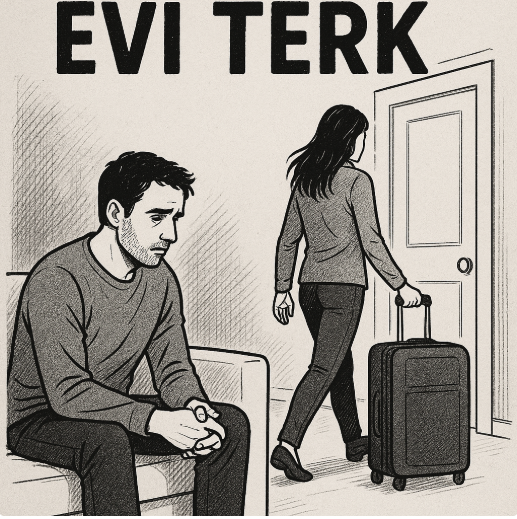
1.Right to Sue in Case of Spouse Leaving Home and the Principle of “Forcing to Leave”
The overwhelming majority of the examined decisions emphasize that the right to file a divorce case based on abandonment belongs exclusively to the “abandoned” spouse. This principle was clearly stated in the Supreme Court General Assembly of Civil Chambers’ decision numbered 2017/2727 E., 2020/846 K.: “…a spouse who forces the other spouse to leave the common residence or prevents them from returning to the common residence, being in the position of the abandoning spouse, does not have the right to file a divorce case based on abandonment.”
For example, in a decision (2nd Civil Chamber of the Court of Appeals, 2015/14545 E., 2016/5851 K.), it was ruled that a man who applied physical violence to his spouse and thereby caused the woman to leave the home does not have the right to file a divorce case based on abandonment. Similarly, it was accepted that a man who sent his wife to her family’s home, saying “I don’t want your daughter,” and did not meet her needs, was also in the position of the spouse who forced the abandonment (2nd Civil Chamber of the Court of Appeals, 2019/5550 E., 2019/9240 K.). These decisions show that the courts meticulously examine the reasons behind the act of abandonment and the fault of the spouses.
2. Abandonment Notice and Procedural Requirements
The most important procedural step in a divorce case based on abandonment is the “warning” process. As stated in the decision of the Supreme Court General Assembly of Law, numbered 2017/2717 E., 2021/939 K., such cases “are subject to very strict substantive and formal conditions and require meticulous examination.” The proper execution of the warning is of critical importance. This procedure was detailed in a decision by the Erzurum Regional Court of Justice (2017/3 E., 2017/14 K.): “The spouse issuing the warning must cover sufficient travel expenses when inviting their spouse home. (…) The spouse issuing the warning must also indicate in the warning sent where the key to the joint residence to which they are inviting their spouse is located and how it can be obtained.” Such procedural deficiencies can lead to the dismissal of the case without delving into its merits. Furthermore, the warning request must reflect a genuine desire for the spouse to return home. Filing a lawsuit a very long time after the warning is served (e.g., 3 years) may lead to questioning this sincerity (Supreme Court 2nd Civil Chamber, 2012/22203 E., 2013/7818 K.).
3. Valid Reason Not to Return
If the abandoning spouse has a legitimate reason not to return to the marital home despite the warning, the case will still be dismissed. In Supreme Court decisions, situations such as the spouse being subjected to violence (Supreme Court 2nd Civil Chamber, 2022/5445 E., 2023/870 K.) or the invited residence not being “spiritually independent” (Supreme Court 2nd Civil Chamber, 2015/4852 E., 2015/19203 K.) have been accepted as legitimate reasons. On the other hand, the fact that the spouse’s family lives on the upper floor of the invited residence has not been considered a reason to negate the spiritual independence of a physically independent residence (Supreme Court 2nd Civil Chamber, 2013/23842 E., 2014/8506 K.). At this point, the court makes an assessment based on the specific circumstances of the concrete case.
4. The Role of the Fact of Abandonment in the “Irretrievable Breakdown of Marriage” Case
Multiple decisions state that a case filed without fulfilling the warning requirement cannot be based on the grounds of abandonment (Turkish Civil Code Art. 164), but will be evaluated within the scope of the fundamental breakdown of the marital union (Turkish Civil Code Art. 166) (Supreme Court 2nd Civil Chamber, 2011/18998 E., 2012/15133 K.). In this situation, the act of abandonment is put forward as a fact indicating that the marriage has become unbearable. However, when resorting to this path, the plaintiff must prove that the defendant spouse is also at fault. If the plaintiff is entirely responsible for the breakdown of the marriage, their case will be dismissed (Supreme Court 2nd Civil Chamber, 2015/15112 E., 2016/6431 K.).
Conclusion
In the event that your spouse abandons the home, it is possible for you to file a unilateral divorce case, but the exercise of this right is subject to specific conditions and legal grounds:
Divorce Based on Abandonment (Turkish Civil Code Art. 164): If you choose this path, you must ensure that you did not force your spouse to leave the house or prevent them from returning. Otherwise, you will legally be considered the “abandoning party” and will not have the right to sue. For this lawsuit, it is mandatory that at least 6 months have passed since the act of abandonment, and that a properly issued “return home” warning during this period remained unsuccessful.
Divorce Based on the Irretrievable Breakdown of the Marital Union (Turkish Civil Code Art. 166): If you cannot meet the strict conditions of a divorce based on abandonment, you can file a lawsuit by presenting your spouse’s abandonment of the house as proof that the marital union has been fundamentally shaken. In this case, in addition to the act of abandonment, you will need to prove that the continuation of the marriage has become intolerably unbearable and that your spouse is also at fault in this situation.
In both scenarios, the reasons behind the act of abandonment, the fault of the spouses, and the specific characteristics of the event will be meticulously evaluated by the court. The presented court decisions indicate that such cases are quite technical and detail-oriented. Therefore, to avoid loss of rights and to manage the process correctly, it is strongly advised to seek legal assistance from a lawyer.
Right to File for Divorce: In the event that a spouse leaves the home, the abandoned spouse has the right to file a unilateral divorce lawsuit. This right is primarily based on the grounds of “abandonment” as regulated in Article 164 of the Turkish Civil Code (TMK).
“Distinction Between ‘The Abandoning Spouse’ and ‘The Abandoned Spouse’:” The most frequently emphasized and critical point in court decisions is the correct identification of who is “the abandoning spouse” and “the abandoned spouse”. The following provision in Article 164 of the Turkish Civil Code (TMK), cited in almost all decisions, is fundamental: “The spouse who forces the other to leave the common residence, or prevents them from returning to the common residence without a just cause, shall also be considered to have abandoned.” According to this principle, a spouse who expels their partner from home, causes them to leave by applying violence, or prevents them from returning home, is legally in the position of “the abandoning spouse” and cannot file for divorce based on this reason.
Conditions for a Divorce Case Based on Abandonment: Strict substantive and formal conditions are required for a divorce case based on abandonment to be accepted. These conditions are:
The act of abandonment must be committed with the aim of not fulfilling the obligations arising from the marital union.
The separation must have lasted at least six months and must still be ongoing.
Upon the request of the abandoned spouse, the abandoning spouse must be warned by a judge or notary to “return home”, and this warning must remain unheeded.
The warning can be requested after the fourth month following the date of abandonment, and a lawsuit cannot be filed until two months have passed after the warning.
“Concept of ‘Just Cause’:” If the abandoning spouse has a “just cause” for leaving home or not returning home despite the warning, the divorce case based on abandonment will be rejected. Situations such as experiencing violence, being insulted, or the common residence not being independent or livable, can be considered as just causes.
Alternative Ground for Divorce: If the conditions for a divorce case based on abandonment (Turkish Civil Code art. 164) have not been met, or if this path is not desired, the spouse leaving the home can be used as evidence in a divorce case based on the ground of “the marital union being fundamentally shaken” (Turkish Civil Code art. 166/1). However, in this situation, as stated in many decisions, “De facto separation alone is not a ground for divorce.” It must be proven that the marital union has been shaken to such an extent that it cannot be expected for the spouses to continue their common life, and that the defendant spouse is also at fault in this shaking. An article suggestion.

Why is Tuzla Lawyer Support Necessary?
In problems experienced between spouses in a marital union, especially when the home is left for serious reasons such as physical violence or psychological pressure, the legal consequences of the act of abandonment vary according to the fault of the parties. For example, in a Supreme Court decision (Supreme Court 2nd Civil Chamber, 2015/14545 E., 2016/5851 K.), it was stated that the woman who left home due to physical violence was deemed justified in her behavior, and the man who committed violence did not have the right to file a divorce case based on abandonment. Similarly, it was accepted that the man who sent his wife to her family and did not meet her needs, saying “I don’t want my daughter,” was also the party forcing the abandonment (Supreme Court 2nd Civil Chamber, 2019/5550 E., 2019/9240 K.). Such decisions demonstrate that courts pay attention not only to whether the home was abandoned but also to the reasons behind the act of abandonment and the behavior of the parties.
This is why Tuzla lawyer support is of great importance. Individuals considering filing a divorce case based on abandonment need to know in advance how their own actions and the other party’s behavior will be legally evaluated. A Tuzla divorce lawyer both ensures that the correct steps are taken during the divorce process and guides you by interpreting which situations the court accepts as justified abandonment according to your specific case. Especially in regions such as (Pendik, Kartal, Maltepe, Gebze, Çayırova, Tepeören, Orhanlı, Aydınlı, Tuzla), incorrect statements or insufficient claims regarding issues such as whether the home was abandoned and whether it was based on a justified reason can lead to the loss of the case. For this reason, it is of great importance for residents of Tuzla and its surroundings to seek professional legal support in such complex and critical legal processes.