Introduction
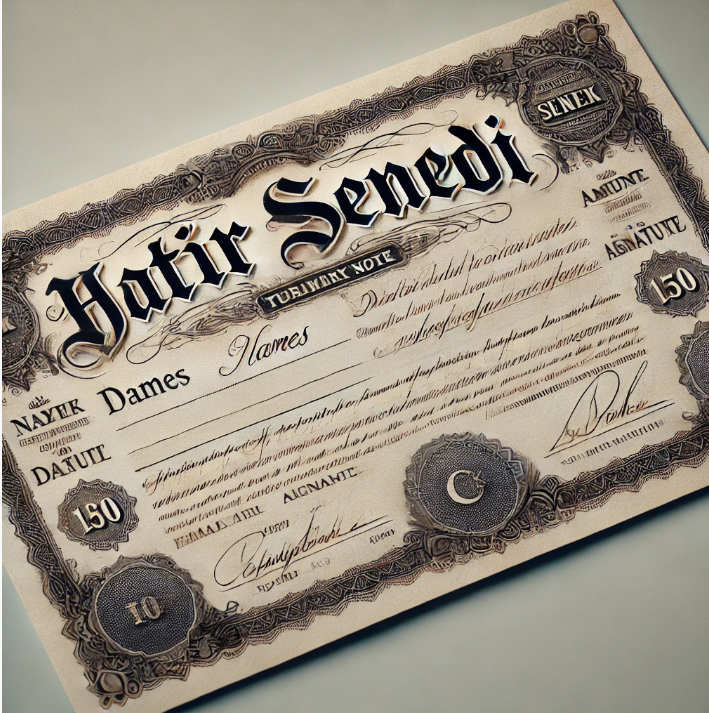
This study has been prepared to analyze the legal consequences of commercial papers, known as “accommodation bills,” which are generally issued not based on a debt relationship, but for accommodation or collateral purposes, and are subsequently filled out. In light of the findings obtained from numerous regional courts of appeal and Supreme Court decisions examined, this study comprehensively addresses whether accommodation bills can be collected through enforcement, the legal remedies available against these bills, statutes of limitations, and the most common dispute topics. The study aims to provide a legal framework for parties issuing or holding these bills.
In light of the judicial decisions examined, the main findings regarding the user’s question are as follows:
Can an Accommodation Bill Be Collected Through Enforcement? Yes, an accommodation bill can be subject to enforcement even if it is filled out later. The main reason for this is that, according to the Turkish Commercial Code, commercial papers (promissory notes, bills of exchange, checks) are considered “abstract acknowledgments of debt”. These bills are considered detached from their underlying cause (causa) and the creditor is not obliged to prove the underlying reason for their claim.
What Can Be Done Against Accommodation Bills?
Negative Declaratory Action: The debtor can file a negative declaratory action to prove that the bill is an accommodation bill and, therefore, that they have no debt.
Proof with Written Evidence: The claim of an accommodation bill, as a rule, must be proven with written evidence. “The rule of proving a bill with a bill” requires the debtor to support their claim with a strong written document (protocol, contract, release document, etc.).
Proof of Bad Faith: If the bill has been endorsed to a third party, and the debtor proves that this person acquired the bill “knowingly acting to the detriment of the debtor”, i.e., that they acted in bad faith, then the accommodation bill defense can also be asserted against this person.
Criminal Investigation: The filling out of the bill without consent or contrary to agreement, as it may constitute crimes such as “misuse of an open signature” or “fraud”, makes it possible to file a criminal lawsuit and use the outcome of this lawsuit as evidence in a civil case.
What is the Statute of Limitations? In the vast majority of the reviewed decisions, general statutes of limitations for promissory notes were not mentioned. However, in some decisions, specific periods related to particular situations stand out: For Checks: In one decision, it was stated that the statute of limitations for checks is 3 years from the expiry of the presentation period (Ankara 14th Civil Court of Commerce). Objection Period: In the enforcement proceedings specific to bills of exchange, it was emphasized that the legal period for objections and complaints to be made to the enforcement court from the notification of the payment order is 5 days (12th Civil Chamber of the Court of Cassation). This period is not the statute of limitations regarding the essence of the debt, but a critical procedural period for objecting to the enforcement.
What are the Most Litigated Cases/Situations?
Burden of Proof: At the core of disputes lies the question of who bears the burden of proving the claim of an accommodation note and how this proof is to be presented. As a rule, the burden of proof rests with the debtor (drawer) who claims that the note is an accommodation note.
Lack of Consideration and Filling Contrary to Agreement: The most fundamental issues in lawsuits are the claims that the note is not based on a real debt relationship (lack of consideration) and that it was subsequently filled in contrary to the agreement between the parties.
Lack of Written Evidence: The inability of debtors to provide written evidence to support their claims of accommodation notes is the most common reason for the rejection of lawsuits.
Commercial Book Records: The presence or absence of a receivable or debt record related to the note in the parties’ commercial books is considered important evidence.
The reviewed decisions clearly set forth several fundamental principles regarding the legal status of accommodation notes.
1. Abstract Nature of Negotiable Instruments and Enforcement Proceedings
Courts consistently emphasize the nature of negotiable instruments as “abstract acknowledgment of debt”. In the decision of the Istanbul 14th Civil Court of Commerce, this principle was stated as “negotiable instruments being documents containing an abstract acknowledgment of debt” . This means that the legitimate holder of the instrument is not obliged to explain the reason for the claim when initiating collection proceedings, and the debtor must prove that they are not indebted. Therefore, the fact that an instrument is an “accommodation bill” does not, by itself, constitute an obstacle to enforcement proceedings.
2. Burden of Proof and Requirement of Written Evidence
The most frequently recurring element in decisions and the one determining the outcome of lawsuits is the burden of proof and the nature of the evidence. As a rule, the debtor’s claim of a friendly bill must be proven with “written evidence”. As stated by the 16th Civil Chamber of the Istanbul Regional Court of Justice, “the claims regarding both the friendly bill and party collusion must be proven with written evidence.” In many Supreme Court decisions, it is observed that the plaintiff’s case was dismissed because they could not prove their claim with written evidence (Supreme Court 19th Civil Chamber – 2016/3216, Supreme Court 11th Civil Chamber – 2021/7368). In promissory notes where the signature is affixed but other parts are left blank, the claim that this blank space was filled contrary to the agreement also requires written evidence. Because, as stated in the decision of the Istanbul 2nd Commercial Court of First Instance, “an empty signed paper signed and given to someone with trust… indicates that the risk arising from this situation has been taken and that the other party was trusted.”
3. Legal Defense Mechanisms and Exceptions
The most fundamental legal recourse for the debtor is to file a negative declaratory action. However, success in these cases depends on strong evidence. In some situations, exceptions to the written evidence rule may arise:
Creditor’s Admission: If the creditor admits that the promissory note is a friendly bill, this is the strongest evidence in favor of the debtor. In the decision of Bakırköy 4th Commercial Court of First Instance, it is observed that the case was accepted with the statement, “It has been admitted by the defendant that these promissory notes, which are the subject of the lawsuit and enforcement, were given to the defendant as friendly bills.”
Examination of Commercial Relationship: Courts may examine whether there is a commercial relationship between the parties that justifies the bill. Bakırköy 5th Civil Court of Commerce, based on the expert report, “there was no commercial relationship between the parties after 31/05/2018,” accepted the request for negative declaratory judgment on these grounds.
Acquisition in Bad Faith: If the bill is transferred to a third party by endorsement, the debtor may also raise their defense against that person if they prove that the person acted in bad faith when acquiring the bill. According to Article 687 of the Turkish Commercial Code, which was also cited by the Istanbul 14th Civil Court of Commerce, “the holder has made an exception for the case where they knowingly acted to the detriment of the debtor when acquiring the bill.“
Criminal Liability: A decision by the 11th Criminal Chamber of the Supreme Court states that the unlawful filling out of a bill may constitute “the element of deceit in the crime of fraud” or the crime of “misuse of a blank signature.” This situation opens up a criminal avenue for the debtor, in addition to their legal defense.
Conclusion
In the entirety of the examined court decisions, it is clearly seen that issuing an accommodation bill is a legally highly risky act. Due to the principle of abstractness of negotiable instruments, these bills can easily be subject to enforcement proceedings. The burden of proving that the bill was given for accommodation purposes and without consideration rests almost entirely with the debtor who asserts this claim.
The most effective way for the debtor to prove these claims is to have written evidence, such as a protocol explaining why the promissory note was given. The vast majority of negative declaratory actions filed without written evidence are dismissed. Although other legal avenues exist, such as proving that the creditor acted in bad faith or that the promissory note was filled out contrary to the agreement, these are also quite difficult to prove. Therefore, in cases involving promissory notes issued as a favor, the safest way is either not to issue such notes at all or to obtain a written agreement from the other party clearly stating that the note was given for security or as a favor. An article suggestion.

Why is Tuzla Lawyer Support Necessary?
The most effective way for the debtor to prove their claims in a negative declaratory action or in accommodation note relationships is to have a written and legally valid protocol explaining why the promissory note was issued. Cases filed without written evidence have a high probability of being dismissed. Furthermore, proving that the creditor acted in bad faith or that the promissory note was filled out contrary to the agreement requires quite difficult legal processes. Therefore, in disputes related to such promissory notes, obtaining Tuzla lawyer support is of great importance for effectively protecting your legal rights.
Our expert staff in the region, including Pendik lawyer, Kartal lawyer, Maltepe lawyer, Gebze lawyer, Çayırova lawyer, Orhanlı lawyer, Aydınlı lawyer, and Tepeören lawyer, especially in Tuzla, effectively represents our clients in the drafting of promissory notes, the preparation of legal protocols, and negative declaratory actions. This way, both the loss of rights is prevented and potential risks are minimized.