1. Requirement for Legal Counsel and Representation
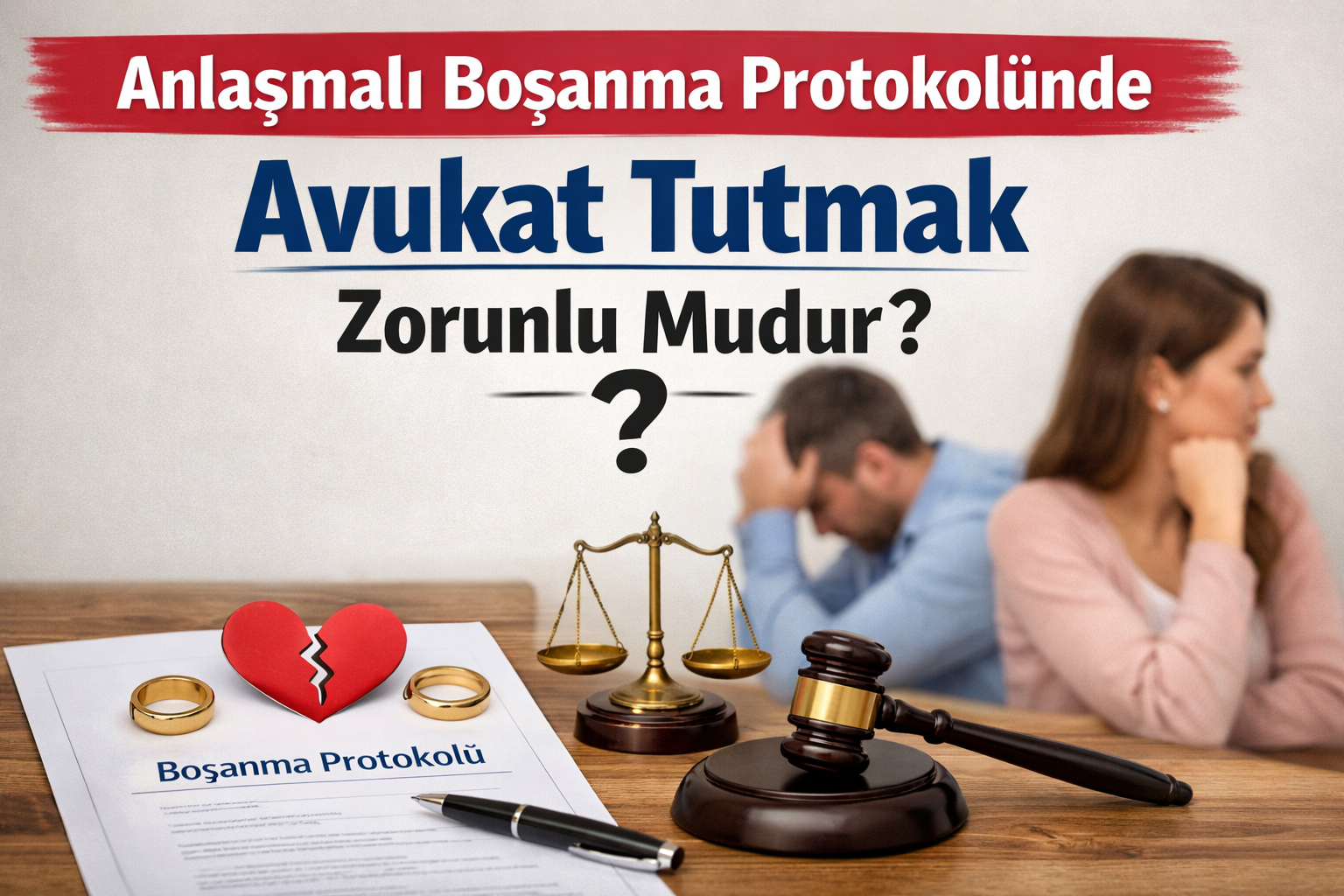
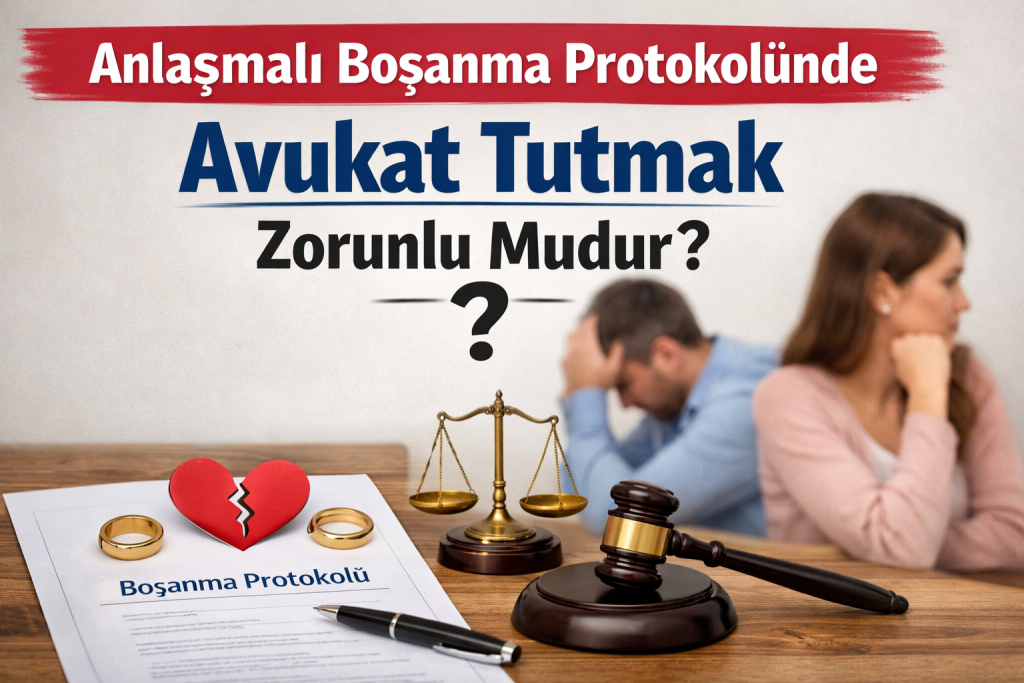
Within the framework of judicial decisions and legal legislation, there is no obligation to work with a lawyer to file an amicable divorce case or manage the process. As explicitly stated in the decision numbered Ankara Regional Court of Justice 23rd Civil Chamber (2023/619 E., 2023/669 K.), “in principle, legal representation by a lawyer before courts is not mandatory for individuals.” However, the same decision emphasizes that individuals need the support of the legal profession to avoid loss of rights due to their unfamiliarity with legislation and jurisprudence.
In the decision of the Supreme Court 2nd Civil Chamber (2023/9915 E.), considered as a secondary source, it is stated that representation without an attorney or inadequate representation may lead to claims of vitiation of consent and protocol errors, and professional support is critical in preventing such uncertainties.
2. Risks of Invalidity in the Amicable Divorce Protocol
The validity of an amicable divorce depends on the court’s approval of the protocol agreed upon by the parties and its explicit inclusion in the judgment.
Requirement of Judicial Approval: Pursuant to Article 184/5 of the Turkish Civil Code (TMK), agreements concerning the financial consequences of divorce are not valid unless approved by a judge. 8th Civil Chamber of the Supreme Court (2018/9159 E. K) and 2014/4205 E. K (Secondary Source) decisions state that protocols not approved by a judge or not included in the judgment clause will not produce legal effect and will remain null and void.
Requirement for Personal Declaration: The 2nd Civil Chamber of the Supreme Court (2023/4062 E. K) decision states that even if the parties have legal representatives, it is mandatory for the principals themselves to be present in court and declare their approval of the protocol. Otherwise, the case cannot be classified as an uncontested divorce. In the present case, the lawsuit filed by the plaintiff seeking an uncontested divorce was not accepted by the court as an uncontested divorce due to the parties’ personal absence at the hearing; the case was consequently evaluated and concluded as a contested divorce.
3. Liquidation of Matrimonial Property Regime and Loss of Rights
The most common mistake observed in Supreme Court decisions is the vagueness of protocol clauses pertaining to the liquidation of the matrimonial property regime.
Clarity Requirement: According to the decisions of the Supreme Court 8th Civil Chamber (2013/827 E. and 2012/3587 E.), for the liquidation of the property regime to be valid, movable and immovable properties must be listed in the protocol “individually, by name, and itemized.”
Insufficiency of General Expressions: General expressions such as “The parties have no property claims against each other” or “There is no claim for material and moral compensation” do not cover the liquidation of the property regime (such as participation receivable, value increase share, etc.). Supreme Court General Assembly of Civil Chambers (2019/335 E., 2022/850 Ka K.) Indeed, in this decision, it was emphasized that general expressions in the consensual divorce protocol (e.g., “we have no other demands”) would not cover the liquidation of the property regime, and that parties could subsequently claim rights unless a clear and concrete arrangement was made. And, as emphasized in the decisions of 2024/7 E. (2025/498 K K.), abstract, ambiguous, and open-to-interpretation expressions do not prevent a subsequent property regime lawsuit.
Waiver Conditions: For a waiver of the property regime to be valid, it must be clear, unconditional, unequivocal, and pertain to a concrete right. The decision of the 2nd Civil Chamber of the Supreme Court (2021/5382 E. K) confirms that a declaration of “I have no claim to property” during the hearing will not be considered a waiver for matters not explicitly regulated in the protocol.
4. Alimony and Compensation Regulations
Alimony and compensation are ancillary consequences of divorce and must be regulated in the protocol.
Errors Difficult to Rectify: Failure to clearly specify the amount or type of alimony (for indigence, child support) in the protocol, or the judge’s refusal to approve these provisions, can lead to financial losses that are impossible to rectify later.
As stated in secondary sources (8th Civil Chamber of the Supreme Court 2016/2660 E. K), it is possible for the protocol to cover ancillary matters such as alimony and compensation while excluding the property regime. This leaves the door open for a separate lawsuit for property division, even if financial consequences have been agreed upon.
5. Allegations of Flawed Will and Fraud
Court of Cassation 2nd Civil Chamber (2023/285 E. K) and Court of Cassation 8th Civil Chamber (2013/23936 E. K) decisions show that allegations of “fraud, intimidation (duress) or deception” frequently arise in protocols prepared without legal counsel. Situations such as hidden changes made later in the protocol or one of the parties being illiterate can lead to lawsuits for the retrial or annulment of the protocol. However, proving these allegations is quite difficult and subject to preclusive periods.
In conclusion; although retaining a lawyer for a consensual divorce is not legally mandatory, obtaining professional legal assistance is critically important in light of judicial decisions to prevent the protocol from being deemed invalid, to avoid loss of rights related to the property regime, and to prevent irreparable damages in financial matters such as alimony from arising later.
Anlaşmalı boşanmada avukat olmadan dava açmak riskli midir?
Anlaşmalı boşanma davalarında avukatla temsil zorunlu değildir; ancak uygulamada en sık karşılaşılan sorunlar protokol hatalarından kaynaklanmaktadır. Özellikle mal paylaşımı, nafaka ve tazminat gibi hususların eksik veya muğlak düzenlenmesi, ileride yeni davaların açılmasına ve ciddi hak kayıplarına yol açabilir. Bu nedenle avukatsız yürütülen süreçler, geri dönüşü zor sonuçlar doğurabilmektedir.
Anlaşmalı boşanma protokolü sonradan iptal edilebilir mi?
Evet, ancak oldukça sınırlı durumlarda mümkündür. Protokolün hile, korkutma (ikrah) veya irade fesadı ile imzalandığının ispatlanması gerekir. Ayrıca bu tür iddialar belirli sürelerle sınırlıdır ve ispat yükü oldukça ağırdır. Bu nedenle baştan doğru ve eksiksiz hazırlanmış bir protokol, ileride doğabilecek uyuşmazlıkların önüne geçer.
Mal talebim yoktur” yazmak tüm haklardan feragat anlamına gelir mi?
Hayır. Yargıtay kararlarına göre bu tür genel ifadeler mal rejimi tasfiyesini kapsamaz. Taşınır ve taşınmaz malların açıkça, tek tek ve somut şekilde belirtilmesi gerekir. Aksi halde taraflar sonradan mal paylaşımı davası açma hakkını korur. Bu durum, anlaşmalı boşanmanın “tam anlamıyla” sonuçlanmadığını gösterir.
Why is Expert Lawyer Support Necessary?
Although the consensual divorce process is often perceived as an “easy” and “fast” type of case, it is one of the areas where the most rights are lost in practice. Especially a small mistake made while preparing the protocol can lead to significant financial losses or new litigation processes years later.
At this point, obtaining support from an Istanbul consensual divorce lawyer, Tuzla consensual divorce lawyer, Gebze lawyer, Çayırova divorce lawyer, Pendik divorce lawyer, and Kurtköy divorce lawyer carries great importance for the correct management of the process.
Thanks to professional support;
The protocol is prepared in accordance with the law and Supreme Court precedents.
The liquidation of the property regime is arranged clearly and unequivocally.
Alimony and compensation rights are secured.
Claims of vitiation of consent are prevented.
The risk of future lawsuits is minimized. Especially obtaining support from an experienced team in this field, such as 2M Hukuk Avukatlık Ofisi , ensures that the process is completed both quickly and securely.
In conclusion; although a lawyer is not mandatory in uncontested divorce cases, obtaining expert support is a critical necessity to avoid loss of rights and to complete the process correctly in one go.