Introduction
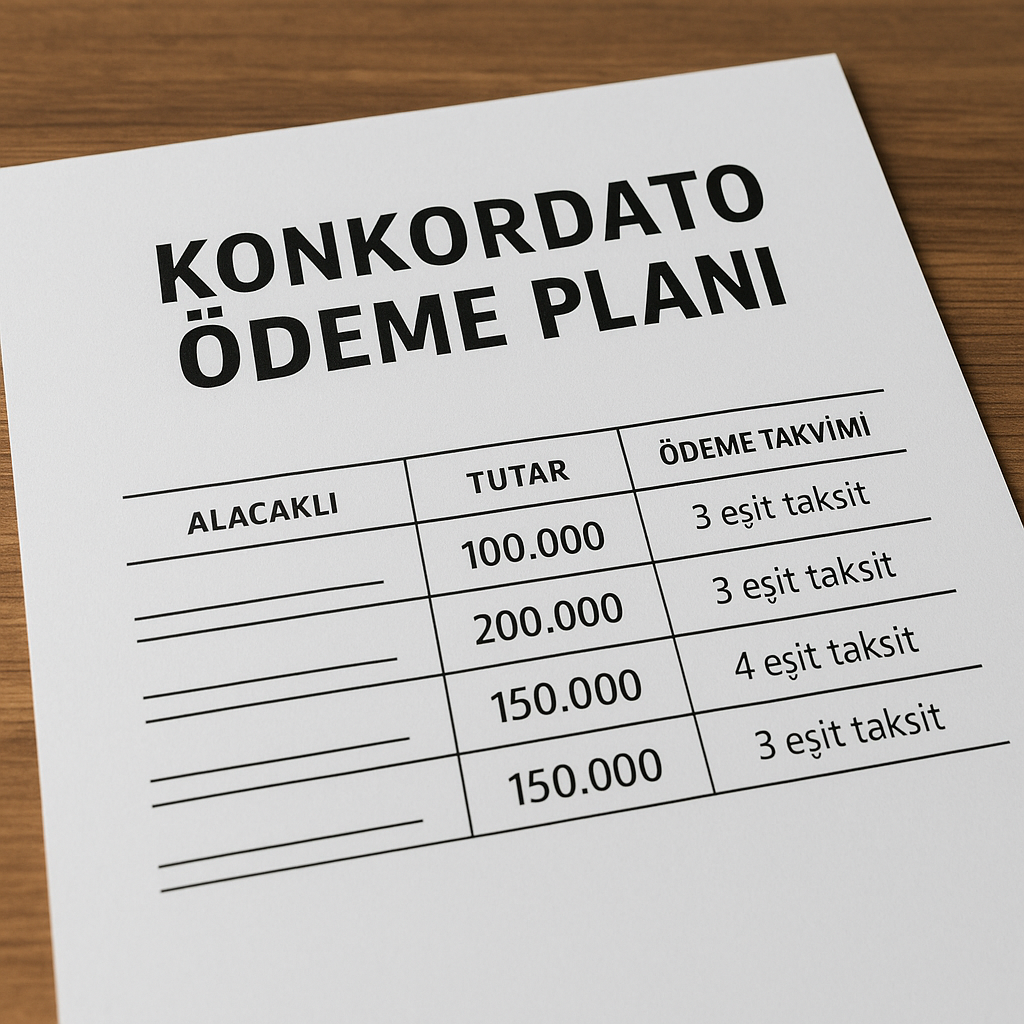
How Does the Concordat Process Work? What are the Application, Stay, Approval, and Commissioner Stages?According to sources in the literature, concordat is an enforcement institution aimed at enabling a debtor experiencing difficulties in paying their debts to restructure their debts by reaching an agreement with their creditors under court supervision and to avoid a potential bankruptcy. Its primary purpose is to allow debtors whose financial situation has deteriorated but who have the potential for improvement to continue their commercial activities. Concordat can be defined as “the debtor liquidating their debts by agreeing with their creditors on the payment method, provided they meet the conditions stipulated in the law.”.
Stages of the Concordat Process
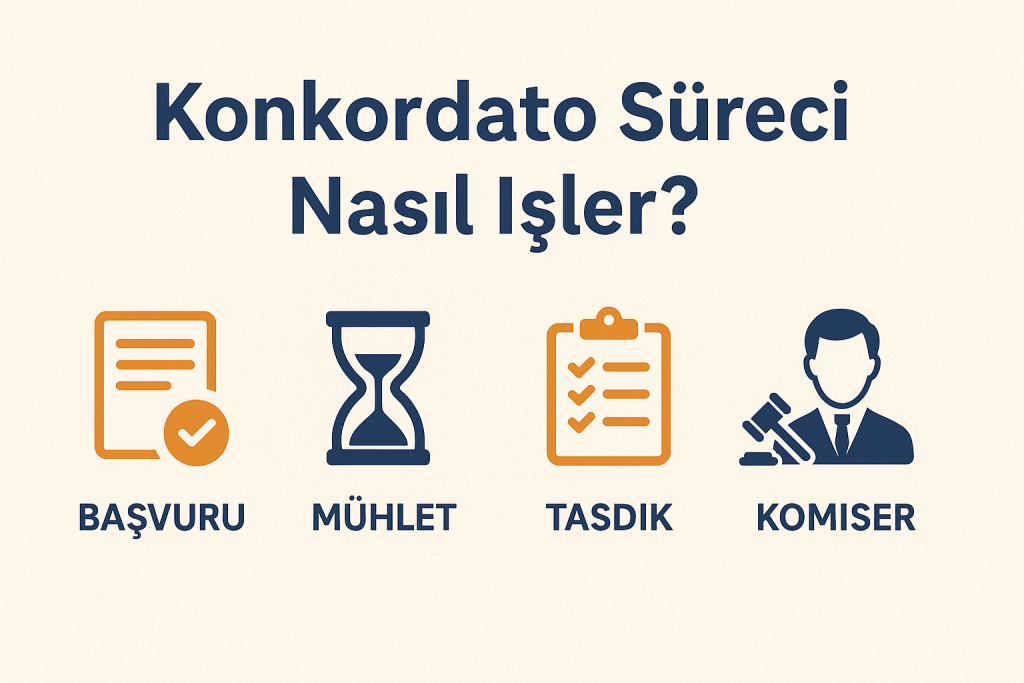
In light of the information in the literature, the ordinary concordat process, excluding bankruptcy, primarily consists of the following stages:
1. Application Phase The concordat process begins with a request made to the competent and authorized court (Civil Court of Commerce). This request can be made by the debtor or one of the creditors who can file for bankruptcy. One of the basic documents that must be submitted to the court during the application is the preliminary concordat project. The preliminary project is a temporary project submitted by the debtor at the beginning of the concordat process, and it can be amended by the debtor ex officio or upon the creditors’ request while the concordat procedure continues. This project outlines how the debtor plans to rectify their financial situation and under what conditions they intend to repay their debts.
2. Temporary Stay Phase After reviewing the application and its accompanying documents, if the court deems the request likely to succeed, it grants the debtor a three-month “temporary stay”. The purpose of this phase is to establish a preparation and evaluation process for the definitive stay.
Purpose: to establish a basis that will “clarify in the first stage whether the debtor’s concordat proposal will be approved or whether the debtor will be able to improve their financial situation at the end of the process.”
Function: It constitutes a phase where the debtor’s assets are determined and it is examined whether the documents submitted to the court are accurate.
Results: With the provisional moratorium decision, proceedings initiated against the debtor cease, no new proceedings can be initiated, and the debtor’s assets are taken under protection. The court also appoints a “provisional concordat commissioner” to supervise the process.
3. Definitive Moratorium Phase If the examinations carried out during the provisional moratorium yield positive results and there is a likelihood of the concordat succeeding, the court usually grants the debtor a one-year “definitive moratorium”. This period can be extended by an additional six months in compulsory cases.
Purpose: This phase is the main process where the concordat project is matured and negotiations with creditors are conducted. During the definitive moratorium phase, the debtor endeavors to improve their financial situation and reach a settlement with creditors by taking all measures included in the preliminary project.
Important Actions: Critical actions such as creditors reporting their claims, organizing a creditors’ meeting, and submitting the concordat project to the creditors for a vote take place during this period.
Legal Protection: By imposing a prohibition on proceedings during the concordat moratorium, it is aimed that the debtor can make the necessary preparations for the concordat without disturbance. This protection enables the debtor to keep their business afloat and focus on the recovery process.
4. Creditors’ Meeting and Acceptance of the Project At the meeting organized by the concordat commissioner within the definitive grace period, creditors vote on the concordat project submitted by the debtor. For the project to be accepted, the majority of registered creditors by number and amount of claims specified in the EBL must be ensured.
5. Approval Proceedings and Decision Phase The project accepted by the creditors is submitted to the court along with the concordat commissioner’s reasoned report. The commercial court conducts proceedings for the approval of the concordat and renders its final decision regarding the concordat request. The court ex officio examines whether the project meets the approval conditions required by the EBL (e.g., the offered amount being greater than the amount creditors would receive in case of the debtor’s bankruptcy, the project being proportionate to the debtor’s resources, etc.). If it concludes that the conditions are met, it decides on “the approval of the concordat”. This decision becomes binding even for creditors who did not accept the project.
Role of the Concordat Commissioner The concordat commissioner is a key actor at the center of the process. He/she is a public official tasked with protecting and balancing the interests of the debtor, creditors, and even the public. The commissioner supervises the debtor’s activities, contributes to the development of the project, organizes the creditors’ meeting, and submits reports to the court. Described as the court’s “extended arm”, the commissioner ensures that the process proceeds transparently and lawfully.
“Achieving Success” – The Dual Meaning of the Concept Literature emphasizes that the concept of “achieving success” in concordat can have two different meanings. It has been stated that what is meant by the concept of achieving success is whether the financial situation can be improved as a result of the concordat, or whether the conditions for the approval of the concordat will be met. The conclusion drawn from this is that the concordat can aim for either recovery or the approval of the concordat. Accordingly, even if the debtor’s financial situation does not fully improve, the approval of a project accepted by the majority of creditors and meeting the legal requirements can also mean that the process has achieved success.
Types of Concordat and Process Differences The functioning of the process may vary according to the type of concordat.
Out-of-Bankruptcy (Ordinary) Concordat: This is the standard process detailed above.
In-Bankruptcy Concordat: This is a method resorted to after the debtor has gone bankrupt. In in-bankruptcy concordat, concepts such as concordat respite and concordat commissioner do not exist. In this process, while bankruptcy liquidation continues, only the conversion of assets into cash is postponed.
Concordat by Abandonment of Assets: It aims for the debtor to be relieved of their debts by transferring their disposition authority over their assets to the creditors or a third party. In this type, a process similar to post-approval bankruptcy liquidation takes place.

Conclusion
Sources in the literature indicate that the concordat process consists of structured stages progressing under court supervision, including application, temporary grace period, definitive grace period, and approval proceedings. The primary purpose of the process is to provide the debtor with a “moratorium” to improve their financial situation, protect the rights of creditors during this period, and ultimately enable the restructuring of debts, allowing both the debtor to maintain their commercial existence and creditors to collect their receivables under more advantageous conditions than bankruptcy. The supervisory and regulatory role of the concordat commissioner is critically important in ensuring the fair and effective conduct of the process. The concept of “achieving success,” implying both the actual recovery of the business and the legal approval of the project, also demonstrates the institution’s flexibility and its goal of debt liquidation. An article.
Why is Expert Lawyer Support Necessary?
A concordat is a complex process involving significant financial and legal risks. Documents must be prepared thoroughly, deadlines must be observed, and actions must be coordinated with the commissioner. Therefore, obtaining professional support from experienced concordat lawyers operating in the Istanbul, Tuzla, Kartal, Pendik, Gebze, and Tepeören regions is vital at every stage of the process.
2M Law Office, provides comprehensive legal consultancy to debtors, creditors, and businesses throughout the entire process, from the preparation of concordat applications to the confirmation stage. With our expert team, we ensure the preservation of financial balance and the implementation of the most suitable restructuring strategy.