The specific incident began with a technical malfunction experienced by an Algerian-flagged vessel carrying liquefied natural gas (LNG) during its passage through the Çanakkale Strait. Prior to and during the strait passage, the vessel was navigating under the escort of administration-owned tugboats and pilot captains, and the service provided at this stage legally constituted a towing escort (assistance) service. The vessel was under command and proceeding within the framework of standard strait passage procedures.
During the passage, a sudden engine malfunction occurred on the vessel, resulting in a complete power outage (black-out) due to the main engine and generators going offline. This situation completely eliminated the vessel’s maneuverability, leaving it exposed to the effects of wind and current within the strait. The risk arising from carrying LNG was not limited solely to the vessel’s safety; it also posed a serious threat to environmental security and public order.
Following the engine malfunction, additional tugboats were dispatched to the scene, supplementing those initially escorting the vessel. From this point onward, the service provided ceased to be a planned escort service; instead, it transformed into an active intervention aimed at securing a vessel in distress, effectively becoming a salvage operation. With the intervention of the tugboats, the vessel was removed from strait traffic, anchored at a suitable location, and brought under control. After the malfunction was rectified, the vessel completed its strait passage, again accompanied by tugboats, and reached its port of destination to discharge its cargo.
After this process, a serious legal dispute arose between the parties. A declaratory action for non-indebtedness was filed by the ship agent, alleging that the service provided was not salvage but escort service, and therefore a salvage fee could not be claimed. In the same lawsuit, the annulment of a precautionary attachment decision previously issued by another court and the return of the letter of guarantee submitted due to this attachment were also requested.
In response, a claim (performance) lawsuit for salvage receivable was filed by the administration providing the service. This lawsuit was consolidated with the main file and is practically considered a “consolidated lawsuit”. In the consolidated lawsuit, the administration argued that the service provided was a salvage operation and that a salvage fee was due for the vessel, cargo, and bunker fuel on board; it demanded the collection of the salvage fee against the shipowner, cargo owner, and other relevant parties. Thus, the file simultaneously contained a declaratory action for non-indebtedness concerning the absence of a salvage debt and a performance lawsuit for the collection of the salvage fee.
To resolve the dispute during the litigation process, multiple expert reports were obtained. In the first expert report, the technical aspect of the incident was discussed in detail; it was stated that the blackout on the vessel meant that the vessel became completely uncontrollable from a maritime practice perspective, and that this situation, especially in a narrow and high-traffic waterway like a strait, actually and seriously endangered the vessel. This report emphasized that after the engine failure, the tugboats ceased to be mere escorting elements and actively intervened to secure the vessel; therefore, the legal nature of the service provided should be considered a salvage operation. It was also stated that the salvage fee should be determined based on the values saved.
In the second expert report, the focus was primarily on the determination of saved values. In this report, the vessel’s age, technical condition, and economic lifespan were evaluated; it was stated that as of the incident date, the vessel had largely completed its economic lifespan, and therefore had no second-hand commercial value in the free market, and that it would be appropriate to calculate the vessel’s value essentially based on its scrap value. In the same report, the monetary equivalent of the fuel (bunker) on board and the LNG cargo carried was also calculated; it was clearly established that the salvage fee should be determined taking into account not only the vessel but also the values of the cargo and fuel.
In the additional report obtained upon the parties’ objections and in the third expert report subsequently prepared, the findings in the previous reports were evaluated together, and it was explained in detail that the vessel’s special tank structure, specific to LNG transport, is an important factor increasing the vessel’s scrap value. For this reason, it was concluded that determining the vessel’s value solely based on its steel scrap weight would be incomplete, and that the technical and material value of the LNG tanks should also be taken into account. In this report, the salvaged values for the vessel, cargo, and fuel were determined more equitably; and it was opined that it would be appropriate to calculate the salvage fee based on a specific percentage, taking into account the level of danger in the specific incident, the success of the salvage operation, and the total value salvaged.
As a result of all these technical and legal evaluations, the dispute was resolved by the Istanbul 17th Civil Court of Commerce. The court accepted that the service provided at the beginning of the incident was of an escorting nature; however, from the moment the engine breakdown occurred, the vessel entered into an open and serious danger, and the service provided after this stage should be considered a salvage operation. In line with this acceptance, the declaratory action for non-indebtedness was rejected; and the consolidated collection lawsuit was partially accepted, ruling for a salvage fee for the vessel, cargo, and fuel. A text suggestion.
Frequently Asked Questions
Refakat (cer) hizmeti ne zaman kurtarma faaliyetine dönüşür?
Refakat hizmeti, geminin kumanda altında olduğu ve olağan seyir güvenliği kapsamında verilen destekle sınırlıdır. Ancak gemide makine arızası, black-out veya benzeri bir teknik sorun meydana gelip gemi kumanda edilemez hâle gelirse ve bu durum gemiyi, yükü veya çevreyi ciddi bir tehlikeye sokarsa, bu andan itibaren verilen müdahale refakat olmaktan çıkar. Somut olayda da olduğu gibi, ilave römorkörlerin aktif şekilde gemiyi emniyete almak üzere devreye girmesiyle hizmet hukuken kurtarma faaliyeti niteliği kazanır.
Kurtarma ücreti yalnızca gemi sahibinden mi talep edilir?
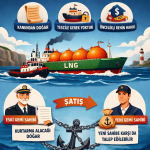
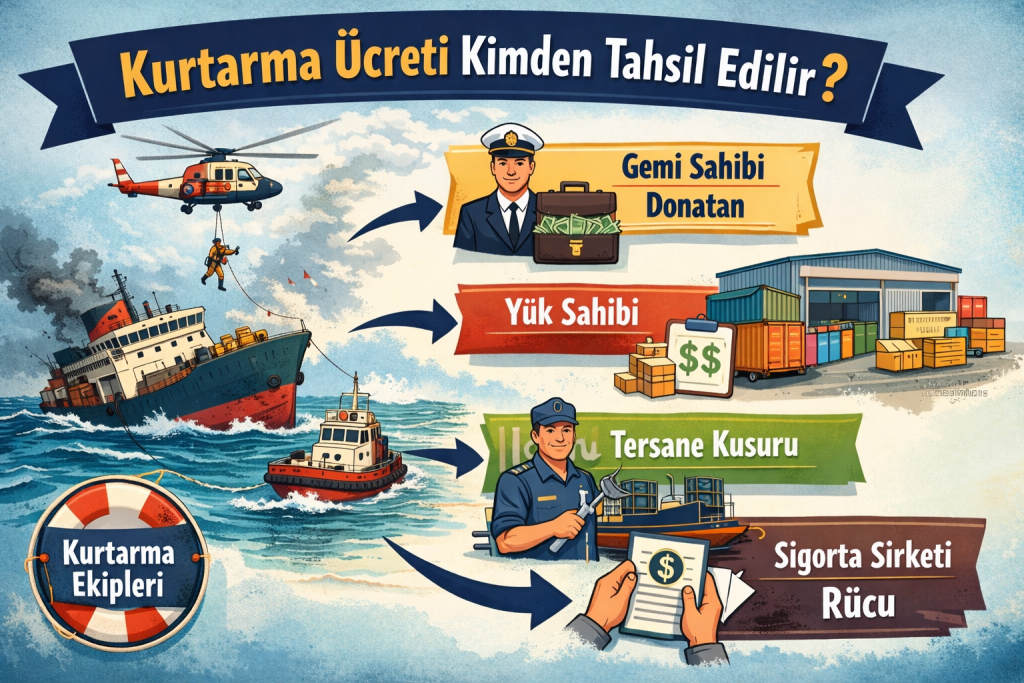
Hayır. Kurtarma ücreti, kurtarılan değerler esas alınarak belirlenir. Bu kapsamda yalnızca gemi değil; gemide bulunan yük ve yakıt (bunker) da kurtarılan değer kabul edilir. Bu nedenle kurtarma ücreti, gemi donatanından gemi ve yakıt için; yük sahibi veya gönderilenden ise yük için talep edilebilir.
Kurtarma ücretinin miktarı nasıl belirlenir?
Kurtarma ücreti, taraflar arasında önceden kararlaştırılmamışsa, Türk Ticaret Kanunu’nda yer alan ölçütler esas alınarak belirlenir. Bilirkişi raporlarında da görüldüğü üzere; geminin ve yükün kurtarıldıktan sonraki değeri, tehlikenin ağırlığı, kurtarma faaliyetinin başarısı, çevresel riskler, harcanan emek ve zaman gibi unsurlar birlikte değerlendirilir. Somut olayda, bu kriterler ışığında kurtarma ücretinin kurtarılan toplam değer üzerinden belirli bir oran esas alınarak hesaplanmasının uygun olduğu kabul edilmiştir.
Why is Expert Lawyer Support Necessary? (Istanbul – Tuzla – Gebze – Dilovası – Pendik Ports)
Disputes arising from ship salvage operations, unlike standard debt collection cases, require deep technical and legal expertise specific to maritime law. Especially in regions with heavy port traffic such as Istanbul, Tuzla, Pendik, Gebze, and Dilovası; correctly distinguishing between escort (towing) services and salvage operations, determining the scope of salvage remuneration, and clarifying who is responsible for the ship, cargo, and fuel (bunker) are of critical importance.
In such cases, correctly interpreting expert reports and structuring objections with technical justifications directly impacts the outcome of the case. Furthermore, the simultaneous and concurrent handling of negative declaratory actions and performance actions related to salvage claims requires a meticulous procedural law strategy and robust case management. Port practices, Coast Guard procedures, provisional attachment, and letters of guarantee are also integral parts of the process.
Therefore, in disputes concerning salvage and maritime claims arising in the context of Marmara Region ports, expert legal support that is proficient in local practices and can effectively interpret maritime terminology and technical reports is vitally important. 2M Law Office, with its Istanbul-based experience, serves the region encompassing Tuzla, Pendik, Gebze, and Dilovası ports, offering result-oriented legal solutions that prevent loss of rights for shipowners, bareboat charterers, cargo interests, and insurance companies.