
What should an employee subjected to mobbing do? This study, in light of decisions rendered by the Constitutional Court, Supreme Court of Appeals, Council of State, and Regional Civil/Administrative Courts, outlines the roadmap, proof methods, and rights an employee subjected to mobbing in the workplace should follow and claim.
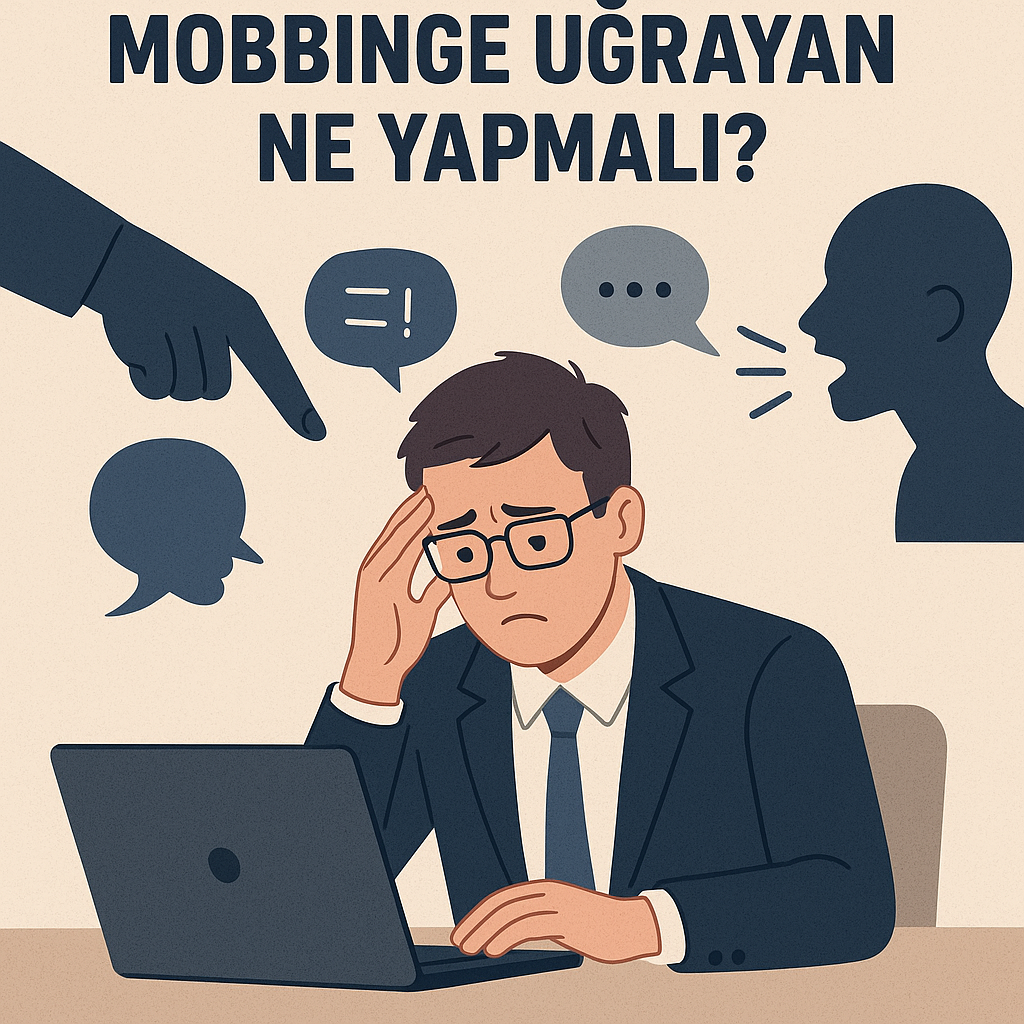
1. Situation Assessment and Definition of Mobbing
According to judicial decisions, an employee must assess whether the process they are experiencing fits the definition of mobbing before resorting to legal remedies.
Continuity and Intent: According to the decisions of the 22nd Civil Chamber of the Supreme Court of Appeals (2013/11788) and the Constitutional Court (26/12/2018), mobbing is a set of behaviors targeting a specific person, which are systematic, intentional, continuous, and aim to intimidate and marginalize.
Distinguishing Elements: Instantaneous bursts of anger, one-time insults, or general rude behaviors are not considered mobbing (Supreme Court of Appeals 9th Civil Chamber, 2017/18581). Mobbing manifests itself through actions such as spreading rumors, ignoring, mocking, assigning tasks below one’s capacity, or causing disengagement from work.
2. First Steps and Administrative Applications
After mobbing is detected, employees should take the following first steps:
Notification to the Employer and Request for Precaution: The employee should communicate the situation they are experiencing to their supervisors or the employer and request a solution. The 9th Civil Chamber of the Supreme Court (2015/3341) stated that the employer’s failure to consider complaints grants the employee the right to rightful termination.
Petition for Public Officials: Public personnel should submit a petition to the administration requesting an investigation. The Constitutional Court (20/4/2016) emphasized that it is a constitutional requirement for the administration to effectively review complaints.
ALO 170 and Psychological Support: The Istanbul Regional Administrative Court, 3rd Administrative Litigation Chamber (2019/668), stated that employees can receive support through the Ministry of Labor and Social Security Communication Center ALO 170 and that the employer must take preventive measures.
3. Evidence Collection and Burden of Proof
While the burden of proof in mobbing cases lies with the employee, “conclusive evidence” is not sought; rather, it is considered sufficient to present “facts that raise suspicion” (Supreme Court 22nd Civil Chamber, 2013/293). The burden of proof shifts to the employer after this stage.
Usable Evidence:
Medical Reports: Reports indicating psychological treatment (anxiety, depression, etc.) are among the strongest pieces of evidence (Supreme Court 9th Civil Chamber, 2021/12218).
Witness Statements: Statements from colleagues play a critical role in proving mobbing.
Written and Digital Records: Emails, camera recordings, task reassignment letters, minutes, and warning letters.
Labor Inspector Reports: Reports prepared as a result of a complaint made to the Ministry of Labor serve as evidence in court (Supreme Court 9th Civil Chamber, 2016/20451).
4. Legal Remedies and Compensation Rights
An employee who is a victim of mobbing may resort to the following legal remedies, depending on the severity of the situation and their request:
A. Termination of Employment Contract for Just Cause
The employee may terminate their employment contract for just cause, in accordance with Article 24/II of Labor Law No. 4857.
Severance Pay: An employee who terminates for just cause is entitled to severance pay (Supreme Court 22nd Civil Chamber, 2013/11788).
Notice Pay: Since the terminating party is the employee, they cannot claim notice pay (Supreme Court 9th Civil Chamber, 2017/18581).
B. Compensation Lawsuits
Non-pecuniary Damages: Non-pecuniary damages may be claimed under Article 417 of the Turkish Code of Obligations due to an attack on personal rights (Supreme Court General Assembly of Civil Chambers, 2015/2274).
Discrimination Compensation: If mobbing is carried out due to trade union reasons or based on discrimination, this compensation may also be claimed.
C. Legal Remedy for Public Officials
Public officials may file a full remedy lawsuit in the Administrative Court due to the actions of the administration.
Furthermore, there are decisions stating that a lawsuit for non-pecuniary damages can be directly filed in the Judicial Courts against the supervisor applying mobbing on the grounds of “personal fault” (BAM Ankara 25th Civil Chamber, 2017/723; Court of Cassation 4th Civil Chamber, 2016/2878).
D. Criminal Remedies
If mobbing acts have reached the level of threat, insult, or torture, a criminal complaint can be filed with the Chief Public Prosecutor’s Office in accordance with Article 118 of the Turkish Penal Code and other relevant articles (Court of Cassation 9th Civil Chamber, 2016/20451).
E. Constitutional Court Individual Application
If no result is obtained after exhausting all administrative and judicial remedies, an individual application can be made to the Constitutional Court within the scope of the right to protect one’s material and moral existence (CC, 20/4/2016). However, the CC requires that the remedy of compensation must first be exhausted in lower courts (CC, 7/3/2019).
5. Additional Information and Warnings Obtained from Secondary Sources
The secondary information contained in the decision texts highlights the following points regarding the details of the process:
Employer’s Duty of Care: The employer is obliged to protect not only the physical but also the psychological health of the employee. Violation of this obligation (for example, if associated with conditions such as stress-induced heart attack or cerebral hemorrhage) may give rise to liability for compensation (Court of Cassation GCA 2023/226; Istanbul 3rd Civil Court of Commerce 2021/850).
Witness Examination Procedure: The rejection or limitation of witness examination requests by courts is considered a “violation of the right to a fair hearing” and constitutes grounds for reversal. The employee must insist on their witnesses being heard (9th Civil Chamber of the Supreme Court, 2022/2629).
Resignation Letter: When resigning, the employee must clearly state the reason for mobbing in their letter. If the resignation is made with general statements or without providing a reason, the right to severance pay may be lost (9th Civil Chamber of the Supreme Court, 2024/1978).
Statute of Limitations: Attention should be paid to the statute of limitations periods for damages caused by mobbing. In cases where physical/psychological harm develops, the statute of limitations may begin from the date the course of the illness is completed (Supreme Court General Assembly, 2021/222). An article recommendation.
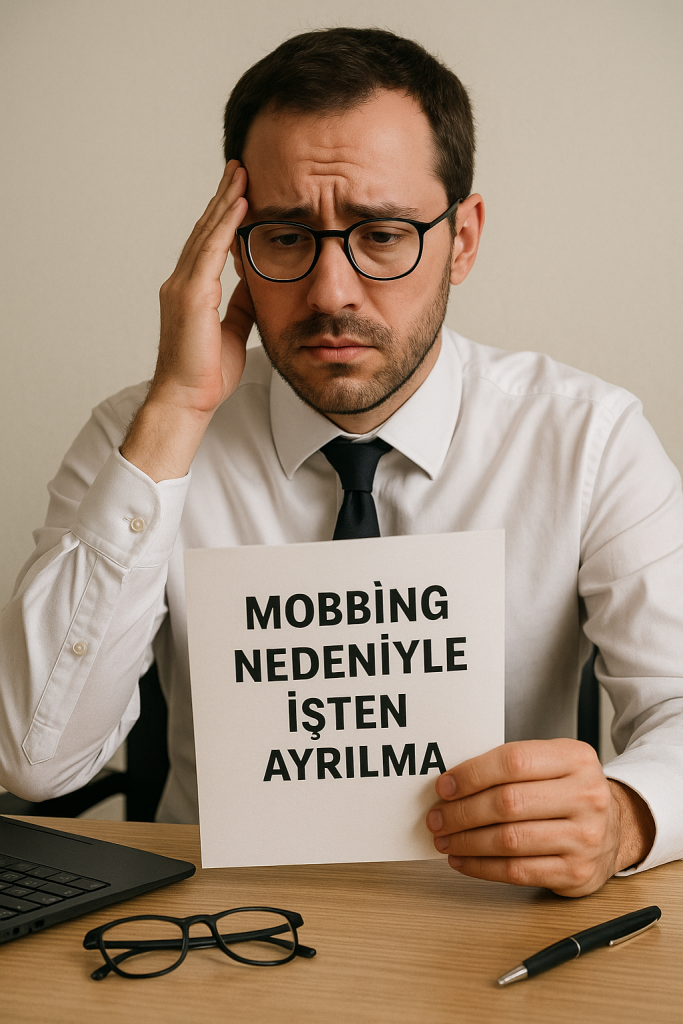
Why is Expert Legal Support Necessary? (Istanbul – Tuzla – Pendik – Kartal – Gebze)
Termination for just cause due to mobbing, as emphasized by the Supreme Court, is a highly technical process, with a heavy burden of proof, and allows no room for procedural errors. Critical points such as the systematic nature, continuity, targeting element of mobbing, the quality of evidence, and the proper preparation of the termination notice directly determine the outcome of the case. Therefore, it is of vital importance for an employee who wishes to terminate their employment contract based on a mobbing claim to seek professional legal support.
Mobbing disputes are frequently observed, particularly in areas with intense business activity such as Istanbul, Tuzla, Pendik, Kartal, Maltepe, Kadıköy, Ataşehir, Ümraniye, Gebze, Dilovası, and Çayırova, and a wrong step can lead to an employee losing their severance pay, moral damages, and other rights.
2M Hukuk Law Office protects the employee’s rights in the strongest possible way by providing professional support on issues such as the proof process of mobbing allegations, witness management, evidence strategy, preparation of termination notices for just cause, notification to the employer, management of the lawsuit process, and effective presentation of claims for moral damages.
Expert lawyer support is essential for the following reasons:
The mobbing allegation must be supported by concrete evidence
For the burden of proof to shift to the employer, the criteria for prima facie proof must be correctly established
If the notice prepared for just termination is written incorrectly, the employee may lose all their rights
Witnesses must be chosen correctly and their statements must be taken in accordance with procedure
Determining the amount of moral damages requires technical legal knowledge
Legal arguments must be developed against the employer’s defenses and counter-claims
Mobbing is not just a workplace issue; it is a serious violation of rights that affects an employee’s professional future, health, and reputation. Therefore, proceeding with an expert lawyer from start to finish is the most accurate and safest approach.