
Introduction
What is the Required Vote Ratio for Installing an Air Conditioner Unit on the Building’s Exterior Facade? What Happens if an Air Conditioner Unit is Installed Without Permission? This study analyzes the legal dimension of installing air conditioner units on the exterior facades of buildings, which are common areas, a frequently encountered problem in collective living spaces such as apartments and residential complexes, in light of Supreme Court and other lower court decisions. The study aims to reveal whether permission is required for this action, what legal rights other floor owners have in case of unauthorized installation, and the judiciary’s consistent approach to this matter. The analyses are primarily based on the relevant articles of Law No. 634 on Condominium Ownership (KMK) and established Supreme Court precedents.
1. Permission Requirement and Legal Basis for Installing an Air Conditioner Unit
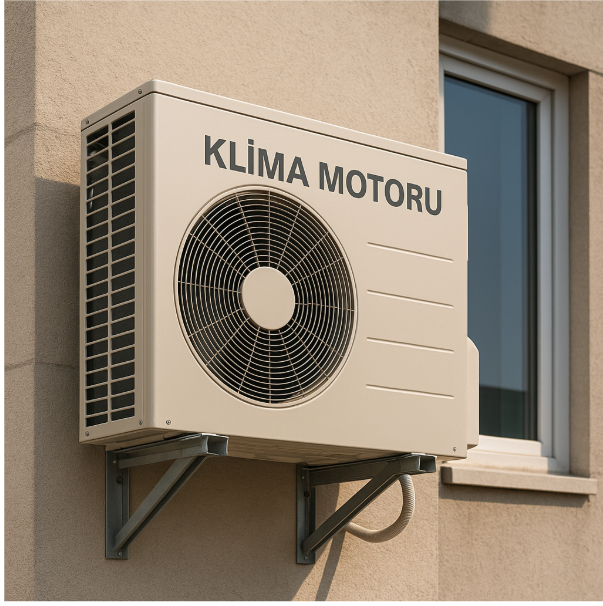
The installation of an air conditioner outdoor unit on the exterior facade of the building is considered an action subject to the permission of the condominium owners in all decisions, without exception. The main legal basis for this obligation is Article 19 of the Condominium Law. This article, which the Court of Cassation refers to in almost all its decisions, clearly sets out the rule, especially after the amendment made by Law No. 5711. In a decision by the Court of Cassation, it was stated as: “Unless one of the condominium owners obtains the written consent of four-fifths of all condominium owners, they cannot carry out construction, repair, installation, or alteration in the common areas of the main property.” (Court of Cassation 20th Civil Chamber – 2018/4651; Court of Cassation General Assembly of Civil Chambers – 2009/254 and many other decisions) According to this provision, since the exterior facade of the building is considered a “common area,” the installation of an air conditioner outdoor unit in this area constitutes an “installation,” and requires the written consent of four-fifths of all condominium owners.
2. Rights of Other Condominium Owners and Recourse Options
In the absence of a board of co-owners’ decision taken by the required 4/5 majority or written consent, if an air conditioner outdoor unit is installed on the exterior facade, other co-owners have the right to object to this situation and resort to legal remedies. Co-owners can file a lawsuit in the Civil Court of Peace with demands for “prevention of interference with common areas” and “restoration of construction contrary to the project”. The Supreme Court of Appeals, while overturning a lower court’s decision to dismiss the case, used the following expressions: “…it was not deemed correct to rule for the dismissal of the case with a written justification, whereas it should have been decided to prevent interference with the common area and to remove the air conditioner outdoor unit.” (Supreme Court of Appeals 18th Civil Chamber – 2011/1530) This indicates that in case of unauthorized installation, the lawsuit filed by other co-owners will most likely result in their favor, and the court will rule for the removal of the air conditioner.
3. Important Distinctions in the Supreme Court of Appeals’ Approach (Balcony Interior / Exterior Facade Difference):
The established jurisprudence of the Supreme Court of Appeals makes an important distinction based on where the air conditioner outdoor unit is installed. This distinction constitutes the most critical detail of the application:
Installation Within Independent Unit Boundaries: It is generally allowed for unit owners to install air conditioners on the window or inner part of their balcony within their independent units, provided that it does not disturb other neighbors (noise, water leakage, etc.). In this case, the 4/5 consent of the unit owners is not required. “Even if not included in the main property’s project, unit owners are permitted to place air conditioning units on their independent unit’s window and balcony, provided that it does not disturb their neighbors.” (Supreme Court 18th Civil Chamber – 2012/9330)
Installation on the Exterior Facade, Which is a Common Area: However, installing the air conditioner unit on common areas such as outside the balcony railing, on a parapet wall, or directly on the building’s exterior wall is strictly considered contrary to the Condominium Law and is subject to the condition of 4/5 written consent.
4. Importance of the Management Plan and Architectural Project:
In addition to the Condominium Law, the building’s management plan is also binding. The management plan may contain stricter provisions disallowing additions that would spoil the building’s aesthetics. Furthermore, whether the installation performed contradicts the building’s approved architectural project is also an important evidence in lawsuits. It has been emphasized that in cases where “…no renovation project related to the intervention or document proving the consent of the unit owners could be presented to the file,” the lawsuit should be accepted. (Supreme Court 5th Civil Chamber – 2023/4436)
Conclusion
The conclusions reached in light of the judicial decisions examined are clear:
Is Permission Required? Yes, for the installation of an air conditioner unit on the outer wall, parapet, or outside of balcony railings, which are considered common areas of the building, the written consent of four-fifths (4/5) of all floor owners is absolutely necessary.
What Can Other Floor Owners Do? Any floor owner may object to an installation made without obtaining this consent. With a lawsuit to be filed in the Civil Court of Peace, they can demand the removal of the air conditioner unit installed without permission and the restoration of the common area to its original state.
What is the Approach of the Court of Cassation? The Court of Cassation interprets Article 19 of the Condominium Law very strictly. It finds any installation on the common exterior facade without 4/5 written consent unlawful and rules for its removal. The only exception is if the air conditioner is installed inside the owner’s balcony or on their window, in a way that does not disturb neighbors.
Consequently, to avoid future legal disputes and expenses, it is essential for floor owners to check the management plan before installing an air conditioner unit on the common exterior facade of the building and to ensure compliance with the 4/5 written consent requirement stipulated by law.
Why is Tuzla Lawyer Support Necessary?
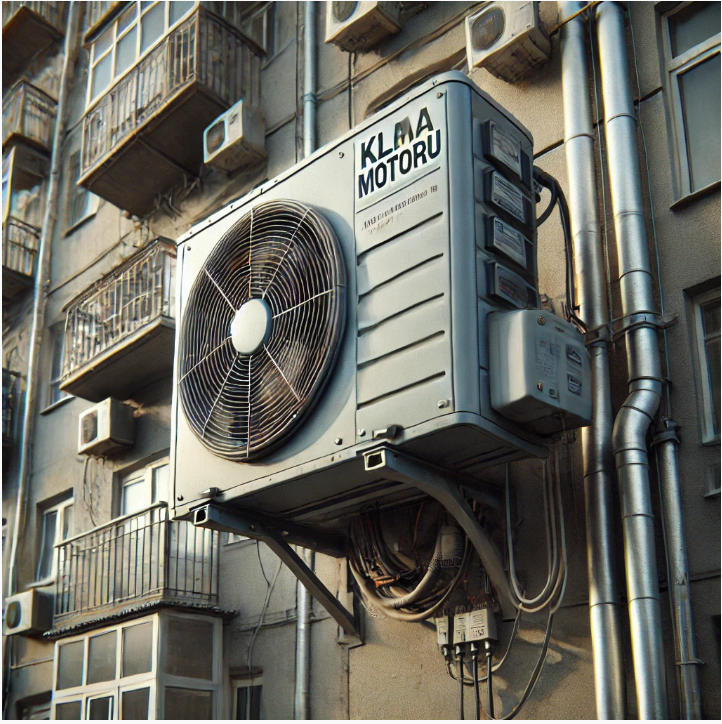
Unauthorized installation of an air conditioner motor on the exterior facade is not merely a technical issue; it is also a **condominium dispute** that entails serious **legal responsibilities**. Especially in areas with a high concentration of multi-story buildings and collective housing complexes, such as **Tuzla**, **Pendik**, **Kartal**, **Maltepe**, and **Gebze**, these types of practices frequently lead to legal disputes. Therefore, in resolving disputes arising in these regions, working with a **Tuzla lawyer** who is knowledgeable about local practices and specialized in the Condominium Law provides a significant advantage.
An expert lawyer in Tuzla can guide you correctly on the following matters: By determining whether the installation was in a common area or within the boundaries of an independent section, they frame the process legally; analyzes the restrictive provisions in the management plan and assesses whether they hinder the application; forms the strongest arguments in line with Supreme Court precedents, in case a lawsuit is filed for the removal of an air conditioner unit or in defense against such a lawsuit; prepares detailed petitions based on grounds such as non-compliance with the project or intervention contrary to neighborhood law. Furthermore, a lawyer familiar with local practices and court approaches in Tuzla can timely and effectively utilize the necessary appeal routes against possible arbitrary rejection decisions that may be encountered in such cases in Civil Courts of Peace. In conclusion, an seemingly minor application like installing an air conditioner unit on the exterior facade can lead to serious and costly judicial processes. Therefore, to both secure the process as an owner and avoid litigation risk, obtaining Tuzla lawyer, Pendik Lawyer, Gebze lawyer, Aydınlı Lawyer, Orhanlı Lawyer, Tepeören Lawyer, Çayırova Lawyer support is crucial.