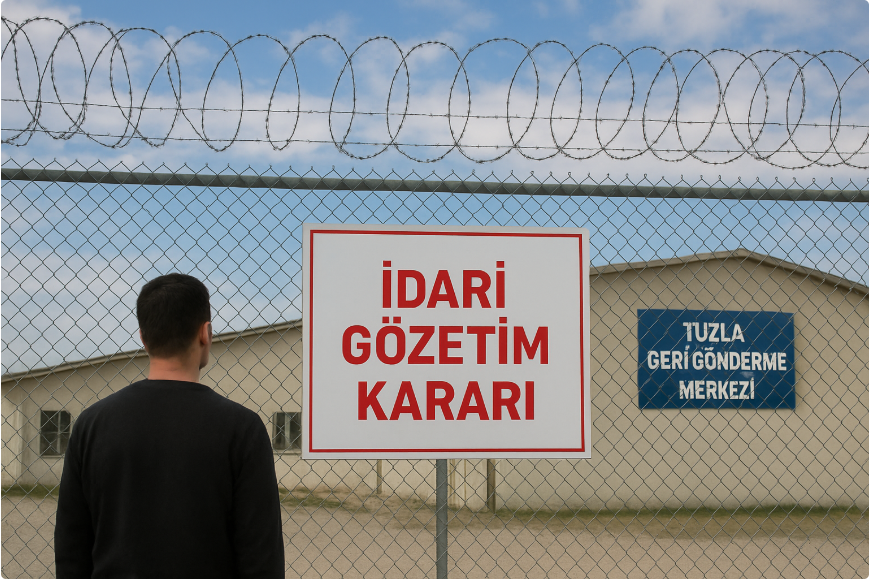
Introduction
In the period before Law No. 6458 on Foreigners and International Protection (YUKK), the absence of a legal framework for placing foreigners under administrative detention, especially the lack of an effective appeal mechanism against this measure, created a significant legal void. This deficiency led the European Court of Human Rights (ECtHR) to issue numerous judgments against Turkey for violations. With the entry into force of YUKK, an appeal mechanism against administrative detention decisions was established, and this right was legally guaranteed. This study examines in detail how the right to appeal against administrative detention can be exercised, including the authority to apply to, the time limits, and the functioning of the process, in light of the existing literature.
1. Right to Appeal Administrative Detention Decision and Application Authority
Literature, while acknowledging that an administrative detention decision is an administrative act by its nature, emphasizes that the authority for objection against this decision is specifically determined, unlike general administrative judiciary. An administrative detention decision is an administrative act because it possesses elements such as “being issued by governorships, which are public institutions; being issued unilaterally by the administration independently of the person to be placed under detention as a result of this act; and this act being implemented ex officio” . However, the remedy against this administrative act is not administrative courts, but peace criminal judgeships.
Pursuant to Articles 57/6 and 68/7 of the YUKK, “the person placed under administrative detention, or their legal representative or lawyer, may apply to the peace criminal judge against the administrative detention decision”. The rationale for this regulation was stated as “peace criminal courts being more widespread in Turkey than administrative courts for supervision to be effective”. Although this situation is criticized in doctrine, it reflects the legislator’s aim to provide effective supervision.
2. Application Period for Administrative Detention Decision
The law does not stipulate a specific period for objections to be made to the peace criminal judgeship against an administrative detention decision. This situation is clearly stated in the literature: “Objections to the peace criminal judgeship against an administrative detention decision are not subject to a specific period in the YUKK. Therefore, as long as the person is held under administrative detention within the periods specified in the YUKK, they may object to the administrative detention decision.” This flexibility ensures that this measure, which restricts personal liberty, can be subject to judicial review at every stage of its continuation.
3. Functioning of the Objection Process to the Administrative Detention Decision
The objection process is structured to facilitate the foreigner’s access to justice:
Applicants: The objection can be made by the person placed under administrative detention, their legal representative, or their lawyer
Application Procedure: The petition can be submitted directly to the competent criminal judgeship of peace, or it can be presented to the administration. “If the petition is submitted to the administration, it is immediately forwarded to the competent criminal judge of peace”
Review Period: The criminal judge of peace is obliged to conclude the application “within five days“. However, one source states that “considering the time required for processes such as sending documents from the relevant governorship, it is not practically possible for the criminal judge of peace to make a decision within 5 days”
Effect of Objection: The submitted application does not suspend the implementation of the administrative detention measure. “The filing of the application does not suspend the administrative detention process”
Obligation to Inform: If the foreigner is not represented by a lawyer, “they will be informed about the outcome of the decision, the objection procedures, and the deadlines”. It is essential that this information is provided in a language the person understands.
4. Scope of Review by the Criminal Judgeship of Peace
The criminal judgeship of peace, when examining an objection, does not only conduct a formal review but also reviews the merits of the decision. The judgeship “takes into account many issues such as the procedure for making the decision, whether the administrative detention exceeds the period stipulated in the law, whether the administrative detention is proportionate, and whether there is a necessity for the continuation of the administrative detention”. The review can also be carried out in terms of the elements of the administrative act: authority, form, reason, subject matter, and purpose. For example, a court decision stating “it has been decided that the administrative detention decision is unlawful on the grounds that its justification was not provided with concrete reasons, and there is no evidence or indication that administrative detention is necessary” demonstrates this comprehensive review.
5. Nature of the Decision and Subsequent Legal Remedies
The decision rendered by the criminal judge of peace upon an objection is final according to YUKK. “The decision of the criminal judge of peace is final”. No other ordinary legal remedy can be sought against this decision.
However, this finality does not mean that all legal remedies have been exhausted:
Re-application: Even if the objection is rejected, “a new application can be made to the criminal judge of peace on the grounds that the conditions for administrative detention have ceased to exist or have changed”
Individual Application to the Constitutional Court: The finality of the criminal judgeship of peace’s decision opens the way for an individual application to the Constitutional Court (AYM). “It will be possible to bring the decisions of the criminal judgeships of peace regarding objections to administrative detention decisions before the Constitutional Court as a matter of individual application”
Full Remedy Action: The Constitutional Court (AYM) evaluates whether other remedies have been exhausted before examining individual applications. Filing a full remedy action in the administrative court for compensation of damages incurred due to unlawful administrative detention may be considered a prerequisite. “In its recent decisions regarding allegations of violation of personal liberty and security; … the Constitutional Court rules that the application is inadmissible due to non-exhaustion of remedies if an individual application is made to the Constitutional Court without filing a full remedy action after the administrative detention decision is lifted.”
Conclusion
Sources in the literature agree that an effective objection mechanism against administrative detention has been established with the YUKK. This right can be exercised by the foreign national under administrative detention, their legal representative, or their lawyer, without being subject to any time limit, as long as the detention continues. Although the application authority may seem contrary to the nature of an administrative act, it is the criminal judgeship of peace, which the legislator has determined for the purpose of effective supervision. The criminal judge of peace examines the application on its merits within 5 days and renders a final decision. It is an important procedural characteristic that the application does not suspend administrative detention. After the final decision of the criminal judgeship of peace, if conditions change, re-application or individual application to the Constitutional Court pathways are open. However, it should not be forgotten that before applying to the Constitutional Court, the remedy of filing a full remedy action in the administrative court for compensation of damages based on an allegation of unlawfulness may need to be exhausted. An article recommendation.
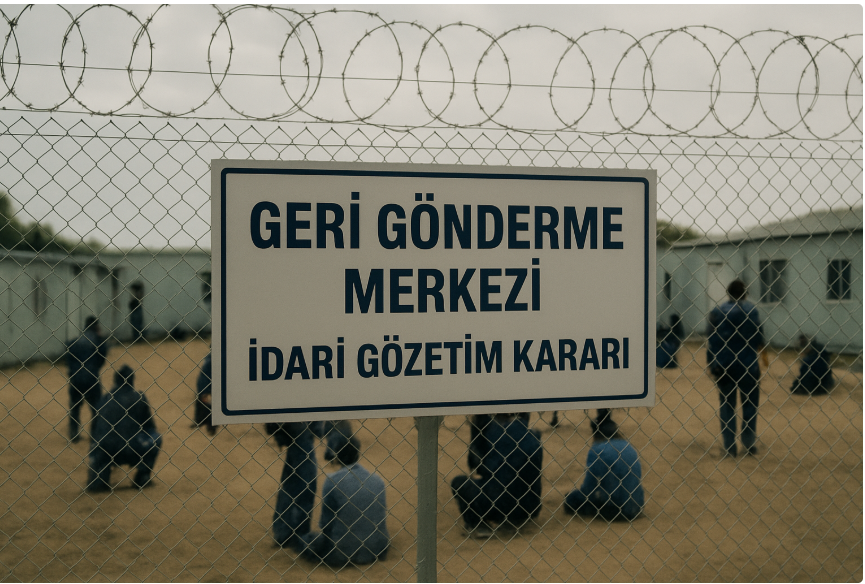
Why is Expert Lawyer Support Necessary?
The application process against an administrative detention decision, although seemingly simple in form, is a highly complex legal process because it directly concerns fundamental human rights such as the right to liberty and security. Especially in regions such as Istanbul, Tuzla Repatriation Center, Kartal, Pendik, Tepeören, Gebze, Çayırova, and Darıca, foreigners who are actually under administrative detention may suffer loss of rights due to their lack of knowledge of the technical details of the process, language barriers, and unfamiliarity with legal terminology.
Therefore, an expert lawyer’s involvement in the process is of great importance both in terms of the form and content of the application and in ensuring an effective defense before the Magistrate Criminal Court.
In many cases, lawyers not only submit an objection petition simply as “objection to administrative detention” but also develop a defense strategy regarding the following:
whether there are concrete reasons on which the administrative detention decision is based,
whether the detention period exceeds the legal limits,
whether alternative measures (such as administrative fines, obligation orders, or residence at a specific address) are applicable,
whether the health, family unity, or humanitarian conditions of the person held under administrative detention are taken into consideration.
Lawyers operating in the vicinity of Tuzla Removal Centre, including Pendik, Kartal, Tepeören, Gebze, Çayırova and Darıca, are intimately familiar with the deficiencies in the justification of administrative detention decisions in practice, communication problems, and procedural differences among penal judgeships of peace. This regional expertise ensures both the accurate preparation of the petition’s content and the swift conclusion of the process.
Furthermore, in case of the rejection of the objection, the legal assessments to be made at stages such as reapplication, filing a full remedy lawsuit, or individual application to the Constitutional Court can only be soundly carried out by a legal professional proficient in the subject matter.
In short, the objection process to administrative detention decisions is not merely about submitting a petition, but involves a multi-layered judicial review mechanism. Therefore, especially for foreigners held at the Tuzla Removal Center, the support of an experienced administrative law or immigration law attorney is critically important for regaining freedom.