
Legal Basis of Deportation
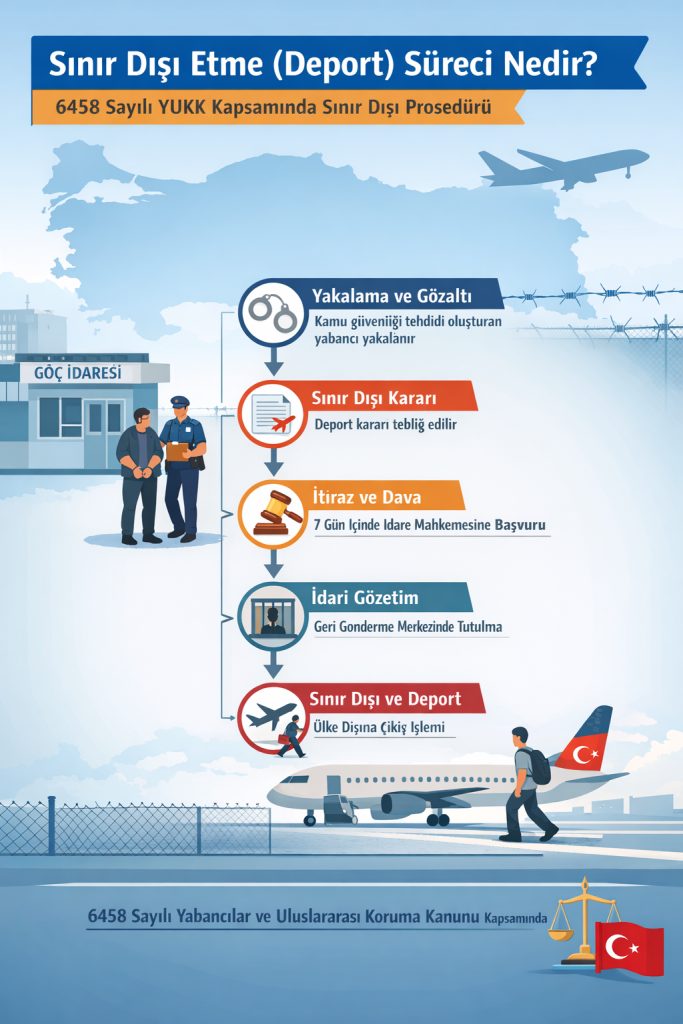
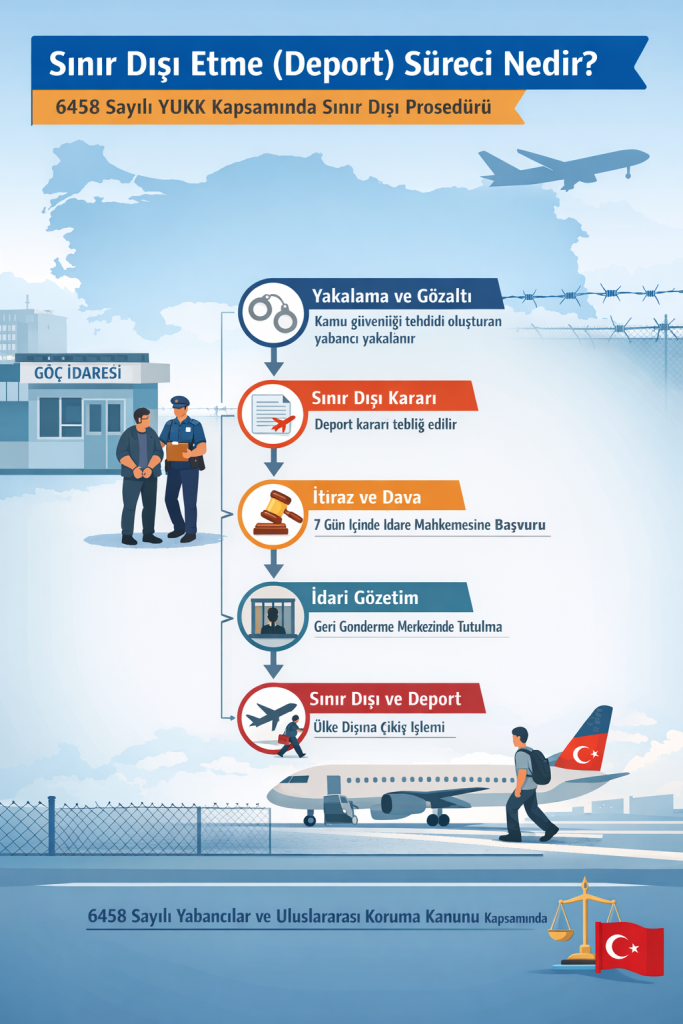
The deportation process in Turkey is regulated between articles 52 and 60 of the Law on Foreigners and International Protection No. 6458 (YUKK), specifically in the fourth section titled ‘Deportation’ within the second part titled ‘Foreigners’. These regulations cover all stages of the process, such as the issuance and implementation of deportation decisions, appeal procedures, administrative detention, voluntary return, and collection of expenses.
Deportation Decision and Competent Authority
A deportation decision is implemented when the reasons specified in Article 54 of the YUKK occur and, according to the clear provision of the law, can only be made by governorships (valiliks). The evaluation and decision-making phase of the decision must be completed within a maximum of 48 hours. If one or more of the conditions listed in the law occur, it is mandatory for the governorship to make a deportation decision, subject to the exceptions specified in Article 55.
Foreigners Subject to a Deportation Decision (YUKK Art. 54)
Under Article 54 of the YUKK, a deportation decision shall be made concerning those who are deemed subject to deportation pursuant to Article 59 of the Turkish Penal Code, those who are managers, members, or supporters of a terrorist organization or a criminal organization established for the purpose of committing crimes, those who use forged documents or provide false information in entry, visa, or residency procedures in Turkey, those who obtain their livelihood through illegal means during their stay in Turkey, and those who pose a threat to public order, public security, or public health.
Furthermore, those who overstay their visa by more than ten days, or whose visa has been cancelled; those whose residence permit has been cancelled; those who continue to stay in the country for more than ten days after their residence permit has expired without an acceptable reason; those who work without a work permit; those who violate the legal entry or exit provisions for Turkey; those who enter the country despite having an entry ban to Turkey; persons whose international protection application has been rejected or whose status has ended; and those whose residence extension application has been rejected and who do not leave Turkey within ten days are also subject to deportation. A deportation decision can also be made regarding persons deemed by international institutions and organizations to be linked to terrorist organizations.
In this context, a deportation decision may also be made at any stage of the international protection procedures concerning international protection applicants or international protection status holders who are deemed to fall under subparagraphs (b), (d), and (k) of the first paragraph of Article 54.
Foreigners Not Subject to a Deportation Decision (LFIP Art. 55)
Pursuant to Article 55 of the Law on Foreigners and International Protection (LFIP), no deportation decision is made regarding some individuals. Those who face the risk of death penalty, torture, or inhumane treatment in the country to which they would be deported are considered within this scope. Furthermore, those whose travel is risky due to serious health problems; individuals undergoing ongoing treatment for life-threatening diseases and for whom no treatment is available in the country to which they would be sent; victims of human trafficking benefiting from the victim support process; and victims of psychological, physical, or sexual violence are not deported until their treatment is completed.
For these individuals to remain in the country, a humanitarian residence permit may be granted under Article 46 of the Law on Foreigners and International Protection (YUKK), and an obligation to reside at a specific address or report regularly may be imposed. If these conditions cease to exist, a deportation decision may be made against them.
Legal Remedy Against Deportation Decision
The deportation decision, along with its grounds, is served on the foreigner, their legal representative, or their lawyer. If the foreigner is not represented by a lawyer, they are informed about the consequences of the decision, the appeal procedures, and the deadlines.
The foreigner or their representative may apply to the administrative court within seven days of the notification of the decision. When an application is made, the authority that issued the deportation decision is also informed. The court finalizes the applications within fifteen days, and the decision rendered is final. Subject to the foreigner’s consent, the deportation process is not implemented during the lawsuit period or until the judicial proceedings are concluded.
Process of Invitation to Leave Turkey
Persons against whom a deportation decision has been made may be granted a period of up to thirty days, not less than fifteen days, to leave Turkey. These individuals are issued a fee-exempt “Exit Permit Document,” and an entry ban may not be applied to those who leave the country within the given period. However, an administrative detention decision is applied to foreigners who do not leave the country within the specified period.
Individuals who pose a flight risk, use forged documents, violate legal entry or exit rules, pose a threat to public order or security, or attempt to obtain a residence permit with false documents are not invited to leave Turkey and may be subjected to direct administrative detention.
Administrative Detention and Removal Centers
An administrative detention decision may be taken by the governorate regarding individuals who are subject to a deportation decision and are at risk of absconding, use forged documents, fail to comply with their departure period, or pose a threat to public order. These individuals are held in Removal Centers.
The administrative detention period is a maximum of six months. However, if the foreign national does not cooperate or fails to provide the necessary information and documents, this period can be extended by another six months. The governorate assesses monthly whether the continuation of administrative detention is necessary.
Alternatives to Administrative Detention
Instead of administrative detention, alternative obligations such as residing at a specific address, reporting, family-based return, return counseling, volunteering in public interest services, providing a guarantee, or electronic monitoring may be applied. These obligations can be applied for a maximum period of 24 months, and if these obligations are not complied with, an administrative detention decision can be taken again.
An appeal can be made to the criminal judge of peace against the electronic monitoring decision, and the judge finalizes the appeal within five days.
Voluntary Return Practice
In-kind or financial support may be provided by the Directorate General of Migration Management to irregular migrants who have been issued a deportation decision and wish to voluntarily return to their country of origin, if deemed appropriate. This process can be carried out in cooperation with international organizations and civil society organizations.
Appeal Against Administrative Detention Decision
Administrative detention decisions and extension decisions are served on the foreigner or their representative. The foreigner, their legal representative, or their lawyer may apply to the criminal judge of peace. The application does not stop the administrative detention, and the judge concludes the review within five days. A new application can be made on the grounds that the conditions have changed. Legal aid, including a lawyer, may be provided upon request to individuals who cannot afford legal fees.
Implementation of the Deportation Decision
Foreigners held in removal centers are taken to border gates by law enforcement units. Individuals to be deported without being transferred to a removal center are also taken to border gates in coordination with the relevant authorities. Cooperation with international organizations and the authorities of the relevant country may be established during deportation procedures.
Travel Expenses of Deported Foreigners
It is essential that the foreigner to be deported covers their own travel expenses. If they have sufficient funds, the expenses are collected from them. If their funds are insufficient or non-existent, the expenses are covered by the state, and an appropriate amount is left to the foreigner. If the expenses are not reimbursed, the foreigner may not be allowed to enter Turkey.
Deportation expenses are considered public receivables and are collected according to the provisions of Law No. 6183, and the statute of limitations does not apply as long as the foreigner is abroad.
Employer’s Responsibility and Collection of Expenses
In case of deportation of foreigners working without a permit, the employer or the employer’s representative is obliged to cover the accommodation, return, and health expenses of the foreigner and their family, if any. Employers who employ foreigners without a work permit will be subject to an administrative fine for each foreigner. If these expenses are covered by the state, the relevant amounts will be collected from the employer.
Frequently Asked Questions
Türkiye’de sınır dışı etme kararı kim tarafından alınır ve ne kadar sürede verilir?

Türkiye’de sınır dışı etme kararı yalnızca valilikler tarafından alınabilir. 6458 sayılı Yabancılar ve Uluslararası Koruma Kanunu’nun 54. maddesi kapsamında değerlendirme yapılır ve karar süreci en fazla 48 saat içinde tamamlanır. Valilik, kanunda belirtilen sınır dışı sebeplerinden birinin varlığını tespit ettiğinde, 55. maddede yer alan istisnalar saklı kalmak kaydıyla sınır dışı kararı almakla yükümlüdür.
Hangi durumlarda yabancılar hakkında sınır dışı etme kararı verilir?
Terör veya suç örgütü bağlantısı bulunanlar, sahte belge kullananlar, geçimini meşru olmayan yollardan sağlayanlar, kamu düzeni veya güvenliği açısından tehdit oluşturanlar, vize veya ikamet süresini ihlal edenler, çalışma izni olmadan çalışanlar, Türkiye’ye yasal giriş veya çıkış kurallarını ihlal edenler, hakkında giriş yasağı bulunmasına rağmen ülkeye gelenler ve uluslararası koruma statüsü sona eren kişiler hakkında sınır dışı kararı alınabilir. Bu durumlar YUKK m.54’te ayrıntılı şekilde düzenlenmiştir.
Hangi yabancılar hakkında sınır dışı etme kararı uygulanmaz?
Sınır dışı edileceği ülkede ölüm cezası, işkence veya insanlık dışı muamele riski bulunan kişiler; ciddi sağlık sorunları nedeniyle seyahat etmesi riskli olanlar; hayati tedavisi devam eden ve gönderileceği ülkede tedavi imkânı bulunmayan kişiler; insan ticareti mağdurları ve psikolojik, fiziksel veya cinsel şiddet mağdurları hakkında sınır dışı kararı uygulanmaz. Bu kişiler için insani ikamet izni verilmesi mümkündür.
Sınır dışı kararına karşı dava açma süresi ne kadardır?
Sınır dışı kararı yabancıya veya avukatına tebliğ edildikten sonra 7 gün içinde idare mahkemesinde iptal davası açılabilir. Mahkeme başvuruyu 15 gün içinde sonuçlandırır ve karar kesindir. Yabancının rızası saklı kalmak kaydıyla dava süresi içinde veya yargılama devam ederken sınır dışı işlemi uygulanmaz.
Türkiye’yi terk etmesi için yabancıya süre verilir mi?
Sınır dışı kararı alınan kişilere genellikle Türkiye’yi terk etmeleri için 15 günden az olmamak üzere en fazla 30 gün süre tanınabilir ve çıkış izin belgesi verilir. Ancak kaçma riski bulunanlar, sahte belge kullananlar, kamu güvenliği açısından tehdit oluşturanlar veya yasal giriş-çıkış kurallarını ihlal eden kişiler için bu süre uygulanmayabilir.
İdari gözetim nedir ve geri gönderme merkezinde ne kadar süre kalınır?
İdari gözetim, sınır dışı edilecek yabancının geri gönderme merkezinde tutulmasıdır. Süre en fazla 6 ay olup, yabancının iş birliği yapmaması veya gerekli bilgi ve belgeleri vermemesi halinde 6 ay daha uzatılabilir. Valilik idari gözetimin devam gerekliliğini her ay düzenli olarak değerlendirir.
İdari gözetim yerine uygulanabilecek alternatif tedbirler nelerdir?
İdari gözetim yerine belirli adreste ikamet etme, bildirimde bulunma, teminat gösterme, elektronik izleme, geri dönüş danışmanlığı, kamu yararına gönüllü hizmet veya aile temelli geri dönüş gibi yükümlülükler uygulanabilir. Bu alternatif yükümlülüklerin süresi en fazla 24 ay olabilir ve yükümlülüklere uyulmaması halinde idari gözetim kararı yeniden uygulanabilir.
İdari gözetim kararına nasıl itiraz edilir?
İdari gözetim altına alınan kişi, yasal temsilcisi veya avukatı sulh ceza hâkimine başvurabilir. Başvuru idari gözetimi durdurmaz ve hâkim başvuruyu 5 gün içinde karara bağlar. İdari gözetim şartlarının değiştiği ileri sürülerek yeniden başvuru yapılması da mümkündür.
Sınır dışı edilme masraflarını kim karşılar?
Sınır dışı edilme masraflarının yabancı tarafından karşılanması esastır. Yabancının ödeme gücü yoksa masraflar devlet tarafından karşılanır ve kamu alacağı olarak tahsil edilir. Masraflar ödenmediği sürece Türkiye’ye giriş izni verilmeyebilir. İzinsiz çalışan yabancılar bakımından sınır dışı masrafları işveren veya işveren vekilinden tahsil edilir.
Gönüllü geri dönüş nedir ve nasıl uygulanır?
Hakkında sınır dışı kararı bulunan yabancı menşe ülkesine gönüllü olarak dönmek isterse, uygun görülmesi halinde ayni veya nakdi destek sağlanabilir. Gönüllü geri dönüş süreçleri uluslararası kuruluşlar, kamu kurumları ve sivil toplum kuruluşları ile iş birliği içinde yürütülmektedir.
Why is Expert Lawyer Support Needed in the Deportation Process?
Deportation, administrative detention, and return center processes are complex legal procedures involving short application periods, technical legislative provisions, and a serious risk of loss of rights. Especially in deportation procedures carried out under Law No. 6458 on Foreigners and International Protection, missing deadlines or making incorrect legal applications for the annulment of administrative decisions can lead to irreversible consequences.
In processes handled by an expert immigration lawyer, the legal basis of the deportation decision is examined, necessary applications are made for the removal of restriction codes, objection processes against administrative detention decisions are followed, and lawsuits to be filed in administrative courts are strategically planned. Furthermore, the protection of the fundamental rights of foreigners held in return centers, requests for alternative obligations, and the evaluation of international protection applications are among the legal procedures requiring expertise.
2M Hukuk Avukatlık Bürosu, based in Istanbul, provides professional legal support regarding immigration law, cancellation of deportation procedures, processes at removal centers, removal of restriction codes, and objections to administrative detention decisions. The firm offers consultancy and litigation services to individual and corporate clients in the field of immigration law throughout Istanbul, Tuzla, Pendik, Kartal, Maltepe, and the Anatolian Side.
It is important that the process is managed by an expert lawyer to prevent loss of rights in deportation procedures and administrative detention processes.