Introduction
Work accidents on ships involve a complex legal process due to the unique working conditions of the maritime sector, the intersection of different legal regulations, and their potential international nature. For the seafarer involved in the accident or their beneficiaries to fully and completely receive their rights, it depends on taking the correct legal steps in a timely manner. This study analyzes various decisions made by the Supreme Court, Regional Courts of Appeal, and Courts of First Instance to reveal the legal roadmap that victims should follow after work accidents on ships. The study aims to offer a comprehensive perspective by supporting key stages such as accident determination, identification of responsible parties, litigation processes, and compensation claims with important excerpts from judicial decisions.
The examined court decisions indicate that the legal process to be followed after a work accident on ships has a multi-stage structure involving different legal disciplines. The process fundamentally includes the following steps:
1. Determination of Work Accident on Board and Institutional Notifications
The first and most fundamental step of the legal process is for the incident to be legally defined as a “work accident.” This determination forms the basis for all subsequent claims.
SGK Process: In accordance with Law No. 5510, the employer has an obligation to report the accident immediately to law enforcement and to the Social Security Institution (SGK) within a maximum of three business days. If the SGK does not accept the incident as a work accident, the victim must file a “work accident determination lawsuit” in the Labor Court. As emphasized by the 21st Civil Chamber of the Supreme Court of Appeals, “For the Institution to be able to pay income to beneficiaries, it is primarily dependent on the harmful insurance event being properly determined as a work accident. This aspect is the preliminary issue that needs to be clarified first in the lawsuit.” (Supreme Court of Appeals – 21st Civil Chamber – 2012/8768-2012/8739).
Determination Lawsuit: The work accident determination lawsuit is filed not only against the SGK but also against the employer, and this lawsuit can be made a preliminary issue for subsequent compensation lawsuits.
2. Competent Court and Types of Lawsuits
The competent court and type of lawsuit vary depending on the nature of the accident and the rights claimed.
Labor Courts: As a rule, material and moral compensation lawsuits filed by a seafarer against their employer are heard in Labor Courts, as they arise from the employment contract. The most important point to note here is that for maritime workers, the provisions of Maritime Labor Law No. 854 are applied instead of the general Labor Law. This law contains different regulations on matters such as overtime calculation (Supreme Court of Appeals – 9th Civil Chamber – 2024/13121-2025/344).
Commercial Courts of First Instance: If the dispute arises from the ship’s insurance policy (e.g., employer’s financial liability insurance) or involves a maritime accident (e.g., collision) under the Turkish Commercial Code (TCC), the competent court may be the Commercial Court of First Instance.
Criminal Courts: If the accident constitutes a crime such as negligent injury or causing death, a criminal case is filed against those responsible. The decision given in the criminal case and the evidence collected, particularly the findings regarding the “unlawfulness of the act” serve as strong evidence for the compensation case in the civil court (BAM-İstanbul 13. HD-2024/601-2024/1697).
3. Determination of Responsible Parties and Rates of Fault
To whom the compensation will be directed and its amount depend on the correct determination of the responsible parties and their rates of fault.
Responsible Parties: The seafarer’s employer, the shipowner, the operator, and any subcontractor, if applicable, may be jointly and severally liable for the accident. According to the decision of the 21st Civil Chamber of the Supreme Court, “in accordance with Article 50 of the Code of Obligations, which regulates the liability of several persons for damages they jointly caused…” the plaintiff may claim the entire damage from any one or all of these responsible parties (Supreme Court-21. HD-2011/9404-2012/18483).
Determination of Fault: Courts refer to expert witness reports to determine whether the employer took occupational health and safety measures in the occurrence of the accident, whether the seafarer was at fault, and the effect of the unforeseeability factor.
4. Rights and Compensation That Can Be Claimed
Pecuniary Damages: In case of injury, it covers treatment expenses and loss of earnings due to temporary and permanent incapacity to work. In case of death, loss of support compensation for those deprived of the deceased’s support (spouse, child, parent) and funeral expenses can be claimed.
Non-pecuniary Damages: It is claimed to alleviate the pain, suffering, and sorrow felt by the victim or, in case of death, by their relatives. The judge determines a fair amount, taking into account factors such as “the country’s economic conditions, the social and economic status of the parties, the purchasing power of money, the fault of the parties, and the severity of the incident” (Court of Cassation-21st Civil Chamber-2011/9404-2012/18483).
Payments Made by SGK: The initial lump sum capital value of the incapacity benefit or death pension granted by SGK is deducted from the calculated pecuniary damages to prevent double payment.
Maritime Lien and Statutory Pledge Right: Pursuant to the Maritime Labor Law and the Turkish Commercial Code (TTK), compensation claims arising from occupational accidents constitute a “maritime lien”. This grants the creditor a statutory lien right over the vessel and is a very important right that secures the collection of the claim. It can be requested from the court that “a statutory lien right be recognized in favor of the plaintiff over the vessel” (Adana Regional Administrative Court-9th Civil Chamber-2019/1839-2022/615).
5. Procedural Actions During the Lawsuit
Mediation: For certain claims and compensation demands arising from commercial and labor lawsuits, applying to a mediator before filing a lawsuit is a “condition precedent for filing a lawsuit”. Failure to complete the mediation process results in the procedural dismissal of the lawsuit (Istanbul Anatolian 11th Commercial Court of First Instance-2024/230-2024/264).
Appeal and Cassation: Against first-instance court decisions, an appeal can be made to the Regional Courts of Justice (istinaf), and from there, for disputes exceeding certain monetary limits, to the Court of Cassation (temyiz).
The decisions reviewed reveal that the legal process in ship accidents at work is not merely a claim for material compensation, but also involves a complex procedural and evidentiary process.
Multi-layered Legal Framework: A ship accident can simultaneously involve the Maritime Labor Law (service contract), the Turkish Commercial Code (shipowner’s liability, maritime lien), the Code of Obligations (tort, non-pecuniary damages), Social Security Law (determination of occupational accident, recourse lawsuits), and Criminal Law (injury/death by negligence). This situation makes it imperative for victims to correctly determine which law to rely on and which court to apply to when seeking their rights.
Burden of Proof and the Expert Witness’s Role: The course of lawsuits is largely determined by evidence, particularly expert reports. Whether the employer has fulfilled its occupational safety obligations, as stated in the decision of the Istanbul 17th Civil Court of Commerce “that how to act in emergency intervention situations should be predetermined, and that the trainings to be provided within this scope should be periodically conducted with appropriate drill scenarios… and internalized,” is monitored by concrete criteria such as these (First Instance-Istanbul 17th Civil Court of Commerce-2015/463-2019/443). Expert reports play a key role in calculating fault rates, disability degree, and the amount of compensation.
The Determinative Nature of Procedural Law: Even entering the merits of a case is strictly dependent on procedural rules. Procedural errors such as not resorting to mediation, insufficient payment of fees, filing the lawsuit in the wrong court (lack of jurisdiction), or rendering a judgment exceeding the plaintiff’s claim (violation of the principle of *ultra petita*) can lead to loss of rights or prolongation of the proceedings.
Conclusion
The legal path to follow after occupational accidents on ships is a process that requires a holistic strategy and necessitates careful and conscious steps. In summary, the victim or their beneficiaries should follow these steps:
Immediate Identification and Notification: Ensure that the accident is identified as an “occupational accident” with the SGK (Social Security Institution) or, if this is not possible, file a declaratory action in court.
Correct Legal Basis and Court Selection: Filing a lawsuit in the competent Labor Court or Commercial Court, based on the Maritime Labor Law, Turkish Commercial Code (TTK), or general provisions, depending on the nature of the dispute.
Comprehensive Liability Determination: Including all jointly and severally liable parties in the lawsuit, such as the shipowner and operator, not just the employer.
Claiming All Rights: While claiming all rights such as material and moral compensation, and loss of support damages, also requesting the establishment of a “statutory lien on the vessel” to secure the receivable.
Collection of Evidence: Ensuring expert witness reports are obtained to determine fault and disability rates, and presenting the criminal case file as evidence if available.
Compliance with Procedural Obligations: Strictly complying with procedural requirements such as mediation, fees, and lawsuit filing periods.
This multi-stage and complex process makes obtaining expert legal assistance in maritime law inevitable. Court decisions clearly show that victims’ rights can be effectively protected when correct steps are taken, but procedural or substantive errors can lead to serious loss of rights. A scholarly article suggestion.
Why is Tuzla Lawyer Support Necessary?
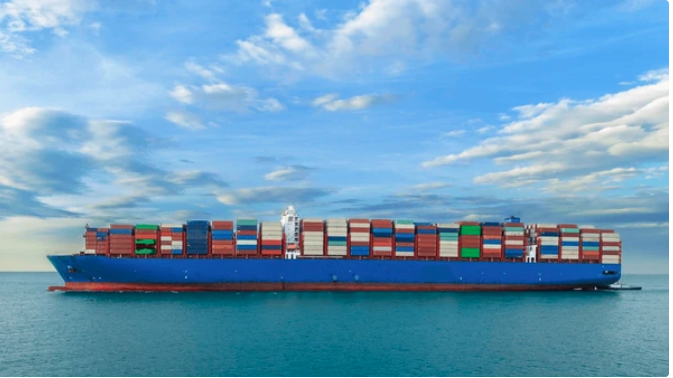
Tuzla is one of Turkey’s most important shipbuilding and maintenance-repair centers, and also one of the regions with heavy maritime traffic. For this reason, lawyers working in Tuzla have special knowledge and experience in topics such as the Maritime Labor Law, the Turkish Commercial Code, and international maritime law. Work accidents occurring on ships should be evaluated not only from a labor law perspective, but also considering maritime trade, insurance, social security, and criminal law dimensions.
Maritime law experienced lawyers operating in Tuzla:
Has close knowledge of local practices related to shipyards, shipping companies, and insurance companies in the region.
Uses the correct communication channels with institutions such as SGK (Social Security Institution), port authorities, and maritime administration to expedite the process.
Effectively applies legal safeguards specific to the maritime sector, such as “statutory lien on a ship”.
Takes strategic steps by foreseeing potential disputes arising at the intersection of both international maritime conventions and local legislation.
Therefore, to avoid loss of rights after work accidents on ships and to conclude the process as quickly as possible, it is of great importance to seek professional support from a lawyer specialized in maritime law in Tuzla in areas such as Istanbul, Tuzla lawyer, Pendik lawyer, Kartal lawyer, Maltepe lawyer, Gebze lawyer, Aydınlı lawyer, Orhanlı lawyer, Tepeören lawyer, Darıca lawyer, Bayramoğlu lawyer or Çayırova lawyer, Şekerpınar lawyer, Güzelyalı lawyer.