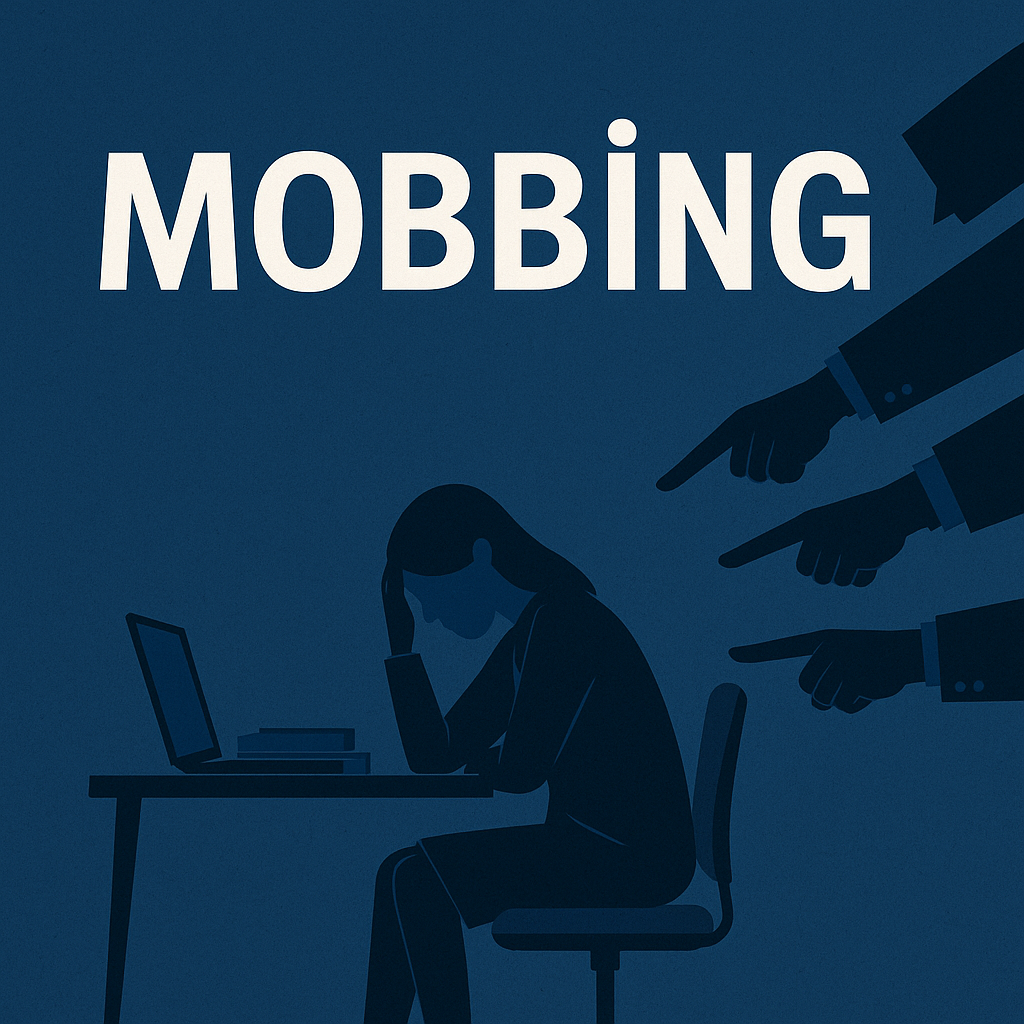
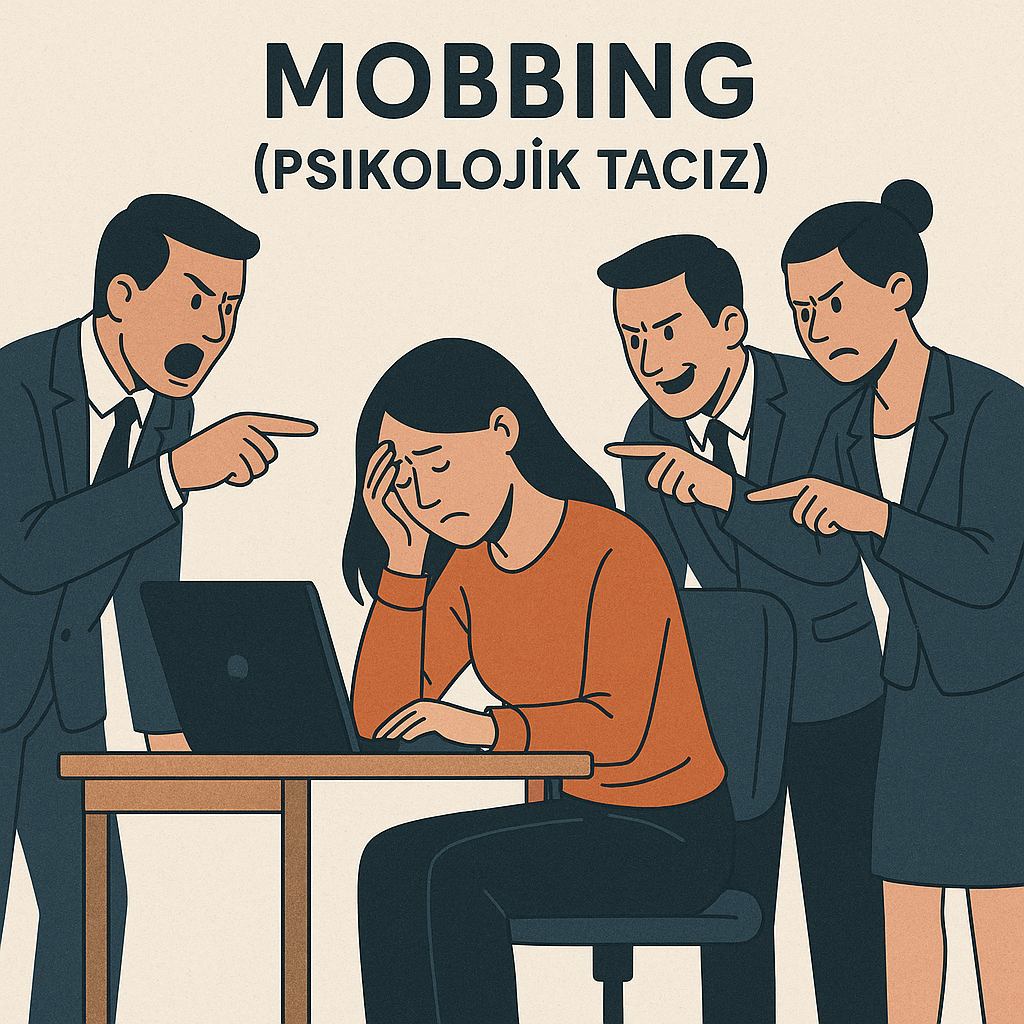
What are the Differences Between Mobbing and Poor Management? In accordance with the examined decisions of the Court of Cassation, the Council of State, the Constitutional Court, and the Courts of First Instance; the fundamental differences between mobbing (psychological harassment) and poor management, workplace incivility, and stress factors, are distinguished by the elements of “targeting”, “continuity/systematicity”, “intent”, and “management right” .
1. Element of Targeting and Personal Nature In judicial decisions, the most distinct difference between mobbing and poor management emerges in the subject and purpose of the action.
Mobbing: According to the decisions of the 9th and 22nd Civil Chambers of the Court of Cassation, the fundamental point distinguishing mobbing from other phenomena is; “the targeting of a specific person for a specific purpose”. The actions must constitute “a collective attack” aimed at the victim’s honor, personality, and character.
Poor Management: If negative behaviors in the workplace (shouting, rude language, harsh attitude) are not solely directed at the plaintiff, but rather stem from the employer’s “general management approach” and are applied to other employees as well, this situation is not considered mobbing. The 9th Civil Chamber of the Court of Cassation (2017/16925) stated that practices based on a general management approach cannot be considered mobbing if the behaviors “do not involve individual and systematic targeting” .
2. Element of Continuity and Systematics While it is mandatory for actions to represent a process for mobbing to exist, bad management can be momentary or irregular
Mobbing: In the decisions of the Constitutional Court and the Court of Cassation, mobbing is defined as a process “continuing systematically for a certain period” and “aiming to intimidate, to render passive”.
Bad Management/Workplace Rudeness: According to the decisions of the 22nd Civil Chamber of the Court of Cassation (2013/11788) and the Istanbul 24th Labor Court; “unjust, rude, impolite, or unethical behaviors that are not continuous and not frequently repeated at certain intervals” cannot be characterized as mobbing. General stress experienced in the workplace, poor organizational communication, or “workplace rudeness, which is the absence of politeness and respect”, even if it makes employees unhappy, if the element of systematicity is absent, it is separated from mobbing and evaluated within the scope of bad management/stress.
3. Right to Manage and Authoritarian Management The way an employer exercises their management authority should not be confused with mobbing.
Right to Manage: According to the decisions of the Grand Chamber of Civil Cases of the Court of Cassation (2016/1427) and the 9th Civil Chamber of the Court of Cassation (2015/8730); for a manager to fulfill the requirements of the job and ensure its proper functioning, “being authoritarian”, giving instructions, supervising working hours, or issuing warnings is not mobbing. These actions are evaluated “within the scope of the employer’s right and authority to manage”.
Point of Distinction: The Constitutional Court (5/12/2017) has stated that an employer’s actions, such as performance evaluations or job changes, cannot be considered psychological harassment, even if they are erroneous (and could be deemed mismanagement), as long as they do not aim at systematic and intentional intimidation.
4. Administrative Judiciary Perspective: Service Fault and Intent In administrative court decisions, “mismanagement” is associated with the administration’s service fault or failure to fulfill its legal obligations, whereas mobbing is distinguished by the element of “intent.”
Service Fault/Mismanagement: According to the decisions of the 8th Chamber of the Council of State and the Constitutional Court (10/3/2016); actions, investigations, or exercises of discretionary power carried out by the administration in accordance with legislation, even if characterized as “service fault” or “mismanagement,” do not constitute mobbing unless they involve “intentional intimidation” and “systematic harassment.”
Mobbing: For administrative actions to be considered mobbing, it is a prerequisite for the administration to act “intentionally and systematically” with the aim of intimidating the employee. Routine investigations or administrative deficiencies do not fall within this scope.
In the decision numbered 2014/2157 of the 22nd Civil Chamber of the Court of Cassation, actions such as a bank branch manager “expecting resignation with a threatening attitude” towards an employee and disclosing survey results were accepted as mobbing. Although the distinction between poor management and mobbing was not clearly established within a theoretical framework in this decision; it was indirectly revealed that if the manager’s actions “consciously, systematically and continuously” forced the employee to leave their job, the incident transcended the boundary of a simple management error or inadequacy (poor management) and transformed into mobbing. An article suggestion.
Why is expert lawyer support necessary?
The distinction between mobbing and poor management becomes clear in court decisions, particularly through elements of targeting, intent, continuity, and systematicity. In the decisions of the Court of Cassation, the Council of State, and the Constitutional Court, it is emphasized that mobbing is a process of psychological harassment directed at a specific person, intentional, and continuous; whereas poor management is considered a type of structural problem that can affect all employees, such as a generally harsh attitude, workplace rudeness, or organizational communication breakdown. Even erroneous actions taken within the scope of exercising management rights are not considered mobbing unless there is an intention to deliberately intimidate. Since this distinction is frequently confused in practice, it leads to significant legal consequences for both employees and employers.
Proving this distinction is a highly technical process, especially from the perspective of labor law and administrative law. For a mobbing claim to be accepted, the frequency of the actions over time, their targeting nature, the element of intent, their impact on the victim, and the quality of the evidence must be meticulously presented. However, distinguishing situations such as a stressful work environment, heavy workload, or an authoritarian managerial style from mobbing often requires expertise. While judicial authorities do not consider isolated or irregular negative behaviors as mobbing, they clearly recognize systematic pressure as psychological harassment. Therefore, incorrect legal assessment can lead to the rejection of claims or the unnecessary prolongation of processes.
Therefore, it is of great importance for employees and employers who suspect mobbing or face allegations of mismanagement to seek professional support from expert lawyers in the field, such as 2M Hukuk Law Office. Especially in regions with intense work life such as Istanbul, Tuzla, Pendik, Kartal, Maltepe, Kadıköy, Ataşehir, Ümraniye, Gebze, Dilovası, and Çayırova, correct classification of mobbing cases, lawful collection of evidence, and proper management of judicial processes require significant experience. Expert legal support, both prevents loss of rights and strengthens the probability of the outcome being favorable to the employee by ensuring the process proceeds on the correct legal ground.