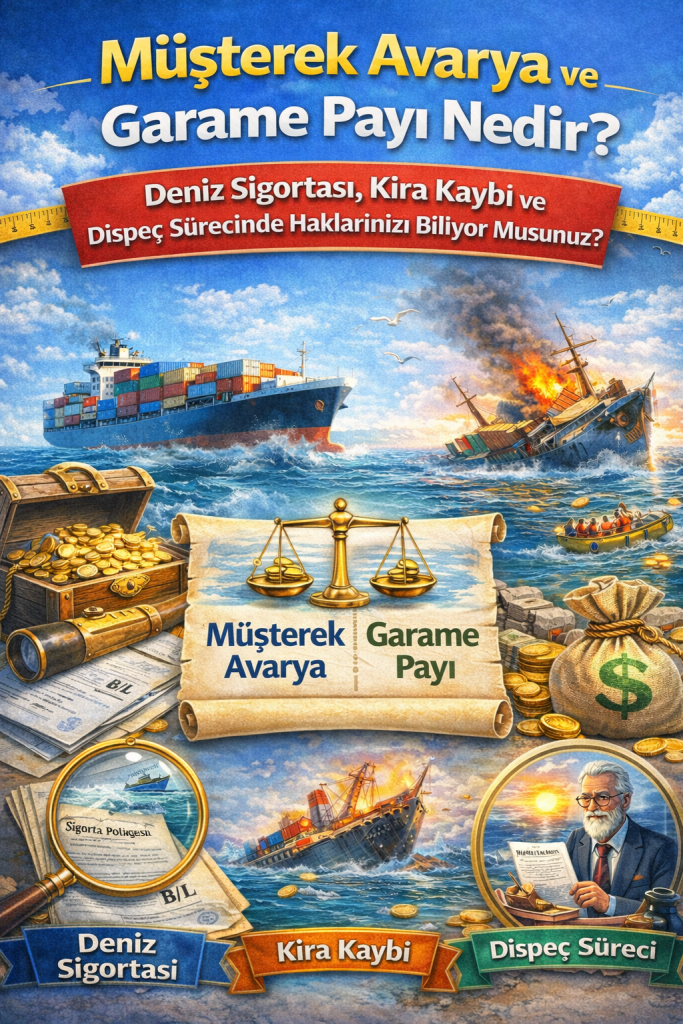
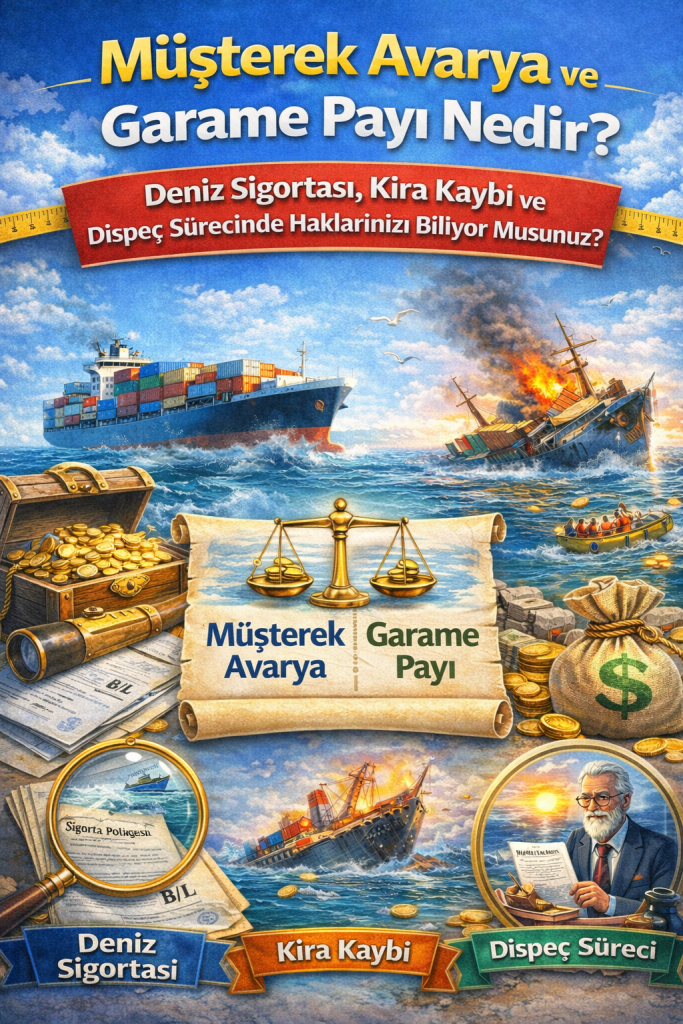
In maritime trade, bthe sharing of losses arising from major damage incidents, collisions, fires, machinery breakdowns, or grounding is subject to a special legal regime. In accordance with articles 1272–1285 of the Turkish Commercial Code No. 6102, general average refers to extraordinary sacrifices and expenses consciously and reasonably made to avert a danger threatening the ship, cargo, and freight participating in a common maritime adventure. The proportional distribution of these expenses among the parties based on their values is called garame (contribution).
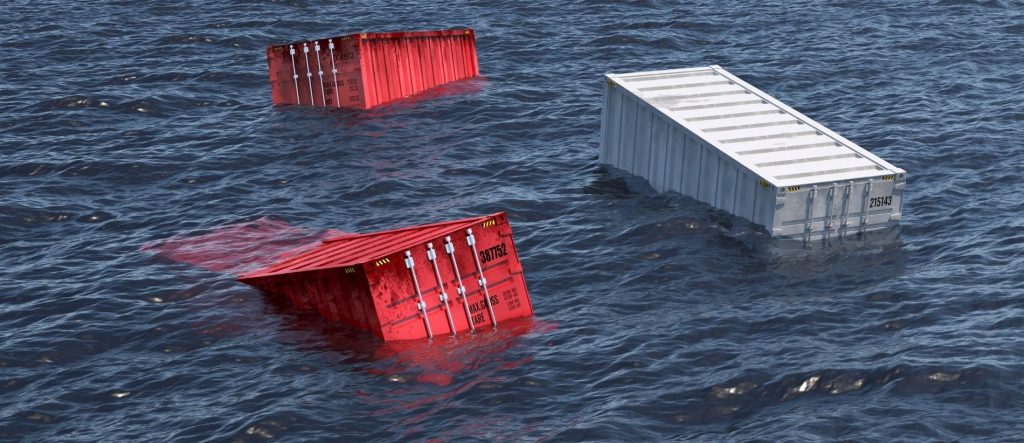
For instance, imagine a ship valued at 100 million TL, with cargo worth 200 million TL and freight of 20 million TL, encounters a severe storm while on its voyage. Upon the threat of sinking, the captain, in order to save the ship and the remaining cargo, had some containers worth 30 million TL thrown overboard and also incurred 10 million TL in tug-salvage expenses. This extraordinary loss of 40 million TL is considered general average because it was incurred to prevent a common danger.
In this situation, the loss is not solely borne by the owner of the cargo thrown overboard. Since the total adventure value is 320 million TL, the 40 million TL general average expense is proportionally distributed among the parties based on their values (contribution). Proportionally, everyone contributes approximately 12.5%: the shipowner contributes 12.5 million TL, cargo owners a total of 25 million TL, and the freight receivable contributes 2.5 million TL. Thus, a single cargo owner who made the sacrifice does not bear the entire loss; the loss is shared collectively.
In conclusion, the general average system is a special maritime law regime that distributes the economic burden of a conscious salvage decision, made under common peril, among all stakeholders. The purpose is the fair distribution of the sacrifice made to save the adventure, ensuring that the sacrificing party is not solely victimized; this distribution process is also called “garame”.
In practice, general average requires a multi-layered legal examination, along with average adjustment reports, York-Antwerp Rules (YAR), insurance policies, and claims for loss of hire and loss of profit. Especially in cases observed in the Istanbul and Tuzla shipyards region, items such as port expenses, temporary repair costs, salvage fees, fuel and personnel expenses, and average adjuster’s fees are subjected to detailed technical and legal assessment to determine their category.
1. Legal Nature of General Average and Garame (Contribution) Share
In light of judicial decisions, general average is the situation where a conscious and extraordinary sacrifice is made or an expense is incurred, in a manner constituting a reasonable course of action, for the purpose of protecting the vessel, cargo, and freight engaged in a common maritime adventure from a threatening peril (Turkish Commercial Code No. 6102, Arts. 1272-1285). In this context, the sharing of the damages and expenses incurred among the parties interested in the vessel, cargo, and freight, in proportion to their values, is called “garame”.
Dispatch Report and Approval Process: General average apportionment is determined by the dispatch report prepared by the average adjuster. The 11th Civil Chamber of the Supreme Court (2018/4685 E.), emphasized that a dispatch report reviewed and approved by the court gains the nature of a judgment and can be directly enforced. Objections to the dispatch report must be raised no later than the first hearing.
Cases of Invalidity: If the expenditure incurred does not serve the purpose of “general safety” or does not meet the conditions (Rules A and VI) of the York-Antwerp Rules (YAR), general average provisions are not applied. For example, in grounding incidents based on seaman’s fault, if the dispatch report is not drawn up in accordance with proper procedure, the apportionment may be considered invalid (Istanbul 17. ATM-2014/572).
2. Distinction Between General Average (GA) and Particular Average (PA)
Courts itemize the expenses included in dispatch reports within the framework of the YAR (specifically the 1994 and 2004 rules). The fundamental principle is that payments that would not have been made at all if the vessel had not been definitively repaired are not included in general average but are considered “particular average” (particular average).
Port Expenses: While entry expenses to a port of refuge are generally included in general average, port charges incurred during the repair period (shifting, etc.) are considered particular average (Istanbul BAM 14. HD-2020/568).
Agency Fees: In practice, a certain percentage of agency fees (e.g., 20%) can be included in general average, and the remaining part (80%) in particular average (Istanbul 17th Commercial Court of First Instance-2022/130 ).
Repair Costs: While temporary repairs can be considered under general average, permanent repair invoices are generally left under particular average.
3. Claims for Loss of Hire and Loss of Profit
Although a detailed analysis regarding loss of hire is not found in the vast majority of the reviewed decisions, these claims are observed to be subject to strict criteria concerning the burden of proof and the causal link.
Lack of Proof: In claims for loss of hire arising from the vessel’s inability to operate during the repair period, claims are rejected if no document showing a concrete business connection for that period is submitted (Supreme Court 11th Civil Chamber-2016/13815 ).
Probabilistic Losses: In loss of profit cases claimed due to the cancellation of second-party orders, the compensation claim is rejected if the placement of the order is not definite but contingent on probability (Supreme Court 11th Civil Chamber-2024/1439 ).
Loss of Profit from Collision: In collision accidents, it is observed that loss of profit can be awarded for fishing vessels by calculating daily earnings based on seasonal fishing data (Istanbul 17th Commercial Court of First Instance-2020/172 ).
4. Other Expenses and Compensation Items
Other expense items accepted in general average and related compensation cases are as follows:
Salvage and Assistance Fees: Considered the most fundamental item of general average.
Fuel and Personnel Expenses: Fuel (Gas Oil), personnel salaries, and subsistence costs during the vessel’s stay in a port of refuge or shipyard can be included in the compensation within reasonable timeframes (Istanbul 17th Commercial Court-2021/179 ).
Average Adjuster and Survey Fees: Fees paid for the management of the general average process are included in the contributions.
5. Insurance Law and the Principle of Pro Rata Apportionment
If the general average contribution is covered by insurance policies, the insurer is obliged to pay this amount. However, in accordance with Article 66/7 of the English Marine Insurance Act (MIA), the insurer may deduct from the compensation amounts collected by the insured from other interested parties (e.g., cargo insurers) or waived through settlement (Istanbul 17th Commercial Court-2021/245 ).
Policy Limit and Apportionment: In cases such as fire or traffic accidents where there are multiple damaged parties and the total damage exceeds the policy limit, the principle of “pro-rata apportionment” is applied, and payment is made to each claimant in proportion to the limit (Istanbul 18th Commercial Court-2019/342 ). The Supreme Court overturns judgments rendered without this calculation due to insufficient examination (Supreme Court 11th Civil Chamber-2015/6553 ).
6. Secondary Sources and Additional Context
The following points are considered secondary sources as they are included in the decision texts as limited information or defense:
Arbitration Clause: It has been stated that the general average and arbitration clauses in the bill of lading are also valid in the event of the insurer’s subrogation and may lead to the court’s lack of jurisdiction (Supreme Court 11th Civil Chamber-2016/3454 ).
Unjust Enrichment: It is accepted that if a contribution share falling outside the scope of the insurance policy is paid by the insurer, this amount can be reclaimed from the shipowner based on unjust enrichment provisions (Supreme Court 11th Civil Chamber-2015/14861 ).

Exchange Rate Difference Disputes: It has been emphasized that in contribution share payments, the difference between the fixed exchange rate in the policy and the exchange rate on the payment day is evaluated within the framework of the general policy conditions and coverage period, and as long as there is no underinsurance, the insurer cannot demand a refund of the exchange rate difference (Istanbul 17th Commercial Court-2024/94 ).
Collision and Limitation of Liability: It is argued that even if general average is declared in collision incidents, liability can be limited on an SDR basis in accordance with the 1976 London Convention (LLMC) (Istanbul 17th Commercial Court-2023/548 ).
Frequently Asked Questions
Müşterek avarya ile hususi avarya arasındaki temel fark nedir?
Müşterek avarya (General Average – GA), ortak bir tehlikeyi bertaraf etmek amacıyla bilerek yapılan fedakârlık ve olağanüstü giderleri kapsar. Örneğin; barınma limanına giriş masrafları, kurtarma ücretleri, geçici tamir giderleri genellikle müşterek avarya kapsamına alınabilir.
Buna karşılık hususi avarya (Particular Average – PA), yalnızca belirli bir menfaat sahibinin zararına ilişkin kalemleri ifade eder. Kalıcı tamir faturaları, tamir süresince yapılan bazı liman harçları (örneğin shifting ücretleri), gemiye özgü hasar giderleri çoğu zaman hususi avarya olarak değerlendirilir.
Mahkemeler özellikle York-Antwerp Kuralları çerçevesinde masraf kalemlerini ayrıştırmakta; “gemi tamir edilmemiş olsaydı yapılmayacak giderler” ilkesini esas almaktadır. Yanlış sınıflandırma, ciddi tutarda ödeme yükümlülüklerine yol açabilir.
Dispeç raporu bağlayıcı mıdır ve nasıl icra edilir?
Müşterek avarya paylaştırması dispeççi tarafından hazırlanan dispeç raporu ile belirlenir. Rapor mahkeme denetiminden geçip onaylandığında ilam niteliği kazanabilir ve doğrudan icraya konu edilebilir.
Ancak dispeç raporuna yönelik itirazların süresinde ve usulüne uygun şekilde ileri sürülmesi gerekir. Raporun usulsüz hazırlanması, müşterek selamet şartının bulunmaması veya YAK kurallarına aykırılık gibi hallerde paylaştırma geçersiz sayılabilir.
Özellikle gemi adamı kusuruna dayalı karaya oturma olaylarında veya teknik inceleme eksikliğinde dispeç raporları mahkemece iptal edilebilmektedir. Bu nedenle teknik bilirkişi incelemesi ile hukuki değerlendirme birlikte yürütülmelidir.
Kira kaybı ve kar mahrumiyeti talepleri hangi şartlarda kabul edilir?
Gemi tamir süresince çalışamıyorsa donatan kira kaybı talep edebilir; ancak bu talep soyut değil somut belgelerle ispatlanmalıdır. Mahkemeler; o döneme ait bağlanmış navlun sözleşmesi, charter party, yük kontratı veya sezonluk kazanç verileri gibi belgeler aramaktadır. İhtimale dayalı sipariş iptalleri veya kesinleşmemiş gelir beklentileri genellikle tazminat kapsamına alınmaz. Çatma gibi hallerde ise balıkçı gemileri için sezonluk ortalama kazanç üzerinden günlük hesaplama yapılabildiği görülmektedir.
İlliyet bağı, kusur ve zarar miktarı birlikte ispat edilmedikçe kira kaybı ve kar mahrumiyeti talepleri çoğunlukla reddedilmektedir.
Why is Expert Legal Support Necessary?
General average and contribution share lawsuits;
Maritime commercial law
Insurance law
International conventions (LLMC, MIA etc.)
York-Antwerp Rules
Dispatch practice
It simultaneously concerns many technical areas such as enforcement and collateral procedures. Especially in disputes carried out in the Istanbul and Tuzla shipyards region, the accurate analysis of technical expert reports, the correct classification of expense items, and the strategic interpretation of insurance policy provisions are of vital importance.
Therefore, working with a law firm specializing in maritime trade and insurance law prevents serious financial risks. Based in Istanbul and with extensive experience in the Tuzla shipyards region, 2M Hukuk Law Firm provides comprehensive legal support in general average, salvage contributions, insurance subrogation cases, and limitation of liability processes arising from collision.
In high-value and technical disputes related to maritime trade, obtaining expert support at an early stage is the safest way to prevent loss of rights in both enforcement and insurance processes.