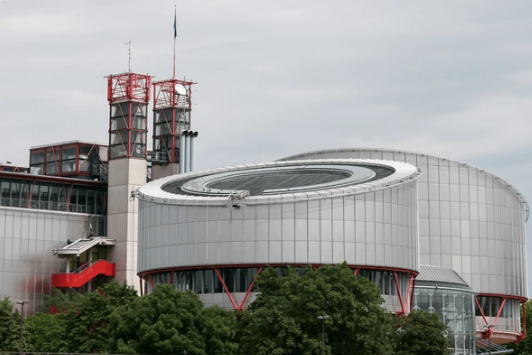
The right to a fair trial is a fundamental right protected under Article 6 of the European Convention on Human Rights. An integral part of this right is the principle of “trial within a reasonable time”. The European Court of Human Rights (ECtHR) holds states responsible in cases where this principle is violated and develops significant jurisprudence.
According to the ECtHR’s established jurisprudence, the complexity of a case does not automatically justify an excessive prolongation of the proceedings. While the Court takes into account the technical or legal challenging nature of a case, it does not accept delays caused by the careless, inadequate, and negligent attitudes of judicial authorities. In other words, it does not accept complexity as a sole justification.
For instance, the ECHR, in its judgments “Adiletta and Others/Italy (1991)”, “Akdemir and Evin/Turkey (2015)”, “Süleyman Ege/Turkey (2013)”, “Kudra/Croatia (2012)” and “Oyal/Turkey (2010)”, has clearly stated that the reason of the case’s complexity was insufficient to explain the exceeding of a reasonable time.
If the judicial authorities cause a file to remain inactive for a long time, even in a case they acknowledge as complex, this situation is considered negligence on the part of the judiciary. In other words, simply not taking action for months or years just because a case is complex, constitutes a clear violation of the reasonable time principle.
According to the ECHR, for delays in judicial proceedings to be justifiable: There must be a genuine link between the complexity of the case and the delay in the judicial process, and the courts must have managed the process efficiently and carefully. If these elements are absent, the defense of complexity is invalid and the applicant’s right to a fair trial is deemed to have been violated.

Why is Expert Lawyer Support Necessary in Individual Applications?
The failure to conclude proceedings within a reasonable time is one of the significant violations that can be subject to an individual application. However, for this violation to be admissible before the Constitutional Court or the ECtHR: Technical details such as a timeline supported by concrete data, legal analysis demonstrating that the delay cannot be explained by the complexity of the case, and documents showing the negligence of judicial authorities require legal expertise.
An expert lawyer analyzes the process from start to finish, prepares petitions in accordance with the jurisprudence of the ECtHR and the Constitutional Court, and effectively demonstrates the violation of rights. Otherwise, even if you are in the right, your application may be rejected due to ‘insufficient evidence’ or ‘formal deficiencies’. This can lead to an irreversible loss of rights. Therefore, before making an individual application on technical matters such as the right to a trial within a reasonable time, obtaining legal support from a lawyer specialized in the field significantly increases the chances of success for the application.