
Introduction
In commercial maritime law, the definition, use, and related legal responsibilities of ships are regulated in detail under articles 931 to 946 of the Turkish Commercial Code (TCC). These regulations define the ships, which are an important part of maritime trade, their legal status, and the obligations of the parties.
1. Definition of a Ship and Status as a Merchant Ship (TCC art. 931)
According to the Turkish Commercial Code, a ship is defined as any vessel capable of moving in water, possessing the characteristic of floating, and not very small. Even if it cannot move on its own, these vessels intended to float and move in water are considered “ships”. If this ship is allocated for the purpose of generating an economic benefit or is actually used for this purpose, it is considered a “merchant ship”. Regardless of on whose behalf or account it is used, all vessels of this nature acquire the status of a merchant ship.
2. Seaworthiness of a Ship (TCC art. 932)
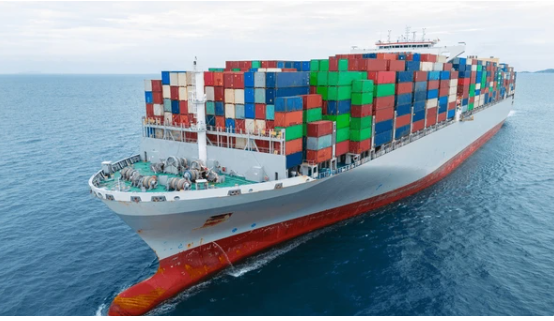
The ship must be seaworthy, fit for the voyage, and cargo-worthy. The ship must possess the qualities to withstand potential dangers during the voyage and must have the necessary equipment and crew competency. A ship is considered “seaworthy” if, with its main components such as hull, rigging, engine, and boiler, it is resistant to maritime dangers it may encounter during its voyage (excluding abnormal dangers). The ship is considered “fit for the voyage“ if it is suitable for the dangers of the journey in terms of its organization, fuel, provisions, loading condition, and the number and competency of its crew. It becomes “cargo-worthy” if it is equipped appropriately for carrying cargo, including refrigeration facilities.
3. Ship Incapable of Repair and Ship Not Worthy of Repair (TCC art. 933):
If a ship becomes irreparable or if the repair costs are excessive, the ship is classified as incapable of repair or not worthy of repair.
A ship incapable of repair is defined as a ship that cannot be repaired at its current location and cannot be transported to a port where it could be repaired. Such a ship may have sustained serious damage, making its repair technically impossible. This situation indicates that the ship’s physical condition is too poor to be repaired. For example, if a ship’s hull has severe damage and it cannot be safely brought to a port at sea, it is considered incapable of repair.
A vessel beyond repair is defined when the repair costs exceed three-quarters of the vessel’s previous value. This calculation is based on the vessel’s value before it became unseaworthy during the voyage or at another point in time. For instance, if the repair costs resulting from a severe accident to a vessel exceed a significant portion of its previous value, the vessel is considered beyond repair. In such a case, repairing it is not considered economically viable, and insurance companies usually declare the vessel a total loss. What is important here is that the repair cost is economically too high to justify restoring the vessel to working order.
These regulations provide important criteria for vessel owners to avoid significant financial losses and for insurance companies in their vessel assessments. These distinctions play a critical role in the economic and operational evaluation of a vessel. For vessel owners and marine insurers, determining whether a vessel is repairable is an important stage for commercial decisions.
4. Seafarers (TCC Art. 934)
According to Article 934 of the Turkish Commercial Code, the term “seafarers” encompasses all personnel working on a vessel. This definition includes the captain, ship’s officers, crew members, and other individuals employed on board who perform the vessel’s management and operational duties. Seafarers are responsible for the safe and orderly operation of the vessel. Among these individuals, the captain serves as the highest-ranking person responsible for the vessel’s management, while officers assist the captain and handle technical tasks.
5. Scope of Application and Exceptions of the TCC’s Provisions Related to Maritime Trade (TCC Art. 935)
Article 935 of the Turkish Commercial Code (TCC) regulates which ships the provisions related to maritime commerce apply to and which ships are exempt from these provisions. Article 935 introduces general regulations for merchant ships, which form the basis of maritime commerce, while also defining specific exceptions for certain types of ships.
a. General Scope of Application:
Merchant Ships: The first paragraph of Article 935 states that the provisions of the TCC related to maritime commerce shall apply to merchant ships. Merchant ships are vessels intended or dedicated for the purpose of generating economic gain through sea transport. These types of ships engage in commercial activities such as cargo or passenger transportation and are subject to maritime commerce provisions. Merchant ships must fulfill the obligations imposed by the Turkish Commercial Code in both national and international waters.
Scope for Merchant Ships: Merchant ships must apply all provisions of this law concerning maritime commerce and comply with regulations regarding maritime claims, collision, salvage, and the captain’s authority and responsibilities. Unless otherwise specified in laws, these provisions are valid for merchant ships.
b. Exceptions:
The second paragraph of Article 935 regulates special provisions applicable to ships that do not have the status of merchant ships and are used for different purposes. The exceptions introduced for these ships create different statuses and responsibilities in the field of maritime law.
aa) Ships Dedicated Solely for Pleasure, Sports, Education, Training, and Scientific Purposes
Yachts and seafarer training vessels used solely for cruising, sports, education, instruction, and scientific research are not subject to all provisions of the Turkish Commercial Code (TTK), provided they do not engage in commercial activities. However, regulations related to maritime law headings such as “Vessel,” “Captain,” “Maritime Claims” and especially provisions concerning collision and salvage apply to these vessels. Additionally, Article 1062 concerning the owner’s liabilities arising from the fault of the crew members is also applicable to these vessels.
Since these types of vessels do not pursue commercial purposes, they are excluded from maritime trade provisions. However, in situations such as collision and salvage that may occur at sea, similar responsibilities are imposed on these vessels as on commercial ships.
bb) State and Military Vessels Allocated to Public Service:
State vessels, military vessels, and auxiliary vessels allocated to public service are also exempt from many provisions of maritime trade law. Since these vessels are not considered commercial ships, they are exempt from obligations such as commercial liabilities and limited liability provisions against maritime claims arising from debts. However, state vessels are also subject to provisions related to collision and salvage situations that may occur at sea. Specifically, whether these vessels, which perform public service in international waters, will be considered commercial vessels is determined within the framework of international law and inter-state agreements.
cc) Vessels Built in Turkey Owned by Foreign States or Citizens:
Specific provisions of the Turkish Commercial Code (TCC) may apply to ships being built in Turkey and belonging to a foreign state or its citizens. For these ships, the provisions of the Turkish Commercial Code regarding flag certificate (Article 944, paragraph 2, and Articles 945, 947, 948, 949), ship registry (Articles 955, 956, 973, 991), statutory mortgage (Article 1013), and rights over ships under construction (Articles 1054-1058) are applicable. This means that a foreign ship built in Turkey is subject to the provisions of the Turkish Commercial Code for procedures such as flag registration, registry entry, and mortgage. However, the TCC provisions apply to these ships only to the extent compatible with their nature.
Consequently, Article 935 covers commercial ships with provisions related to maritime trade, while introducing different provisions for yachts not engaged in commercial activity, training ships, and state ships dedicated to public service. This distinction, while regulating the complex structure of maritime trade, ensures that ships generating commercial profit are subject to different responsibilities and rights than those used for public service or personal purposes. For example, even if a yacht is used solely for recreational purposes, it can be held liable like a commercial ship in the event of a collision or rescue at sea.
6. Legal Status and Registry of Ships (TCC Art. 936)
Ships are considered movable property under the Turkish Commercial Code. However, in some cases, provisions related to immovable property may also apply to ships. These situations are important for the ship’s registry entry and legal transactions.
The second paragraph of Article 937 of the Turkish Commercial Code (TCC), referring to certain articles of the Turkish Civil Code (TCC), explains that in specific cases, ships shall be considered as “immovable property” and the ship registry shall be treated like a “land registry”. This regulation ensures that ships are handled similarly to immovable property in legal transactions, particularly concerning ownership, pledge, and mortgage. The articles of the Turkish Civil Code (TCC) referenced for the recognition of ships as immovable property are as follows;
Turkish Civil Code Article 429(1)(2): This article regulates the management and disposition powers related to immovable property. Article 429(1)(2) stipulates how a person managing and administering an immovable property, which can also apply to ships, shall use this asset to protect ownership rights and under what circumstances the rights of others over this immovable property shall take effect. Regarding ships, the responsibilities that a person holding ownership rights in completed or under-construction ships must observe during the management of this right are addressed similarly to those for immovable properties. Therefore, legal transactions conducted on ships are subject to strict regulations, just like real estate transactions.
Turkish Civil Code Article 444: This article contains regulations regarding the protection of immovables. It regulates the measures that can be taken for the protection of rights over immovable properties and the ways in which the owner can transfer or exercise these rights. When ships are considered within the scope of this regulation, the ownership rights of a ship registered in the ship registry are protected just like those of immovables. The rights over a registered ship are secured, and how these rights will be transferred during legal transactions is determined.
Turkish Civil Code Article 523: This article contains provisions for securing and transferring the right of ownership over immovables. It specifies the procedures to be followed during the transfer of ownership of immovables. When applied to ships, the same provisions apply during the transfer of ownership of a ship registered in the ship registry. Particularly, the ownership of ships under construction or completed can be transferred, pledged, or mortgaged just like an immovable property.
Turkish Civil Code Article 635: This article regulates the right of mortgage over immovables. It determines the necessary conditions for an immovable property to be mortgaged and how this process will be carried out. From the perspective of ships, mortgage transactions can also be performed on ships under construction or completed. The ship registry functions as a register book, similar to the land registry used for immovables, where these rights are recorded and mortgage transactions are carried out. Therefore, if a mortgage is to be placed on a ship, this process is carried out just like a mortgage transaction on an immovable and is recorded in the ship registry.
Ship Registers and Land Registry Similarity: According to Article 937(2) of the TCC, ship registers are considered similar to land registries used for immovables. This means that legal transactions such as transfer of ship ownership, mortgage transactions, and pledges will be registered and tracked in the register. This situation provides ships with a legal guarantee similar to that of immovables.
These references to the Turkish Civil Code ensure that ships, in some cases, are considered as immovables and are subject to immovable property provisions, especially in registration, ownership, and mortgage transactions. Although ships are considered movable property, this special regulation allows them to be treated like immovables for financial and legal transactions. Transactions such as ownership, mortgage, and pledge on registered ships are secured by being carried out through ship registers, similar to land registries. This ensures that ships are handled more securely and orderly in legal transactions.
7. Ship’s Identity and Flag (TCC Art. 938-946)
The identity of ships is defined by their names and flags. Articles 938 to 946 of the Turkish Commercial Code determine the rules regarding the names given to ships, the right to hoist a flag, and the home port, thereby securing the international legal status of Turkish ships. The right to hoist the Turkish Flag is granted only to Turkish citizens and Turkish companies, and special provisions have been introduced for a ship to carry this flag.
a. Ship’s Name
aa. Freedom of Choice (TCC Art. 938)
According to Article 938 of the Turkish Commercial Code, the first Turkish owner of a ship is free to give the ship any name they wish. However, this freedom of naming is conditional on the ship’s name being unique so as not to cause confusion with other ships; thus ensuring that ships are easily distinguishable in maritime transport. If the owner wishes to change the ship’s name, they must obtain permission from the Ministry of Transport, Maritime Affairs and Communications. In this case, the changed ship name is also updated in the registration records.
bb. Obligation to Be Written on the Hull (TCC art. 939)
According to Article 939 of the Turkish Commercial Code, the name of every registered ship must be written on both sides of its hull and on its stern, in indelible, permanent, and easily readable letters. The home port of the ship must also be written on the stern. This regulation facilitates the identification of ships in maritime affairs and ensures the accuracy of the ship’s information with its registration record.
b. Ship’s Flag
aa. Right and Obligation to Fly the Turkish Flag (TCC art. 940)
Every Turkish ship has the right and is obliged to fly the Turkish Flag. According to Article 940 of the TCC, the ship must belong only to Turkish citizens or Turkish companies that meet specific conditions. The detailed specification of these conditions determines the nationality and legal status of ships entitled to fly the Turkish flag, ensuring their recognition in international law.
Turkish Ship Status:
Co-ownership: In vessels owned by more than one person, the vessel is considered a Turkish vessel on the condition that the majority of the shares belong to Turkish citizens.
Joint Ownership: If the vessel is under the joint ownership of more than one person, the vessel is considered a Turkish vessel provided that the majority of the individuals holding ownership rights are Turkish citizens.
Vessels Owned by Legal Entities: For vessels owned by organizations, institutions, associations, and foundations with legal personality according to the Turkish Commercial Code, it is necessary that the majority of the individuals in their governing bodies are Turkish citizens to fly the Turkish Flag.
Vessels Owned by Turkish Commercial Companies: In vessels owned by Turkish commercial companies, the majority of the persons authorized to manage the company must be Turkish citizens, and the majority of voting rights in the company’s articles of association must belong to Turkish partners. In joint-stock companies and limited partnerships with share capital, the vessel can fly the Turkish Flag provided that the majority of the shares are registered and their transfer to a foreigner is subject to the approval of the company’s board of directors.
Vessels Owned by Co-ownership Associations: In vessels owned by co-ownership associations registered in the Turkish commercial registry, the right to fly the Turkish Flag is granted if more than half of the shares belong to Turkish citizens and the majority of the shareholder-owners authorized to manage the association are Turkish citizens.
bb. Exceptions (TCC Art. 941)
According to Article 941 of the Turkish Commercial Code, a vessel entitled to fly the Turkish Flag may obtain permission to fly a foreign flag under certain conditions. If a Turkish vessel, transferred to persons who would lose the right to fly the Turkish Flag, has been left to be operated in their name for at least one year, the Ministry of Transport, Maritime Affairs and Communications may, upon the owner’s request, permit this vessel to fly a foreign flag. During this permit period or as long as the permit has not expired, the vessel cannot fly the Turkish Flag. Conversely, if a non-Turkish flagged vessel has been transferred to persons entitled to fly the Turkish flag for at least one year, it may be permitted to fly the Turkish Flag with the owner’s consent; however, this vessel must document that it meets the conditions every two years and is recorded in a special register by the Ministry.
cc. Loss of the Right to Fly the Turkish Flag (TCC art. 942)
If the conditions specified in Articles 940 and 941 of the Turkish Commercial Code cease to exist, the vessel loses the right to fly the Turkish Flag. In this case, the Ministry of Transport, Maritime Affairs and Communications must be notified immediately. The Ministry may grant permission for the vessel to continue flying the Turkish Flag for a maximum of six more months; at the end of this period, the vessel can no longer fly the Turkish Flag.
dd. Proof of Right
Ship’s Certificate (TCC art. 943): The right to fly the Turkish Flag is proven by the ship’s certificate. A vessel cannot fly the Turkish Flag unless a ship’s certificate has been obtained. During a voyage, it is mandatory to carry the ship’s certificate, an abstract approved by the registry directorate, or a flag certificate on board the vessel.
Flag Certificate (Turkish Commercial Code, Article 944): If a ship located outside Turkey acquires the right to fly the Turkish Flag, the “flag certificate” issued by the Turkish consulate at its location serves as a ship’s certificate, and this document is valid for a maximum of one year. For ships built in Turkey but not having the right to fly the Turkish Flag, a flag certificate may be issued, valid until their place of delivery. Furthermore, in cases specified in the second paragraph of Article 941 and Article 942, the flag certificate is issued to be valid for the duration of the permit.
Exemption Cases (Turkish Commercial Code, Article 945): Ships smaller than 18 gross tons and special purpose vessels such as yachts and training ships mentioned in subparagraph (a) of the second paragraph of Article 935 may fly the Turkish Flag without the need for a ship’s certificate or flag certificate.
c. Ship’s Home Port (Turkish Commercial Code, Article 946)
A ship’s home port is the place where the ship’s voyages are managed. This port is specified in the ship’s register and must be written on the stern of the ship along with its name. The home port represents the ship’s operational center and is considered a complementary part of the ship’s identification information in both legal and operational processes.
These regulations of the Turkish Commercial Code place the identity and flag rights of Turkish ships under a guarantee recognized in international law. Elements such as ship naming, the right to fly the flag, and the home port play an important role in determining the nationality, legal status, and legal rights of ships in maritime trade. Thanks to these regulations, the status of ships sailing under the Turkish Flag is protected, and legal assurance is provided in international waters through relevant procedures.
Conclusion
The relevant articles of the Turkish Commercial Code clearly regulate the definition of ships, their legal status, and the liabilities of the parties in maritime trade. The obligations of shipowners, operators, and crew are clearly defined, and these responsibilities ensure the safe and orderly operation of maritime trade. A suggested article.
IMPORTANT REMINDER – Tuzla Lawyer
In matters concerning the definition of ships, their legal status, and flag rights, it is important for shipowners and other relevant parties to work with an expert legal consultant to protect their rights and ensure that legal processes proceed smoothly without any disruptions. It does not matter whether the ship’s port is Tuzla, Dilovası, Zeytinburnu, Istanbul, or Izmir. Seeking expert support to minimize the legal and financial consequences that may arise from not acting in accordance with the relevant articles of the Turkish Commercial Code will minimize potential problems in the future.

