

Introduction
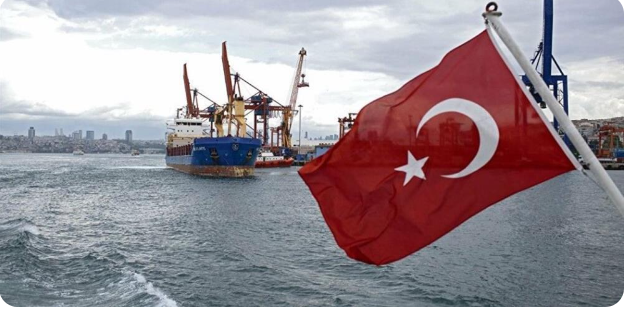
The Turkish Flag is the most important national symbol of the Republic of Turkey at sea. For this reason, legal regulations concerning ships sailing under the Turkish flag have been handled with great meticulousness; penal provisions have been stipulated within the framework of the Turkish Commercial Code (TCC) to prevent the incorrect or unlawful use of the flag. Regulations regarding the right to fly the flag are of great importance for the preservation of national identity and the maintenance of Turkey’s reputation in the maritime sector.
A. Acts Constituting a Crime
1. Unlawful Flag Flying (TCC. art. 947)
According to the Turkish Commercial Code, ships that are not Turkish citizens or do not legally have the right to fly the Turkish Flag cannot fly the Turkish Flag. A captain who flies this flag despite not having the right to fly the Turkish Flag, or who flies the flag of another state when they should be flying the Turkish Flag, faces imprisonment for up to six months or a judicial fine. This provision has been introduced to prevent the incorrect or unlawful use of the Turkish Flag.
2. Flying the Flag Without Obtaining and Possessing a Ship’s Certificate or Flag Certificate (TCC. art. 948)
In Article 948 of the Turkish Commercial Code, penalties are stipulated for captains who fail to obtain and keep on board the ship’s certificate of registry (gemi tasdiknamesi), which is a document proving the right to fly the Turkish flag, or its certified copy, or a flag certificate (bayrak şahadetnamesi). The ship’s certificate of registry serves as legal proof of the right to fly the Turkish flag. It is mandatory for all vessels flying the Turkish flag to carry this certificate of registry or a certified copy thereof. A captain who flies the flag without a certificate of registry or flag certificate may be subject to imprisonment for up to four months or a judicial fine for up to two hundred days. Similarly, a captain who fails to keep the certificate of registry or flag certificate on board the ship shall be punished with imprisonment for up to two months or a judicial fine for up to one hundred days. This requirement ensures the clear documentation of the ship’s legal status and allows for the control of the right to fly the flag. The absence of these documents can create uncertainty regarding the ship’s identity and national affiliation, potentially leading to legal issues.
3. Failure to Hoist the Flag When Entering and Exiting Turkish Ports and In Front of Warships and Coastal Fortifications (TCC Art. 949)
Failure to hoist the flag when entering or exiting Turkish ports, as well as in front of warships and coastal fortifications, is considered an offense under the Turkish Commercial Code (TCC). This requirement aims to ensure national security and represent Turkey’s sovereignty in its maritime areas. A ship’s failure to hoist its flag when entering Turkish territorial waters is considered both a legal violation and disrespect for national identity. Therefore, a captain of a merchant ship who fails to hoist the flag when entering or exiting Turkish ports, or in front of warships and coastal fortifications, is subject to imprisonment for up to three months or a judicial fine.
4. Failure to Write the Ship’s Name and Port of Registry (TCC. art. 950)
The name of a registered ship must be properly written on both sides of its hull, and its name and port of registry must be written on its stern. This information, which identifies the ship, ensures its legal definability. Captains who fail to comply with this obligation face imprisonment for up to three months or a judicial fine. Especially in a global field like maritime transport, such identifications, which clearly define the ship’s identity, are critically important for international security and maritime order. The complete writing of the ship’s basic information increases its traceability and safety.
B. Requirement for Intentional Commission of These Offenses (TCC. art. 951)
The TCC states that for punishment to be imposed for these offenses, the act must have been committed intentionally. This means that a captain who violates the right to fly a flag, does not possess a certificate, or carries a false flag, can be penalized if they committed these acts knowingly and willingly. The element of intent in the captain’s infringing actions is considered an important factor in determining criminal liability.
C. Independence of Place and Person in Flag Violations (TCC. art. 952)
Acts contrary to the right to fly the flag are punishable, regardless of where the crime was committed. Accordingly, these violations constitute a crime even if they are committed in a foreign country or on the high seas. Furthermore, the captain who commits such violations is subject to punishment, regardless of whether they are a Turkish citizen or not. This regulation, which aims to protect Turkey’s national identity in maritime trade, ensures that the use of the Turkish Flag is kept under strict control. This provision, aimed at protecting Turkey’s reputation at sea, allows law enforcement agencies’ jurisdiction to extend beyond local boundaries.
Conclusion
The Turkish Commercial Code has protected the legal status of ships sailing under the Turkish flag and the right to fly the flag that documents this status. The violation by ship captains of the right to fly the Turkish Flag is met with serious legal sanctions. It does not matter whether the ship’s port is Tuzla, Dilovası, Zeytinburnu, Istanbul, or Izmir. Legal support can be obtained from an expert or lawyer specializing in maritime commercial law on this matter. These provisions, introduced to ensure the correct and proper use of the right to fly the flag, aim to protect national interests and maintain order at sea. Every ship flying the Turkish Flag has a legal responsibility and a respectable representational power. Therefore, the provisions of the TCC regarding the right to fly the flag play a critical role in protecting national identity and ensuring legal security in international maritime affairs. (Tuzla Lawyer)

