Introduction
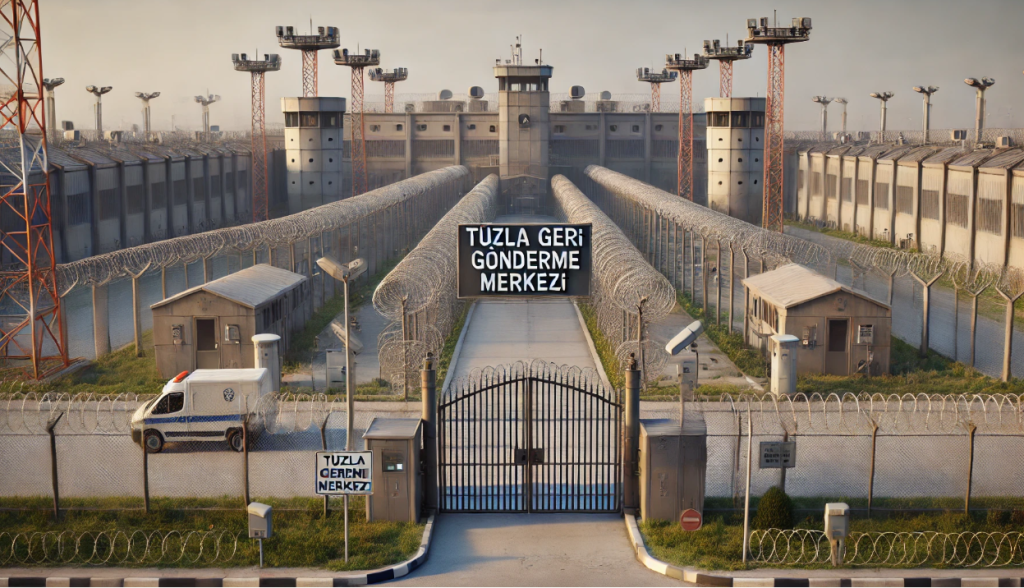
This study analyzes the rights of individuals held under administrative detention in Removal Centers (GGM), particularly in the face of problems encountered in accessing health services and allegations of inhumane treatment, as well as the legal remedies available to them, within the framework of the presented literature. The study addresses the positive obligations of the state, the concept of medical negligence, the responsibility of the administration, and existing national and international application mechanisms.
1. Conditions in Removal Centers and the Right to Health
Removal Centers are places where the fundamental rights of individuals held under administrative supervision must be guaranteed. However, the inadequacy of the physical conditions and health services in these centers is noteworthy. The European Court of Human Rights (ECtHR)’s Asalya v. Turkey judgment constitutes a precedent in this regard. “The applicant stated that during the seven-day detention period, the Kumkapı Removal Center was not suitable, especially for wheelchair users, that even basic arrangements such as elevators and toilets were not made… that due to the lack of an elevator, he was forced to sleep on a table in a ground-floor room, and that no treatment facilities were provided during this period.” This decision demonstrates that deficiencies in physical infrastructure and the lack of health services in Removal Centers constitute a fundamental human rights violation. Accordingly, it reveals that providing the necessary physical conditions and psychosocial environment for disabled individuals and those with special needs who may stay in the center, ensuring care for the situations of individuals with special needs (such as pregnant women, sick individuals, children) and providing for their needs, and meeting the needs of these individuals, would mean a violation of the state’s obligation to show care for individuals with special needs.
2. The State’s Positive Obligations within the Scope of the Right to Life and Health Services
The State has a positive obligation to protect the right to life of all individuals within its sovereign territory. This obligation includes not only refraining from intentionally ending life, but also taking reasonable measures against risks that threaten life. The regulation and provision of health services is one of the most important elements of this positive obligation. The provision of health services and the assurance of public health also constitute a branch of the positive obligations of the States Parties to the Convention regarding the right to life. States Parties are responsible for making the necessary regulations and taking reasonable measures to protect the lives of patients in health institutions, regardless of whether they are public or private. This responsibility becomes even more pronounced in places directly under state control and responsibility, such as GGM.
3. Medical Negligence, Administrative Responsibility, and Remedies
a. Medical Negligence and Service Fault
The failure of health personnel to perform necessary medical interventions, performing them late, or refusing treatment is considered medical negligence. They are obliged to apply the necessary diagnoses and treatments to patients who come to the hospital for treatment. Otherwise, they will have committed a crime, and the administration will incur liability for compensation as a result of the damages caused. The failure to treat a person held in a GGM despite their deteriorating health condition indicates that the administration has committed a “service fault” and gives rise to liability for compensation. The Patient Rights Regulation also safeguards this situation. According to Article 42 of the Regulation, individuals whose patient rights have been violated have the right to file all types of lawsuits, complaints, and applications.
b. Domestic Legal Remedies A person whose right to health has been violated in a GGM can resort to various legal remedies:
Administrative Jurisdiction (Full Remedy Action): A full remedy action can be filed in the administrative court against the responsible administration (e.g., Presidency of Migration Management, Ministry of Health) for the compensation of material and moral damages such as medical negligence and the resulting lung problems. The administration’s fault in organizing health services forms the basis of this lawsuit.
Criminal Investigation (Criminal Complaint): A criminal complaint can be filed with the Public Prosecutor’s Office due to the neglect of duties or ill-treatment by the doctors and personnel on duty by not intervening with the patient.
Individual Application to the Constitutional Court: If no results are obtained despite exhausting the administrative and judicial remedies mentioned above, an individual application can be made to the Constitutional Court, claiming a violation of the “right to life, to protect and develop one’s material and spiritual existence” and the “prohibition of torture and ill-treatment,” which are guaranteed under Article 17 of the Constitution.
Application to the Human Rights and Equality Institution of Turkey (TİHEK): An application can be made to TİHEK, claiming that the treatment at the GGM violates the prohibition of torture, inhuman, or degrading treatment. The issue of “health and patient rights” is one of the most frequently alleged violated rights in applications made to the institution, and “requests and complaints regarding the health rights of convicts and detainees in prisons and detention centers” are at the forefront of these complaints.
c. International Legal Remedies (ECtHR Application) After domestic legal remedies are exhausted, an application can be made to the ECtHR based on Article 3 (prohibition of torture, inhuman or degrading treatment) and Article 2 (right to life) of the European Convention on Human Rights (ECHR). Deprivation of treatment can constitute a violation under Article 3 of the ECHR. In this regard, in the case of D. v. United Kingdom the Court ruled that a violation occurred, stating: “The Court ruled that the return of the applicant, where appropriate treatment was not given to patients in his condition… would further shorten his already quite short life expectancy, leading to physical and psychological suffering and an extremely agonizing death, thus constituting inhuman treatment and would be contrary to Article 3 of the ECHR.” This jurisprudence shows that not only in cases of deportation, but also deprivation of treatment experienced while under administrative detention, can reach the level of inhuman treatment.
Review and Assessment
The evaluations made clearly demonstrate that the situation of an individual held in a Removal Center (GGM) who falls ill constitutes a violation of fundamental rights, going beyond a mere administrative deficiency. The state has an increased responsibility towards individuals under its control. This responsibility covers not only basic needs such as shelter and nutrition, but also the right to “the highest attainable standard of physical and mental health.”
An individual who falls ill while being held in a Removal Center and is deprived of adequate medical care possesses fundamental rights protected under national and international law. The legal remedies that can be pursued in response to these human rights violations are as follows:
Administrative Jurisdiction: Filing a full remedy lawsuit for the compensation of material (treatment costs, loss of earning capacity) and non-pecuniary damages incurred due to the administration’s service fault.
Criminal Law: Filing a criminal complaint against relevant health personnel and administrative officials for charges of dereliction of duty or ill-treatment.
Constitutional Court: Filing an individual application after exhausting other domestic legal remedies, due to the violation of the right to life and the prohibition of torture.
ECtHR: Applying to the ECtHR after exhausting all domestic legal remedies, alleging a violation of Articles 2 and 3 of the ECHR.
The state’s positive obligation to protect the health of individuals held in closed institutions like GGM is absolute. Failure to fulfill this obligation will give rise to the administration’s legal and financial responsibility, and may also lead to the criminal liability of the relevant public officials. A paper suggestion.
Geri gönderme merkezinde tutulan bir kişi sağlık hizmeti alamazsa bu hak ihlali midir?
Evet. Geri gönderme merkezlerinde tutulan kişilerin sağlık hizmetlerine erişimi, yaşam hakkı ve insanlık dışı muamele yasağı kapsamında temel bir haktır. Tedavi edilmemesi, geç müdahale edilmesi veya uygun koşulların sağlanmaması, Avrupa İnsan Hakları Sözleşmesi’nin 2. ve 3. maddeleri kapsamında hak ihlali oluşturabilir. AİHM içtihatları, bu durumun insanlık dışı muamele seviyesine ulaşabileceğini açıkça kabul etmektedir.
Geri gönderme merkezinde tıbbi ihmal varsa idareden tazminat istenebilir mi?
Evet. GGM’de tutulan bir kişinin sağlık durumunun kötüleşmesine rağmen gerekli tıbbi müdahalenin yapılmaması, idarenin hizmet kusuru anlamına gelir. Bu durumda Göç İdaresi Başkanlığı veya ilgili kamu kurumlarına karşı idare mahkemesinde tam yargı davası açılarak maddi ve manevi tazminat talep edilebilir. Tıbbi ihmal, idarenin hukuki ve mali sorumluluğunu doğurur.
Geri gönderme merkezindeki sağlık ihlalleri için Anayasa Mahkemesi veya AİHM’e başvurulabilir mi?
Evet. İç hukuk yolları tüketildikten sonra, Anayasa Mahkemesi’ne bireysel başvuru yapılabilir. Burada Anayasa’nın 17. maddesinde düzenlenen yaşam hakkı ve işkence yasağı ihlali ileri sürülür. İç hukuk yollarından sonuç alınamazsa, Avrupa İnsan Hakları Mahkemesi’ne (AİHM) başvurarak AİHS’nin 2. ve 3. maddelerinin ihlal edildiği iddia edilebilir.
Why is Tuzla Lawyer Support Necessary?
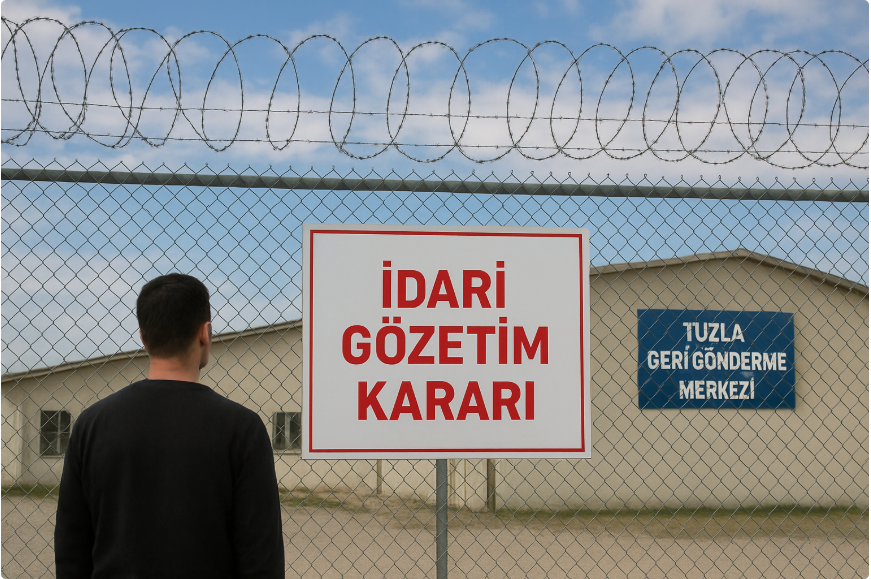
Human rights violations experienced by individuals held under administrative supervision at the Tuzla Removal Center, and particularly the problems regarding access to healthcare services, are difficult processes to resolve without expert legal support. Legal avenues such as administrative litigation, criminal investigations, individual applications to the Constitutional Court, and applications to the ECHR involve complex procedures. For this reason, obtaining support from an experienced lawyer in Tuzla ensures both that applications are made correctly and timely, and that the individual’s rights are protected most effectively. Tuzla lawyer support is the strongest way to address human rights violations suffered by foreigners held in removal centers.