Introduction
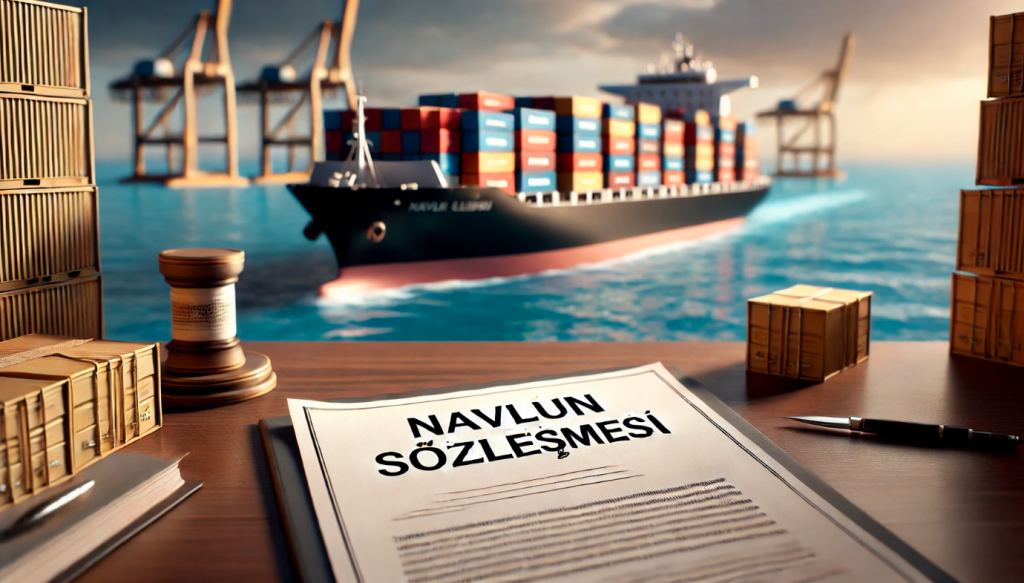
This study presents an analysis of court decisions regarding the resolution of disputes according to types of freight contracts. Examinations show that contractual arrangements between parties, especially arbitration and jurisdiction clauses, are primarily decisive in resolving disputes. In cases where there is no written contract, the provisions of the bill of lading and national (Turkish Commercial Code – TCC) and international legislation (CMR, Montreal Convention, etc.) applicable according to the type of transport are taken as a basis. The report examines these resolution methods under the headings of main findings and detailed analysis.
Priority of Arbitration and Jurisdiction Clauses: The most common finding in the examined decisions is that the arbitration and jurisdiction clauses contained in freight contracts are primarily considered by the courts. If the parties have designated the law of a specific country and an arbitration center (especially London Arbitration) or a foreign court as competent for the resolution of the dispute, Turkish courts issue decisions of incompetence or lack of jurisdiction.
Determinative Nature of the Bill of Lading: In the absence of a written freight contract between the parties, the bill of lading becomes the fundamental document governing the legal relationship between the carrier and the consignor/consignee. Provisions regarding jurisdiction, statute of limitations, and liability contained in the bill of lading are directly applied in the resolution of disputes.
Varying Legal Regimes Based on Mode of Transport: In resolving disputes, the mode of transport (sea, land, air) is of critical importance. For sea transport, the provisions of the Turkish Commercial Code (TTK) apply; for international road transport, the CMR Convention; and for air transport, the Montreal or Warsaw Conventions are applied, with courts paying particular attention to identifying the correct legal regime.
Common Dispute Subjects: Lawsuits typically focus on unpaid freight charges, container demurrage fees, cargo damage/loss, and the determination of liabilities arising from the delivery terms (FOB, CIF, EXW, etc.).
Determination of Parties’ Capacities: In resolving disputes, accurately identifying the capacities of the parties to the lawsuit, such as “carrier”, “consignor”, “consignee”, or “actual carrier”, is essential for determining who bears the debts and liabilities.
1. Determination of Dispute Resolution Method: Arbitration and Jurisdiction Clauses
Court decisions clearly show that the parties’ will is given precedence in freight contracts. Especially in contracts of an international nature, it is common for parties to authorize arbitration or the courts of a specific country for the resolution of disputes. Courts dismiss the case on procedural grounds without examining the merits if such conditions exist.
Arbitration Clause: In many decisions, courts are seen to rule for lack of jurisdiction due to the arbitration clause in the contract. The Istanbul 17th Commercial Court of First Instance made the following determination in one of its decisions: “...since it is understood that the London/arbitration clause for disputes was accepted in Article 43 of the binding note dated 25/04/2018 regarding the terms of the freight contract, which was accepted by both parties, it was concluded that the defendant’s objection to arbitration was well-founded, and therefore, with the acceptance of the objection to arbitration, it was necessary to decide on the procedural dismissal of the case due to our court’s lack of jurisdiction arising from the arbitration clause in the freight contract.“ (2020/206 E., 2021/219 K.). Similarly, the Bursa 1st Commercial Court of First Instance also accepted the provision “General Average and Arbitration will be held in London – English Law will be applied” in the contract made via email as a valid arbitration clause (2015/776 E., 2016/682 K.).
Jurisdiction Clause: Similar to arbitration, provisions in a bill of lading that exclusively grant jurisdiction to a foreign court are also considered binding. In a decision by the 12th Civil Chamber of the Istanbul Regional Court of Justice, “Article 26 on the reverse side of the bill of lading explicitly stipulates that the bill of lading shall be interpreted according to English Law and that the High Court of London shall have exclusive jurisdiction over all disputes arising from the bill of lading; in this case, it must be accepted that the High Courts of London also have exclusive jurisdiction in this present lawsuit,” thus affirming the local court’s decision of lack of jurisdiction (2019/785 P., 2019/738 D.).
2. The Role of the Bill of Lading in the Absence of a Charterparty Agreement
In cases where there is no detailed written charterparty agreement between the parties, the bill of lading functions as the contract itself, going beyond merely being an instrument of proof. The 43rd Civil Chamber of the Istanbul Regional Court of Justice expressed this situation as follows: “According to Article 1237 of the Turkish Commercial Code, legal relations between the carrier and the shipper are subject to the provisions of the charterparty agreement. However, in the absence of a written charterparty agreement, the bill of lading becomes a decisive factor in the legal relationship between the carrier and the shipper.“ (2020/329 P., 2021/779 D.). Therefore, provisions such as the statute of limitations, liability limitations, and jurisdiction clauses contained in the bill of lading are directly taken as the basis for resolving disputes.
3. Applicable Law According to the Type of Carriage
In resolving disputes, the means by which the carriage was performed is a decisive factor.
Maritime Transport: Disputes in this area are primarily resolved within the framework of the Turkish Commercial Code (TCC). Issues such as demurrage claims (TCC 1174, 1203, 1207), the carrier’s duty of care (Izmir 5th Commercial Court, 2022/490 E.), periods for damage notification (TCC 1185), and the interpretation of special clauses like FIOS (Free In/Out Stow) (Istanbul 17th Commercial Court, 2019/120 E.) are evaluated according to the provisions of the TCC.
Road Transport: In disputes arising from international road transport, courts primarily apply the provisions of the CMR Convention. The carrier’s liability, grounds for exemption from liability, and compensation calculations are made according to the relevant articles of the CMR (e.g., Article 17). As stated by the Ankara West Commercial Court of First Instance, “…since the transport between the parties was carried out internationally, the dispute was resolved by evaluating the contract between the parties and the provisions of the CMR Convention.” (2021/649 E., 2022/1002 K.).
Air Transport: In air transport, the Montreal or Warsaw Conventions apply. Courts must determine the correct legal regime by ascertaining which convention the countries where the transport in dispute took place are party to (Istanbul Regional Court of Justice 14th Civil Chamber, 2018/45 E., 2018/650 K.).
4. Frequently Encountered Dispute Issues and Resolution Approaches
Payment of Freight and Additional Costs: According to the TCC, the freight debtor is generally the carrier (TCC art. 1200). However, delivery terms such as FOB (Free On Board) in the sales contract may indicate that the freight payment obligation actually belongs to the buyer. In one of its decisions, the Court of Cassation accepted that the phrase “FOB” in the invoice and customs declaration proved that the freight charges belonged to the buyer (11th Civil Chamber, 2013/17224 E., 2014/6849 K.).
Container Detention Fee (Demurrage): For demurrage claims to be valid, there must first be an agreement between the parties on this matter. However, even if there is no agreement, according to TCC art. 1203, it is accepted that by taking delivery of the cargo, the consignee assumes all debts arising from the bill of lading, and these debts also include the return of the container. If the cargo is not taken delivery of, the responsibility lies with the carrier (TCC art. 1207/1).
Cargo Damage and Loss: The carrier’s liability for cargo damage is based on fault. The claimant must prove that the damage occurred during transport and while under the carrier’s responsibility. Furthermore, timely written notification of the damage to the carrier at the latest upon delivery (TCC art. 1185) is a critical procedural requirement to prevent loss of rights (Istanbul 17th Commercial Court, 2017/151 E., 2019/288 K.).
Conclusion
The resolution of disputes arising from freight contracts requires a multi-layered and technical legal assessment. The examined court decisions reveal that the first step in the resolution process is the determination of the contract, arbitration, and jurisdiction clauses that reflect the parties’ intentions. The existence of such clauses leads to cases being concluded procedurally without delving into their merits. In cases where contractual arrangements are absent, bill of lading provisions and national and international legislation specific to the type of transport (sea, land, air) (e.g., Turkish Commercial Code, CMR) come into play. For the dispute to be resolved correctly, it is essential to carefully analyze the parties’ capacities (carrier, shipper), the delivery method (FOB, CIF, etc.), and the obligation subject to the dispute (freight, demurrage, damage). An article suggestion.
Why is Tuzla Lawyer Support Necessary?
Disputes arising from freight contracts involve complex legal regulations at both national and international levels. Issues such as the interpretation of arbitration clauses, the validity of bill of lading provisions, and the application of international texts like the CMR or Montreal Convention require expertise.
Especially the density of the maritime and logistics sector in Tuzla, Pendik, Kartal, Maltepe, Gebze and their surroundings increases the risk of disputes for companies operating in these regions. Therefore, Tuzla lawyer support is vital to prevent parties from suffering a loss of rights.
A Tuzla maritime lawyer can determine the correct legal strategy regarding freight contracts, bills of lading, and shipping regimes, both within the framework of the Turkish Commercial Code and international conventions. Furthermore, they can provide fast and effective solutions in enforcement proceedings, demurrage claims, collection of freight receivables, and lawsuits related to cargo damage.
As a result, in resolving complex and technical freight disputes, working with an expert Tuzla lawyer is the most appropriate way for companies to minimize financial losses and manage the process securely.