Maritime activities constitute a high-risk sector strictly bound by international standards. The safe operation of ships is not solely the responsibility of shipowners; states are also obligated to inspect the technical safety of ships and their compliance with international conventions under the scope of flag state responsibility. In Turkey, this inspection system is largely regulated by the “Regulation on Authorized Organizations for Ships”.
This regulation includes detailed rules concerning the determination and supervision of organizations that will operate on behalf of the Ministry for the control of applicable technical standards, the conduct of surveys, the issuance of certificates, and the execution of classification procedures during the construction, modification, maintenance, and operation processes of Turkish-flagged vessels. The Regulation also regulates the responsibilities of these organizations, their inspection processes, and sanction mechanisms such as the suspension or cancellation of their authorizations.
Below, all important provisions of the regulation have been examined in detail and with reference to their respective articles.
Purpose of the Regulation
The primary purpose of the Regulation on Authorized Organizations for Ships is to establish a technical inspection system aimed at ensuring safety of life and property at sea and preventing marine pollution in national and international waters. In the maritime sector, it is mandatory for ships to comply with specific technical standards for their safe operation. These standards are regulated in both national legislation and international conventions to which Turkey is a party.
In this context, the regulation determines the procedures and principles for the selection and authorization of organizations that will provide testing, survey, plan approval, and certification services for the purpose of inspecting the minimum safety and competence criteria to be applied during the construction, repair, modification, and operational phases of Turkish-flagged ships. These organizations act on behalf of the Ministry and inspect the compliance of ships with international maritime standards. The regulation also stipulates how these organizations will be audited, under what conditions their authorizations will be revoked, and how their activities will be conducted. (Reg. art. 1)
Scope of the Regulation
The regulation covers Turkish or foreign legal entities authorized by the Ministry for the technical inspection and certification of Turkish-flagged ships. These organizations are generally classification societies operating internationally and are expert institutions that inspect the compliance of ships with technical standards.
In this context, the regulation does not govern the direct operation of ships, but rather regulates the authorization, duties, responsibilities, and auditing mechanisms of organizations that conduct inspections on ships. Authorized organizations check the compliance of ships with international conventions and issue the necessary certificates accordingly. Through this system, instead of carrying out the inspection duty entirely by itself, the state utilizes international organizations with high technical capacity to perform flag state inspections more effectively. (Reg. Art. 2)
Legal Basis of the Regulation
The regulation has been prepared based on various legislative provisions that authorize the Ministry of Transport and Infrastructure to make regulations in the maritime sector. In this context, specifically the Decree Law No. 655 on Certain Regulations Regarding the Field of Transport and Infrastructure and the Presidential Decree No. 1 on the Presidential Organization constitute the fundamental legal basis of the regulation.
These regulations grant the Ministry broad administrative powers regarding the regulation of maritime activities, ensuring ship safety, implementing international conventions, and establishing a ship inspection system. The regulation was also prepared and enacted within the scope of these powers. (Reg. Art. 3)
Basic Definitions in the Regulation
A correct understanding of some concepts used in the application of the regulation is of great importance. For this reason, numerous technical concepts are defined in detail within the regulation.
For example, “ship” is defined to encompass not only self-propelled vehicles but also all marine vehicles that must move on water and possess buoyancy. This definition also includes platforms, various service vessels, and some special marine craft.
Furthermore, in the regulation, “survey” refers to technical examinations and inspections carried out to determine the compliance of ships with national legislation and international conventions. Survey procedures cover many elements such as the ship’s structural condition, machinery systems, safety equipment, and environmental protection systems.
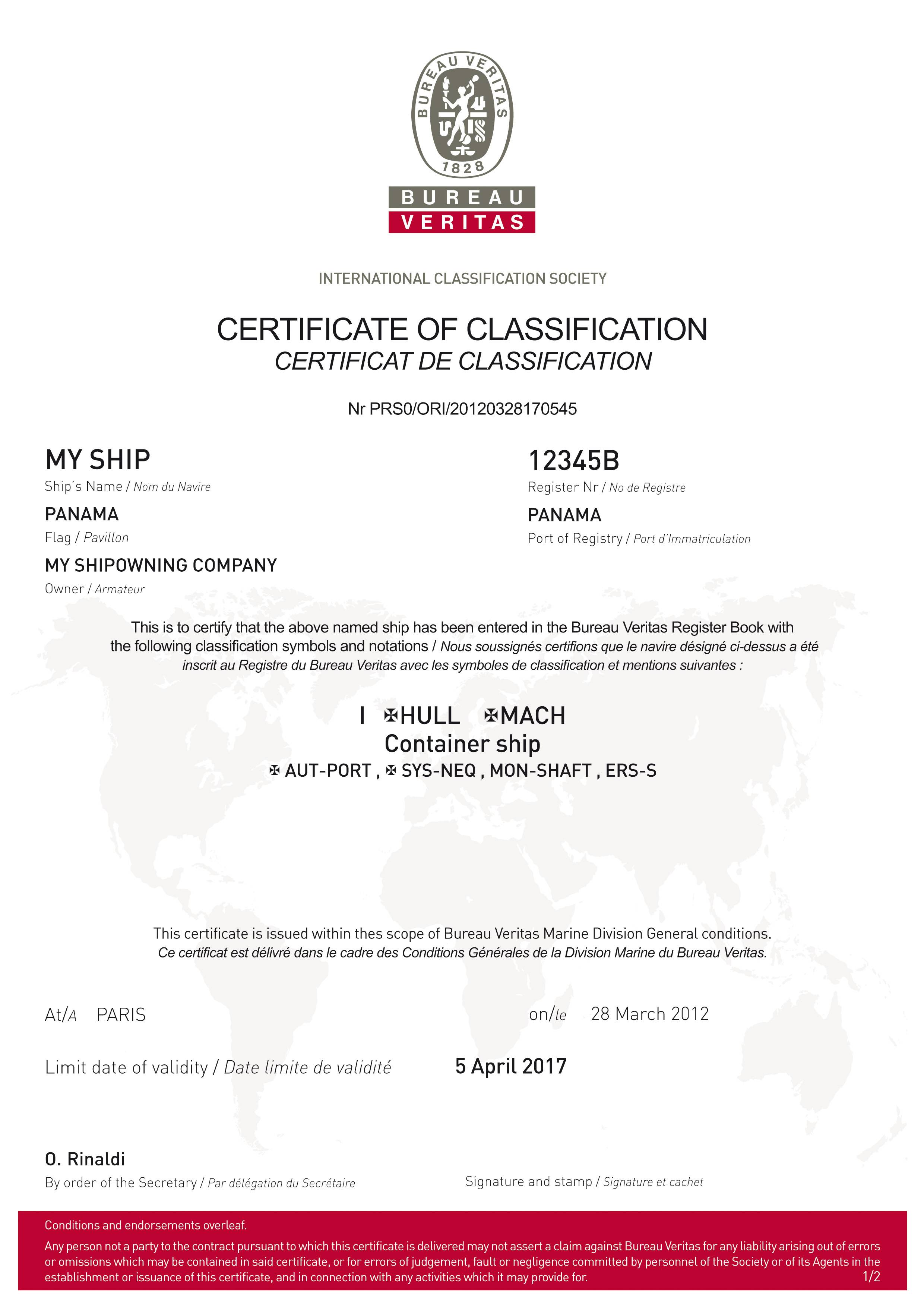
Moreover, the regulation defines “class certificate” as a document indicating that a ship’s structural and technical characteristics comply with specific class rules. This certificate is an important technical document demonstrating that the ship has been constructed and is operated in accordance with international standards.
The regulation also addresses the concept of a Recognized Organization. Recognized organizations are entities that operate under the Recognized Organizations Code accepted by the IMO and are authorized by flag states. (Reg. Art. 4)
Authorization Request and Application Process
Organizations wishing to carry out ship inspection and certification services on behalf of the Ministry must first submit an authorization request. As part of this request, organizations are required to submit various information and documents demonstrating their technical competence, organizational structure, and personnel capacity to the Ministry.
The application file generally includes elements such as the organization’s organizational structure, quality management system, technical infrastructure, surveyor staff, compliance with international standards, and experience in the maritime field. These documents are important for evaluating whether the organization can reliably carry out ship inspection and certification activities.
Organizations wishing to become limited authorized organizations must also meet the special criteria determined by the Ministry. (Reg. Art. 5)
Auditing of Applications and Review Process
Organizations applying for authorization are not evaluated solely based on documents. The Inspection, Determination, and Auditing Commission (İTDK) established by the Ministry plays an important role in the application process.
This commission not only examines the documents submitted by organizations; but also evaluates the organization’s technical capacity by conducting on-site audits of its head office and, if any, regional offices. During the audits, the organization’s technical equipment, personnel qualifications, and organizational structure are examined.
The report prepared by the commission is then submitted to the Ministry and forms the basis for the authorization decision. (Reg. Art. 6)
Authorization Decision and Decision Commission
Authorization decisions are made by the Decision Commission established within the Ministry. The structure of this commission consists of high-level executives, and decisions are mostly made by majority.
The Commission consists of high-level executives such as the Deputy Minister, Director General of Maritime Affairs, Director General of Legal Services, and Director General of Shipyards and Coastal Structures. This structure ensures that authorization decisions are meticulously evaluated from both a technical and legal perspective.
In line with the decision made by the Commission, it is determined whether the organization will be authorized. (Reg. art. 7)
Authorization Protocol
An authorization protocol is signed between the Ministry and organizations with a positive authorization decision. This protocol is the fundamental legal document that defines which tasks the organization will perform on behalf of the Ministry and the mutual responsibilities of the parties.
While preparing the protocol, the provisions of the Recognized Organizations Code published by IMO and international maritime standards are taken into consideration. The duration of the authorization protocol can be a maximum of ten years. (Reg. art. 8)
Registration System for Turkish-Flagged Vessels
Authorized organizations are required to record all technical information pertaining to Turkish-flagged vessels they register. This registration system is of great importance for monitoring the technical history of vessels and ensuring transparent inspection processes.
The registration system includes information such as the vessel’s survey history, identified deficiencies, corrections made, issued certificates, and technical modifications. This information is kept open for review by both the Ministry and foreign administrations during port state controls. (Reg. art. 9)
Port State Controls and Obligations
Authorized organizations are obliged to follow up on deficiencies identified during port state controls of vessels under their registry. In case a vessel is detained or serious deficiencies are identified during port state control, the organization must immediately inform the Ministry.
Within this scope, organizations are obliged to monitor whether deficiencies identified during port state controls have been rectified and to submit the necessary reports to the Ministry. (Reg. Art. 16)
Financial Responsibility and Insurance Obligation
Authorized organizations have legal responsibilities for damages that may arise from their survey and certification activities. Therefore, within the scope of the regulation, it is mandatory for organizations to obtain professional liability insurance.
Organizations providing survey services for vessels engaged in international voyages must obtain professional liability insurance with a minimum coverage of 5 million TL. This insurance aims to cover damages that may arise as a result of the organizations’ activities. (Reg. Art. 22)
Supervision of Authorized Organizations
The Ministry regularly supervises the activities of authorized organizations. These supervisions are generally carried out once every two years, but can also be conducted more frequently if deemed necessary.
During inspections, organizations’ survey activities, certification processes, personnel competency, and technical procedures are examined. In addition, Ministry personnel may also participate in some of the planned inspections carried out on ships. (Reg. Art. 25)
Yetkilendirilmiş kuruluş nedir?
Yetkilendirilmiş kuruluş, Ulaştırma ve Altyapı Bakanlığı tarafından gemiler üzerinde teknik denetim, sörvey ve sertifikalandırma işlemlerini gerçekleştirmek üzere yetkilendirilen kuruluştur. Bu kuruluşlar genellikle uluslararası klas kuruluşlarıdır ve gemilerin ulusal mevzuat ile uluslararası sözleşmelere uygunluğunu denetler. Geminin yapımından işletilmesine kadar birçok teknik inceleme bu kuruluşlar tarafından gerçekleştirilir.
Klas sertifikası neden önemlidir?
Klas sertifikası, bir geminin yapısal ve teknik özelliklerinin belirli klas kurallarına uygun olduğunu gösteren önemli bir teknik belgedir. Uluslararası sefer yapan birçok geminin klas sertifikasına sahip olması zorunludur. Bu sertifika sayesinde geminin uluslararası güvenlik standartlarına uygun olduğu kabul edilir ve gemi uluslararası limanlarda faaliyet gösterebilir.
Sörvey işlemleri hangi konuları kapsar?
Sörvey işlemleri geminin gövdesi, makine sistemi, güvenlik ekipmanları, yangın önleme sistemleri, çevre koruma sistemleri ve navigasyon ekipmanları gibi birçok teknik unsuru kapsar. Bu denetimler geminin ulusal ve uluslararası kurallara uygunluğunu belirlemek amacıyla yapılır ve sonucunda gerekli sertifikalar düzenlenir.
Why is Expert Maritime Law Attorney Support Necessary?
Maritime legislation does not consist solely of national regulations; it also includes numerous technical regulations such as IMO conventions, international maritime codes, and class rules. Therefore, shipowners, operators, and maritime companies can often encounter complex legal issues.
Particularly in situations such as the cancellation of class certificates, the detention of a vessel during port state control inspections, shipping accidents, and the liability of authorized organizations, it is of great importance to seek support from expert maritime law attorneys. Thanks to expert legal support, shipowners can both be protected from administrative sanctions and continue their operations in compliance with international maritime legislation.