Introduction Extraordinary meetings of the board of apartment owners, convened in accordance with Article 29 of the Condominium Law (KMK) No. 634, are subject to the strict formal requirements stipulated by law. In light of Supreme Court decisions, the elements that must be included in call letters for these meetings and the procedural rules to be observed are detailed below.
1. Mandatory Elements to be Included in the Call Letter
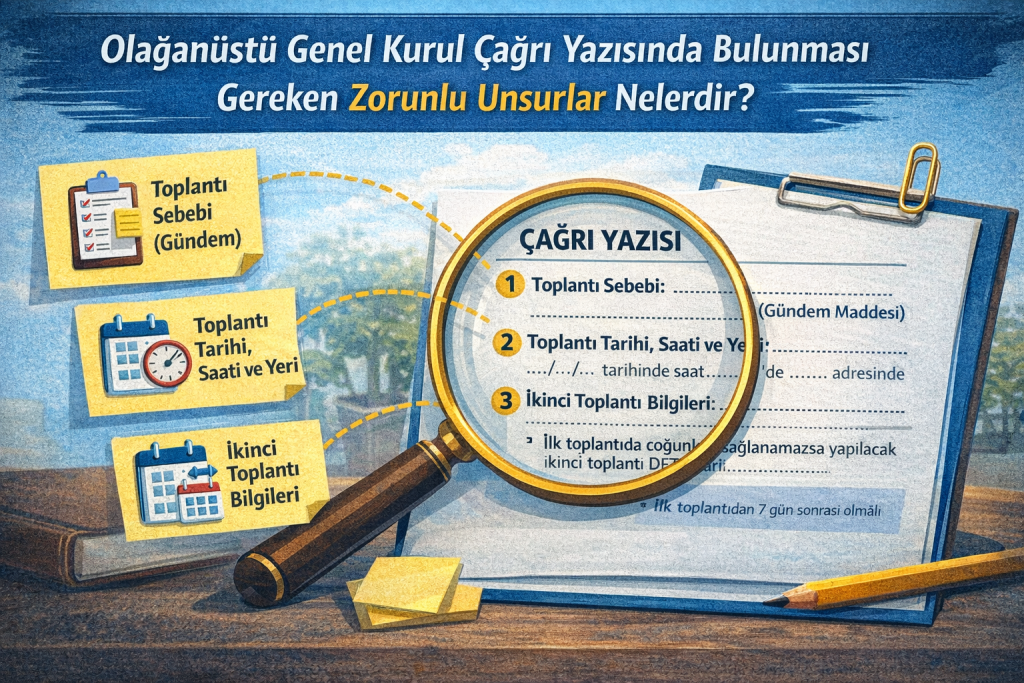
According to the established jurisprudence of the 20th Civil Chamber, 18th Civil Chamber, and 5th Civil Chamber of the Supreme Court, an extraordinary general assembly call letter must contain the following information:
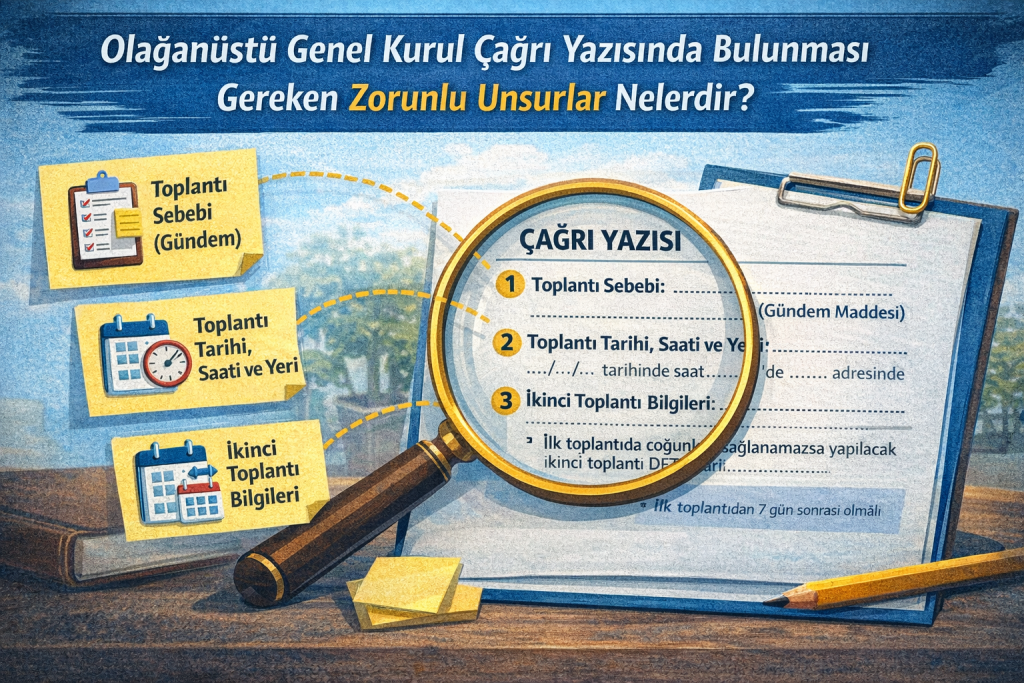
Reason for the Meeting (Agenda): The reason for the meeting must be clearly stated in the extraordinary meeting invitation. Notifying the reason for the meeting is a mandatory condition, and it is not possible to discuss and decide on matters outside this reason (off-agenda).
Date, Time, and Venue of the Meeting: The location and time of the meeting must be stated in a way that leaves no room for doubt.
Second Meeting Information: When the initial call is made, the location and date of the second meeting must also be specified, in case a quorum is not achieved in the first meeting.
Period Between Meetings: It should be noted that the period between the first and second meetings cannot be less than seven days.
2. Call Procedure and Notification Requirements
For an extraordinary meeting invitation to be valid, it is mandatory to comply with the notification methods stipulated by law:
Notification Method: The call must be made to all floor owners “against signature” or “registered letter” . Announcements posted on the notice board or at the apartment entrance do not meet the formal requirements stipulated by law and lead to the annulment of the meeting.
Notification Period: The call must be delivered to all floor owners at least 15 days before the requested meeting date. This 15-day period is mandatory; even if there are provisions in the management plan that shorten this period, the legal period shall be taken as a basis.
Recipient: The call must be made directly to the “floor owner”. Notifications made to a tenant residing in the floor owner’s independent section are invalid and are not considered to have been made to the floor owner.
3. Critical Points to Consider
Strict Formal Requirements: Extraordinary meetings are subject to stricter formal rules than ordinary meetings. Failure to comply with these rules (duration, method, content) leads to the annulment of the decisions made solely for this reason, without examining other matters.
Authority to Convene: An extraordinary meeting may be convened upon the request of the manager, auditor, or 1/3 of the floor owners if a “significant reason” arises.
Burden of Proof: Proof that the call was made in due form is only possible with written documents (signed call list, PTT records, registered letter receipt). Failure to submit these documents in the file is a ground for annulment.
Effect of Participation: In some decisions, it is observed that even if a proper invitation was not made, the fact that the floor owner participated in the meeting is taken into account when evaluating the request for annulment.
4. Secondary Source Assessments
The following additional contexts were provided in decisions considered as secondary sources:
It was emphasized that compliance with the provisions of the management plan is critical in extraordinary meeting invitations, but the periods in the management plan cannot be contrary to the imperative provisions of the Condominium Law (KMK).
It was stated that the court must thoroughly examine meeting invitation documents, attendance lists, agendas, and powers of attorney, and that a deficiency in the invitation procedure may lead to cases of “nullity” or “absolute invalidity,” in which case lawsuit filing periods may not be sought.
It was stated that not specifying the place and time of the first meeting in the invitation letter or confusing the nature of the meeting (ordinary/extraordinary) could be a reason for annulment.
Conclusion: The extraordinary general assembly invitation letter must include the reason, place, time, and possible second meeting information; it must be delivered to all floor owners at least 15 days in advance, either with a signature or by registered mail. Failure to comply with these procedures carries the risk of all decisions taken at the meeting being annulled through legal action. A blog post suggestion.
Frequently Asked Questions
1) Olağanüstü kat malikleri kurulu çağrı yazısında neler mutlaka yer almalıdır?
Yargıtay’ın yerleşik içtihatlarına göre olağanüstü toplantı çağrı yazısında toplantı sebebi (gündem) açıkça belirtilmeli; toplantının tarihi, saati ve yeri tereddüde yer vermeyecek şekilde yazılmalı; ayrıca ilk toplantıda çoğunluk sağlanamazsa yapılacak ikinci toplantının yer ve zamanı da gösterilmelidir. Toplantı sebebi bildirilmeden yapılan çağrılar geçersiz sayılmakta ve gündem dışı kararlar iptal edilmektedir.
Olağanüstü toplantı çağrısı ilan panosuna asılarak yapılabilir mi?
Hayır. Olağanüstü toplantı çağrısı, tüm kat maliklerine imza karşılığı veya taahhütlü mektupla yapılmalıdır. Apartman girişine veya ilan panosuna asılan duyurular kanuni tebligat yerine geçmez. Yargıtay uygulamasında, bu şekilde yapılan çağrılarla toplanan genel kurullarda alınan kararlar salt çağrı usulsüzlüğü nedeniyle iptal edilmektedir.
15 günlük çağrı süresine uyulmazsa toplantı ve kararlar geçerli olur mu?
Hayır. Olağanüstü kat malikleri kurulu toplantılarında 15 günlük çağrı süresi emredici niteliktedir. Bu sürenin yönetim planı ile kısaltılması mümkün değildir. Çağrının kat maliklerine toplantıdan en az 15 gün önce ulaştırılmadığı ispatlanırsa, toplantıda alınan kararlar başka bir husus incelenmeden iptal edilebilir.
Why is Expert Legal Assistance Necessary?
Extraordinary meetings of the board of floor owners are subject to much stricter formal requirements compared to ordinary meetings.
The absence of even a single element in the call letter,
Incorrect calculation of the 15-day period,
Notification being made to the tenant,
Errors such as the omission of information for the second meeting can lead to the annulment of all decisions, even if they were taken unanimously at the meeting. Furthermore, since the burden of proof that the call was made in due form rests with the party making the call, missing documents or records can result in irretrievable loss of rights.
For this reason, the conduct of the extraordinary general assembly process, from the preparation of the call text to the notification and potential annulment lawsuits, with the accompaniment of a lawyer well-versed in condominium law and Supreme Court precedents, is critically important for the validity of the process and the legal security of the decisions to be taken.