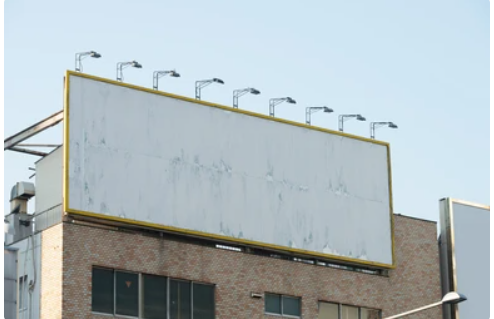

General Rule and Conditions: According to the established practices of the Supreme Court, for a signboard or advertising panel to be affixed to the facade of a building for the purpose of promoting and advertising a workplace, the consent of the floor owners is not always required, provided that there is no prohibition stipulated in the management plan and by a decision of the board of floor owners.
However, this has specific conditions:
Size and Aesthetics: The signboard/panel should not be of exaggerated size in a way that would spoil the building’s exterior appearance and aesthetics. It must be of reasonable dimensions.
Independent Section Boundaries: The signboard/panel must not exceed the exterior facade boundaries of the independent section to which it belongs. Specifically, it must not exceed the ceiling slab boundaries or the ceiling and floor boundaries of the independent section.
Not Disturbing Other Apartment Owners: The sign/billboard must not disturb other independent section owners or tenants and must not restrict their rights. For example, it should not cause disturbance by its light or by blocking the view.
Situations Requiring the Consent of Apartment Owners
Interference with Common Areas: The building’s exterior facade is a common area under the Condominium Law (KMK). Interventions in common areas generally require the consent of the apartment owners.
Condominium Law Article 19: One of the apartment owners cannot construct, repair, install facilities, or make alterations in the common areas of the main property without the written consent of four-fifths of all apartment owners.
Management Plan and Apartment Owners’ Board Decisions: If there is a specific prohibition or regulation regarding the hanging of signs/billboards in the management plan or in the decisions of the apartment owners’ board (e.g., designated areas, sizes, or prohibitions), then compliance with these rules is mandatory. The management plan may state that shops can only place their signs in areas allocated to them. The management plan may prohibit placing advertisements in common areas, allocated areas, and on the building’s exterior facades.
Exceeding Independent Section Boundaries: If the sign/billboard exceeds the exterior facade/ceiling/floor boundaries of the independent section it belongs to, this constitutes an interference with a common area, and prevention of this situation may be requested. In this case, the exceeding part may need to be removed.
Disturbance of Building Aesthetics or Causing Nuisance: If the sign/panel excessively disrupts the building’s exterior appearance and aesthetics or causes nuisance to other floor owners (e.g., exaggerated dimensions, light pollution, obstruction of view), this situation may be a reason to prevent intervention or to have the sign removed/regulated.
Violation of the Architectural Project: If the installed sign/panel constitutes a violation of the main property’s architectural project, this situation may necessitate preventing intervention and ensuring compliance with the project.
Violation of Municipal Regulations: Advertising panels must comply with the relevant municipality’s advertising, announcement, and promotion regulations. Non-compliance with regulations can also be a reason to prevent intervention.
In conclusion, to summarize, (What Should Be Considered When Installing a Sign or Advertising Panel?)
According to Supreme Court jurisprudence, the hanging of billboards generally does not require additional permission from the apartment owners, provided that it remains within the boundaries of the independent section of the workplace, does not disrupt the building’s aesthetics, is of reasonable size, and does not disturb other owners, and if there is no prohibition to the contrary in the management plan or a decision by the board of apartment owners. However, if any of these conditions are not met, especially in cases where the boundaries of the independent section are exceeded and common areas such as the exterior facade are interfered with, the provisions of the Condominium Law regarding common areas (such as Article 19), the rules of the management plan, and the decisions of the board of apartment owners come into play, and the removal of the intervention may be requested. An article suggestion.

Why is Expert Opinion Necessary?
Applications such as signs or billboards are not merely a visual preference, but also entail legal and administrative responsibilities. The Condominium Law, management plan provisions, Supreme Court decisions, and municipal regulations must be evaluated together. At this point, obtaining an opinion from a lawyer or a real estate law expert both prevents loss of rights and prevents potential disputes in the future.
Especially in Istanbul’s rapidly developing and densely urbanized districts such as Maltepe, Kartal, Pendik, and Tuzla, apartment and site managements are more sensitive. In these areas, apartment owners are more careful and aware of every intervention made to common areas. An improperly implemented sign application may lead to the risk of objections from apartment owners, fines from the municipality, or intervention through legal action.