
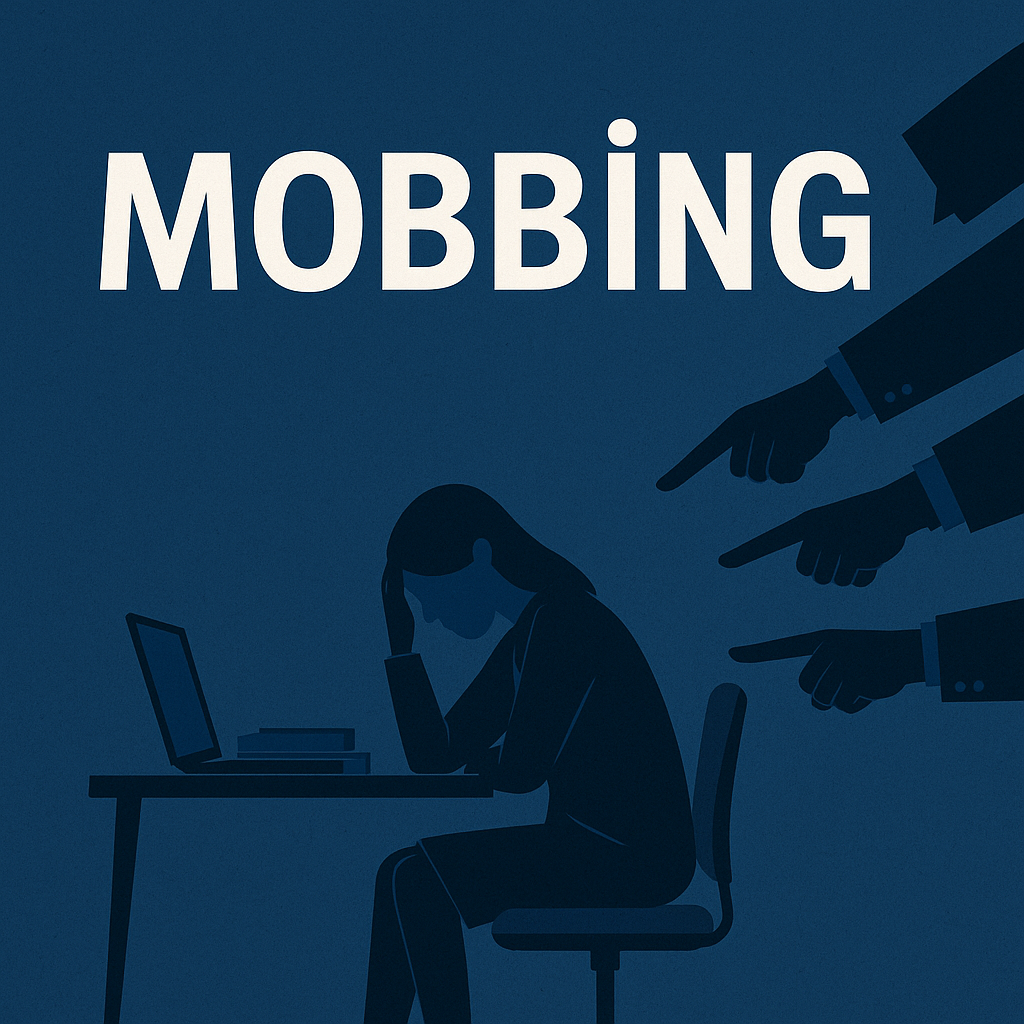
Evidential Value of Official Reports, Emails (Mail), and Messages in Proving Mobbing (Psychological Harassment) Allegations. In light of reviewed judicial decisions, definitive and beyond-a-doubt evidence is not sought in proving mobbing allegations; instead, the principle of “approximate proof” is accepted as valid. In this context, official reports, emails, and messages are accepted as evidence to the extent that they reveal a systematic policy of pressure and intimidation. However, the mere existence of these documents is not sufficient; their content and continuity are decisive.
1. Evidential Value of Mobbing (Psychological Harassment) Email (Mail) Correspondences
In judicial decisions, emails can be considered among the strongest pieces of evidence for mobbing, depending on their content and method of sending.
Situations Where Accepted as Evidence:
Insult and Incivility: In the decision no. 2015/2274 of the Supreme Court of Appeals General Assembly of Civil Chambers (HGK), addressing an employee as “insolent” and using commanding expressions was considered an indicator of mobbing. Similarly, the 22nd Civil Chamber of the Supreme Court of Appeals (2013/693) accepted exceeding the bounds of civility in intra-branch correspondence as evidence.
Systematic Pressure and Exclusion: The 9th Civil Chamber of the Supreme Court of Appeals (2021/12218) considered the detailed “information” emails sent by the plaintiff to managers regarding their portrayal as unsuccessful and their exclusion, along with witness statements, as valid evidence in proving mobbing.
Negative Intelligence: The Supreme Court General Assembly (2017/3017) considered emails exchanged among managers containing negative intelligence about the plaintiff as proof of systematic pressure.
Cases Where Insufficient as Evidence:
Mass Mailings: The 7th Civil Chamber of the Supreme Court (2014/1345) ruled that mass emails sent to all employees, not specific to an individual, do not constitute evidence of mobbing.
Instructions Required by the Job: The Supreme Court General Assembly (2016/1427) and the 9th Civil Chamber of the Supreme Court (2010/38293) decided that emails written in a polite tone and containing instructions within the scope of work operations and assignments are not sufficient to prove mobbing.
2. Evidential Value of Mobbing Messages (SMS, WhatsApp)
Messages sent via electronic communication tools are taken into consideration by the judiciary, especially in proving systematic harassment and working conditions.
Cases Where Accepted as Evidence:
Group Correspondence: The 9th Civil Chamber of the Supreme Court (2016/14206) considered correspondence made by employees in a WhatsApp group about managers’ attitudes and negative working conditions as evidence for determining mobbing-like attitudes.
Continuity and Harassment: The Supreme Court’s General Assembly of Civil Chambers (2019/683) accepted persistent, late-night, sexually-oriented messages sent by an employer to a female employee as evidence of an infringement on personal rights and psychological harassment. The Supreme Court’s 22nd Civil Chamber (2012/6291) also considered insults and defamation via SMS as concrete evidence justifying termination.
Admission: The Supreme Court’s 9th Civil Chamber (2022/4922) ruled that WhatsApp and email correspondences, the content of which was admitted by the defendant, proved the existence of mobbing.
Situations Where Evidence Was Deemed Insufficient:
Personal Communications Without Employer Involvement: The Supreme Court’s 7th Civil Chamber (2016/23374) stated that private messages exchanged between an employee and another employee would not constitute evidence against the employer in the context of mobbing, as long as the employer’s order or involvement could not be proven.
3. Evidentiary Nature of Reports
Reports are addressed in two different ways in mobbing cases: either as a tool of mobbing (unjustified reporting) or as a means of documenting events.
Reports as a Tool of Mobbing (Evidence in favor):
The Supreme Court’s 7th Civil Chamber (2016/31457) accepted unfounded and unjust reports, consecutively filed against an employee for reasons such as dress code violations within a short period, as a “planned and systematic mobbing”s bir part and evidence.
The Supreme Court’s General Assembly of Civil Chambers (2017/3017) evaluated the employee’s report filed as a result of the search of their desk, a systematic harassment’s indicator.
The 9th Civil Chamber of the Supreme Court (2022/14587) deemed records related to an insult incident, if corroborated by witness statements, sufficient for proving psychological harassment.
Records Deemed Insufficient for Proof:
The Denizli Regional Administrative Court (2013/158) stated that the records kept by the administration due to absenteeism did not prove the claim of mobbing; on the contrary, they supported the administration’s defense.
The 7th Civil Chamber of the Supreme Court (2016/23374) emphasized that records kept due to disruptions in work operations (e.g., failure to collect cargo) and statements of defense alone are not sufficient to accept that mobbing occurred.
4. Findings from Secondary Sources
The following decisions, while not directly mobbing cases within the scope of labor law, or in a secondary context, offer additional perspective on the nature of evidence:
Issue of Unlawful Evidence: The Constitutional Court (25/2/2021) considered an employer’s unauthorized acquisition of an employee’s private messages (WhatsApp, etc.) and using them as grounds for termination an infringement of privacy. This indicates that the method of obtaining messages to be used as evidence in mobbing cases must be lawful.
Messages in Criminal Proceedings: The 4th Criminal Chamber of the Supreme Court (2021/30760) and the 9th Criminal Chamber of the Supreme Court (2021/12444) accepted WhatsApp message transcripts and HTS records as valid evidence to be based upon in judgments for insult and harassment offenses. This supports that messages are strong evidence in the criminal law dimension of mobbing (insult, threat).
Correspondence in Commercial Lawsuits: The Istanbul Anatolian 13th Civil Court of Commerce (2020/609) has stated that emails and computer records constitute evidence within the scope of Article 193 of the HMK in mobbing claims related to contract termination.
Conclusion: According to judicial decisions; minutes, emails, and messages are considered evidence for mobbing. However, the evidentiary value of these documents is evaluated by the courts based on factors such as systematicity, nature of the content (insult, humiliation, unfair accusation), lawful acquisition, and support by other evidence (witness, health report). Abstract claims or correspondence required by the nature of the work are not accepted as evidence of mobbing. A text suggestion.
Why is Expert Legal Support Necessary in Mobbing Cases? – 2M Law Office
While electronic or written evidence such as emails, WhatsApp messages, and minutes in mobbing claims are considered by the courts under the principle of “approximate proof”, submitting these documents alone is not sufficient; their content, continuity, ability to demonstrate systematic pressure, and whether they were obtained lawfully are extremely critical. The Supreme Court’s decisions, which considered messages containing insults as evidence but did not accept instructions required by the job as mobbing, demonstrate how technical evidence evaluation is.
Therefore, in mobbing cases, working with an expert lawyer becomes essential for the correct segregation of evidence, the sifting of unlawfully obtained data, determining whether minutes will result in favor of or against the employer, strengthening witness testimonies with evidence, and presenting psychological harassment criteria in a manner consistent with Supreme Court precedents. Especially in mobbing cases observed in the busy business centers of Istanbul’s Anatolian Side (Tuzla, Pendik, Kartal, Maltepe, Kadıköy, Ataşehir, Ümraniye) and the Gebze region, mastery of local court practices is crucial for the successful management of the process.
2M Hukuk Law Firm provides professional support on the technical analysis of mobbing evidence, the legal characterization of employer-employee correspondences, the proof of psychological harassment elements, and the correct evaluation of the consequences of employment contract termination. Expert lawyer support both prevents loss of rights and ensures the strategic strengthening of the case.