Introduction
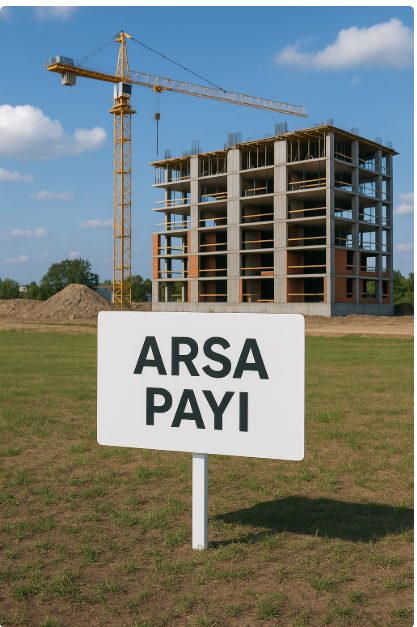
This study analyzes the question of whether a penalty clause can be demanded in case of termination of construction contracts in return for land share, in light of the presented judicial decisions. Examinations reveal that the issue cannot be reduced to a single rule; the validity of the demand depends on many factors such as the legal status of the contract, the nature of the termination, special provisions in the contract, and the fault status of the parties. The study aims to provide a guiding framework for lawyers by systematically addressing these factors.
1. General Rule: Inability to Demand a Penalty Clause Upon Termination of a Construction Contract in Return for Land Share
The fundamental principle consistently emphasized in judicial decisions is that a claim for contract termination and a penalty clause cannot exist together. The Supreme Court evaluates the penalty clause within the scope of “positive (affirmative) damage”. Termination, on the other hand, is a legal transaction that nullifies the contract and aims to restore the parties to their pre-contractual state. Therefore, when a contract is terminated, the parties no longer have an expectation that the contract will be performed. Consequently, demanding a penalty clause, which is a sanction dependent on performance, is contradictory.
In the decision numbered 2013/892 E. of the 23rd Civil Chamber of the Supreme Court, this situation was expressed as, “the claim for such a penalty depends on the contract being in force.” Similarly, in the decision numbered 2023/4155 E. of the 6th Civil Chamber of the Supreme Court, the principle that *”since the termination of the contract is requested, a penalty clause within the scope of positive damage cannot be claimed“* was adopted. It is accepted that the party choosing termination implicitly waives the claim for a penalty clause with this action (Supreme Court 23rd Civil Chamber, 2013/5174 E.).
2. Main Reasons Preventing a Claim for a Penalty Clause
Beyond the general rule, there are some fundamental situations that render a penalty clause claim impossible from the outset or abolish it.
a) Invalidity of the Contract Ab Initio: The penalty clause is a secondary obligation tied to the main contract. Therefore, if the main contract is legally invalid, the penalty clause dependent on it is also invalid. The most common reason for invalidity in court decisions is the failure of all co-owners to be a party to the contract in immovable properties subject to co-ownership. This situation was clearly stated in the decision numbered 2012/1006 E. of the 15th Civil Chamber of the Court of Cassation: “…for a termination to be mentioned, there must be a legally valid contract… For these reasons, since there is no valid contract, it cannot be accepted that the stipulated penalty clause can be demanded.” This rule stems from the requirement that significant dispositions, such as construction on co-owned property, must be made by unanimous consent, in accordance with Article 692 of the Turkish Civil Code (TCC) (See. Court of Cassation 15th CC, 2009/3771 E.; R.C.A.-Izmir 14th CC, 2017/630 E.).
b) Being the Party that Terminates the Contract: Court decisions generally accept that the party terminating the contract, based on its own declaration of termination, kcannot claim a penalty clause from the other party. The penalty clause is a right that can be asserted by the other party, who wishes the contract to remain in force, against the party at fault for the termination. In the decision numbered 2018/919 E. of the 15th Civil Chamber of the Court of Cassation, this principle was clearly stated as: “The stipulated penalty clause can be claimed not by the terminating party, but by the other party.” For this reason, a landowner or contractor who unilaterally terminates the contract cannot claim a penalty clause based on this termination, regardless of the justness of the termination (See. Bakırköy 7th Commercial Court of First Instance, 2011/298 E.).
3. Exceptional Circumstances Where a Penalty Clause Claim is Possible
Despite the general rule and obstacles mentioned above, it is possible to claim a penalty clause in certain situations, even despite termination.
a) Explicit Provision in the Contract: This is the most important and most frequently encountered exception. According to the principle of freedom of contract, parties can explicitly agree that a penalty clause shall be paid even in case of termination of the contract. If there is such a provision in the contract, courts prioritize this will. This exception was emphasized as follows in the decision of the 23rd Civil Chamber of the Court of Cassation, numbered 2012/6542 E.: “Since there was no provision in the current contract stating that a penalty would be paid even in case of termination, while the claim for a penalty clause should have been rejected, deciding to accept it based on an erroneous assessment was incorrect and necessitated annulment.” This statement indicates that the claim would have been accepted if there had been a provision to the contrary. This principle has been reiterated in numerous decisions (See. Court of Cassation 6th Civil Chamber, 2022/3217 E.; Court of Cassation 23rd Civil Chamber, 2016/6000 E.; First Instance-Bakırköy 2nd Commercial Court, 2021/910 E.).
b) Nature of Termination: Termination with Prospective Effect: In cases where a significant portion of the construction has been completed but could not be finalized due to the contractor’s default, courts may decide on the “prospective termination” of the contract. In this situation, the contract remains valid until the moment of termination. The consequences of prospective termination are different from retroactive termination. This distinction has been clearly explained in the decision numbered 2022/1628 E. of the 17th Civil Chamber of the Istanbul Regional Court of Justice: “…in prospective termination, the contractor is entitled to receive a title deed share according to the level of construction completed, and the landowner, unlike in retroactive termination, can demand the penalty clause attached to performance and delay (rent) compensation due to the delay in performance… from the contractor.” Therefore, in cases where the termination is decided to have prospective effect, the penalty clause attached to performance and delay compensation can be demanded (See. Supreme Court 15th Civil Chamber, 2010/2090 E.).
4. Other Matters to Consider
Joint Fault of Parties: If it is determined that both parties are at fault in the events leading to termination, neither party can demand a penalty clause or positive damages from the other. According to the decision numbered 2021/4707 E. of the 6th Civil Chamber of the Supreme Court, “if the parties are jointly at fault in the termination, claiming loss of profit within the scope of positive damages or a penalty clause due to delay… is not possible.“
Mutual Termination (Rescission by Agreement): If the parties terminate the contract by agreement (rescission by agreement), this constitutes a new contract. In this case, for rights such as the penalty clause arising from the previous contract to be claimed, these rights must be explicitly reserved in the rescission agreement (Supreme Court 15th Civil Chamber, 2018/1410 E.).
Scope of the Penal Clause: It is important to determine the specific condition for which the penal clause was agreed upon. For instance, a penalty specifically stipulated for the situation of “failure to commence construction” cannot be claimed for defaults occurring after construction has begun (Supreme Court 15th Civil Chamber, 2009/3771 E.).
CONCLUSION
The answer to the question of whether a penal clause can be claimed upon the termination of construction contracts in exchange for a land share is strictly dependent on the wording of the contract and the specific circumstances of the case. Although judicial decisions establish a strong general rule that a penal clause cannot be claimed concurrently with termination, there are significant exceptions to this rule. Specifically, the existence of an express provision in the contract stating “that the penal clause shall be paid even in case of termination” is the most decisive factor for the acceptance of the claim. Additionally, conditions such as the contract being valid from the outset, the termination having prospective effect, and the claiming party not having caused the termination through their fault also directly influence the outcome of the claim. Therefore, in legal disputes, it is essential to first carefully examine the text of the contract and correctly determine the nature of the termination. An article suggestion.
Why Is Expert Lawyer Support Necessary?
Claims for penal clauses in construction contracts in exchange for land share are a complex area intertwined with the legal consequences that may arise in case of termination. Whether the penal clause can be claimed requires the joint evaluation of many factors such as the validity of the contract, whether the termination has prospective or retrospective effect, the fault ratio of the parties, and the special provisions in the contract. Therefore, serious loss of rights may occur if the process is managed incorrectly. Especially in construction projects in exchange for land share, commonly seen in regions such as Istanbul, Tuzla, Kartal, Pendik, Tepeören, Gebze, and Bayramoğlu, the incomplete or incorrect assertion of claims for penal clauses or compensation after the termination of contracts can lead to both financial losses and lengthy litigation processes.
Decisions of the Court of Cassation also show that; for a penal clause to be claimed, the nature of the contract, the statements of the parties, and the legal consequences related to termination must be correctly analyzed. At this point, a detailed examination of the contract, determining which provisions are valid or not, the protection of rights after termination, and the correct structuring of the litigation strategy can only be provided by an experienced construction law attorney in this field. Working with a professional **land share agreements lawyer** both ensures that penal clause claims are legally validly put forward and helps you position yourself most strongly against possible objections and defenses. Therefore, acting from the beginning of the process with the support of an **Istanbul Tuzla Kartal Pendik Tepeören Gebze Bayramoğlu lawyer** is critically important for preventing loss of rights.