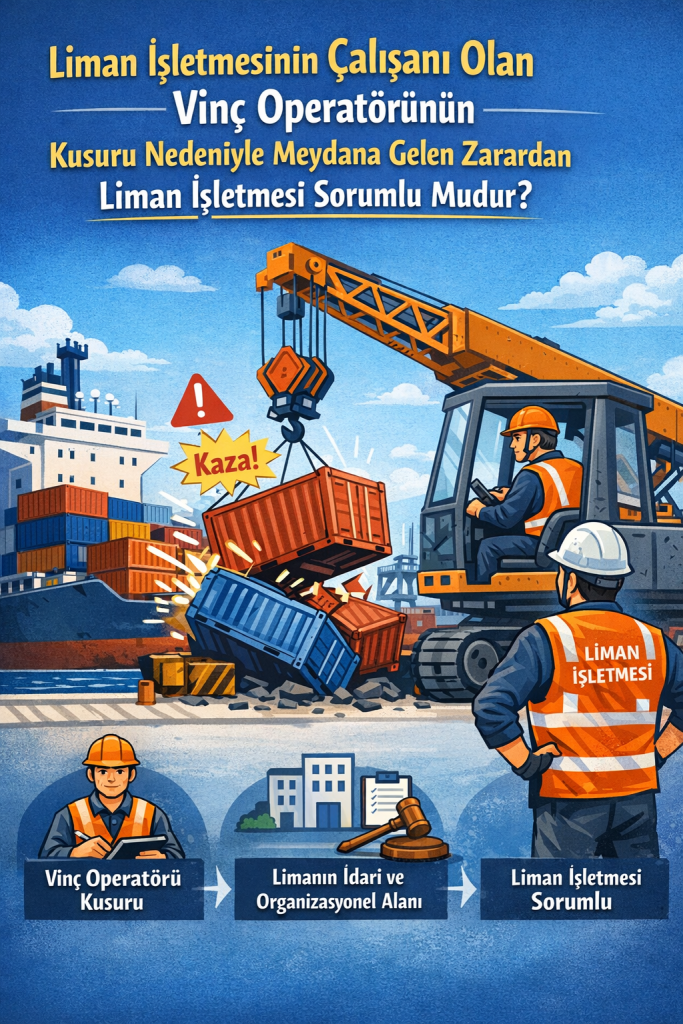
Damages caused to the vessel or cargo during the loading, unloading, and handling activities of port operators are evaluated according to various criteria in court decisions, regarding the legal nature of liability, the court where the case will be heard, and its qualification as a “maritime claim”.
1. Legal Nature and Foundations of Liability
Court decisions address the liability of the port operator within the framework of three main legal bases:
Employer’s Liability (TCO Art. 66 / fTCO Art. 55): In cases of damages resulting from faulty maneuvers by a port crane operator or forklift driver, the port operator is held liable as an “employer”. For example, in a case where a container was damaged due to incorrect stacking, the port operator was held liable because the crane operator failed to exercise due diligence (Court of Cassation 11th Civil Chamber 2015/10010 P. D).
Tort Liability (TCO Art. 49): In cases where there is no direct contract between the parties, the negligent act of the port operator is deemed a tort. In the decision of Izmir 5th Civil Court of First Instance (2022/108 P. D), it was stated that the port operator is the “performance assistant” of the carrier, but in situations where there is no contractual relationship between the plaintiff insured and the port, liability will be determined according to tort provisions.
Liability of the Assistant for Performance (TCO Art. 116 / Old CO Art. 100): The port operator is considered an “assistant for performance” who fulfills the carrier’s (shipowner’s) loading and unloading obligations. In this case, the carrier is liable for the fault of the port operator as if it were their own fault, and can subsequently seek recourse from the port operator (Turkish Court of Appeals, 11th Civil Chamber, 2011/11590 E. Source).
2. Nature of Maritime Claim and Ship Lien
The issue of whether damages caused by the port operator to the ship constitute a “maritime claim” is critical in terms of applicable procedure and security rights:
Nature of Maritime Claim: In the decision of the Turkish Court of Appeals, 11th Civil Chamber (2018/129 E. K), the damage caused by a port crane striking a ship’s crane was classified as a “maritime claim” within the scope of Law No. 3095, Art. 4/a, and it was affirmed that the case should be heard in the Commercial Court.
Statutory Lien Right: In some cases, a statutory lien right can be established on a ship due to cargo damages caused by the fault of the port operator. In the decision of the Turkish Court of Appeals, 11th Civil Chamber (2011/11590 E. K), a lien right on the ship was recognized for cargo damaged by forklift fault, in accordance with Turkish Commercial Code (TCC) Articles 1235/7 and 1236.
3. Competent Court and Types of Lawsuits
In lawsuits to be filed against a port operator, the competent court is determined based on whether the dispute falls within the scope of “maritime commerce”:
Maritime Specialised Courts: In cases where the damage is directly related to the operation of the vessel or the performance of a maritime transport contract, the Maritime Specialised Courts are deemed competent. In the decisions of Istanbul 17th Commercial Court (2018/427 E.) and Istanbul Regional Court of Appeals 12th Civil Chamber (2020/1223 E. K), it was emphasised that the provisions of Maritime Commercial Law shall apply to damages occurring on a vessel before the discharge is completed, and that the Specialised Court is competent.
Commercial Courts of First Instance: In some decisions, Commercial Courts of First Instance were found to be competent, stating that the port service is a “contract of work” (contract for services) and that the dispute is of a general commercial lawsuit nature rather than maritime commerce (Istanbul 17th Commercial Court 2022/255 E. K).
Case Types: In practice, lawsuits for “Compensation”, “Annulment of Objection”, and “Recourse for Damages” filed by insurance companies are generally observed.
4. Concrete Case Analyses
Collision of Port Crane with Ship Crane: In the event of a shore crane’s boom being traversed horizontally and colliding with a ship crane at the TCDD port, the port operator was held responsible for the repair cost and loss of rent (Supreme Court 11th Civil Chamber 2018/129 E. K). In a similar event, the crane colliding with the ship crane without being stopped was characterised as a tortious act (Supreme Court 11th Civil Chamber 2011/849 E. K).
Forklift and Handling Errors: Damage to coiled sheets while being transported by forklift (Supreme Court 11th Civil Chamber 2011/11590 P. D) or a container being dropped from a crane and damaging another container (Supreme Court 11th Civil Chamber 2013/6450 P. D) are typical examples that give rise to the port operator’s liability.
Damage to Ship Equipment: In the incident where a port crane struck the ship’s radar due to not being raised high enough during discharge, 50% fault sharing was determined, also considering the ship’s ballast imbalance (Supreme Court 11th Civil Chamber 2012/10624 P. D).
5. Additional Context from Secondary Sources
Decisions considered as secondary sources provide additional details on liability limits and procedure:
Fault Determination and Protest: In cases of damage to hatch covers during discharge, protest letters and survey reports prepared by the ship’s captain are of critical importance as means of proof (Supreme Court 11th Civil Chamber 2014/4749 P. D).
Effect of FIOS Clause: The FIOS (Free In and Out Stowed) clause in the bill of lading may transfer discharge responsibility from the carrier to the consignee. In this case, it is considered that the carrier cannot be held responsible for the errors of the port workers (Istanbul Regional Court of Appeals 12th Civil Chamber 2022/1526 P. D).
Operator Errors and Work Accidents: The injury of a seaman as a result of the crane operator acting without instruction during unloading, being considered within the scope of “maritime operational activity” has been included in the jurisdiction of the Maritime Specialized Court (Istanbul Regional Administrative Court 12th Civil Chamber 2025/1541 E. K).
Shipyard and Port Interaction: In collisions between a ship and port/shipyard equipment, in the presence of external factors such as wind, fault is shared between the captain and the operator (Istanbul 17th Commercial Court 2017/148 E.).
Frequently Asked Questions
Liman işletmesinin tahmil ve tahliye sırasında verdiği zararlar deniz alacağı sayılır mı?
Evet, bazı durumlarda sayılır. Zararın geminin işletilmesiyle veya deniz taşımasının ifasıyla doğrudan bağlantılı olması halinde, liman işletmesinin verdiği zararlar “deniz alacağı” niteliği kazanabilir. Bu durumda gemi üzerinde kanuni rehin hakkı doğması ve ihtiyati haciz gibi deniz hukukuna özgü güvencelere başvurulması mümkündür.
Liman işletmesi her durumda sözleşmeye dayalı mı sorumlu olur?
Hayır. Taraflar arasında doğrudan bir sözleşme bulunmuyorsa, liman işletmesinin sorumluluğu haksız fiil hükümlerine göre değerlendirilir. Ancak taşıyan adına yükleme veya boşaltma yapan liman işletmesi, bazı hallerde “ifa yardımcısı” olarak kabul edilerek dolaylı sözleşmesel sorumluluk da gündeme gelebilir.
Liman kaynaklı hasarlarda hangi mahkeme görevlidir?
Uyuşmazlığın deniz ticaretiyle doğrudan bağlantılı olup olmadığı belirleyicidir. Hasar, geminin işletilmesi veya deniz taşıması sürecinde meydana gelmişse denizcilik ihtisas mahkemeleri görevli kabul edilir. Aksi halde, genel ticari nitelik taşıyan uyuşmazlıklarda asliye ticaret mahkemeleri görevli olabilir.
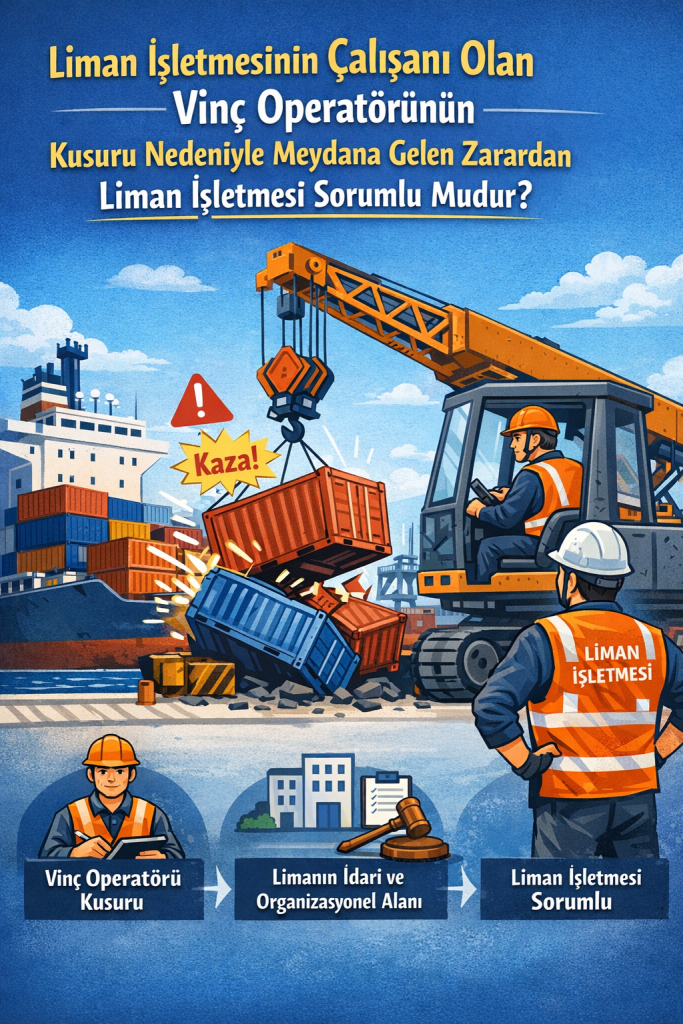
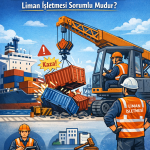
Liman İşletmesinin Çalışanı Olan Vinç Operatörünün Kusuru Nedeniyle Meydana Gelen Zarardan Liman İşletmesi Sorumlu Mudur?
Evet. Yargıtay 11. Hukuk Dairesi’nin 08.02.2016 tarihli, E. 2015/10010, K. 2016/1052 sayılı kararı uyarınca, liman sahasında yürütülen tahliye, taşıma ve istifleme faaliyetleri sırasında liman işletmesinin çalışanı olan vinç operatörünün kusuru ile meydana gelen zararlardan liman işletmesi hukuken sorumludur.
Karara konu olayda; konteyner içinde bulunan emtia, liman sahasında vinçle taşınırken yanlış istifleme yapılması sonucu zarar görmüştür. Zarara sebep olan vinç operatörünün, liman işletmesinin çalışanı olması nedeniyle, olay adam çalıştıranın sorumluluğu kapsamında değerlendirilmiştir.
Yargıtay; Tahliye ve istifleme işlemlerinin liman işletmesinin sevk ve idaresi altında yürütüldüğünü, Zarara sebep olan fiilin, liman işletmesi personelinin kusurundan kaynaklandığını, Bu nedenle liman işletmesinin, çalışanının kusurlu fiilinden dolayı üçüncü kişilere verilen zararı tazmin etmekle yükümlü olduğunu
kabul etmiş ve yerel mahkeme kararını oybirliğiyle onamıştır. Bu içtihat, liman işletmelerinin, yük elleçleme faaliyetleri sırasında personel kusurundan doğan zararlara karşı doğrudan sorumlu tutulacağını açık şekilde ortaya koymaktadır.
Liman sahasında gemiden tahliye sırasında meydana gelen yük hasarından kim sorumludur?
Yargıtay 11. Hukuk Dairesi’nin 15.11.2011 tarihli kararına göre, yükün gemiden tahliyesi sırasında liman işletmesinin ekipmanları ve personelinin kusuruyla meydana gelen zararlardan liman işletmesi sorumludur. Somut olayda çelik rulo yükü, liman sahasında tahliye sırasında liman işletmesine ait forkliftlerin kusuru nedeniyle zarar görmüş; Yargıtay, liman işletmesinin bu zarardan sorumluluğunu açıkça kabul etmiştir.
Liman işletmesinin kusuru taşıyanı da sorumlu kılar mı?
Evet. Yargıtay, liman işletmesini taşıyanın muavin şahsı (yardımcısı) olarak kabul etmiş; bu nedenle taşıyanın da, liman işletmesinin kusurlu fiilinden müştereken ve müteselsilen sorumlu olduğunu belirtmiştir.
Liman sahasında tahliye sırasında meydana gelen yük hasarında, yük sahibine tazminat ödeyen taraf diğer sorumlulara rücu edebilir mi?
Evet. Yargıtay 11. Hukuk Dairesi’nin 15.11.2011 tarihli (E. 2011/11590, K. 2011/15096) kararı uyarınca, liman sahasında tahliye sırasında meydana gelen yük hasarında yük sahibine tazminat ödeyen taraf, zararın meydana gelmesinde kusuru bulunan diğer sorumlulara rücu edebilir. omut olayda zarar, gemiden tahliye sırasında liman işletmesine ait forkliftlerin kusuru ile meydana gelmiştir. Yargıtay, liman işletmesini taşıyanın muavin şahsı (yardımcısı) olarak kabul etmiş; bu nedenle yük sahibine karşı taşıyan ile liman işletmesinin müştereken ve müteselsilen sorumlu olduğunu belirtmiştir. Ancak iç ilişkide, zararın hangi taraftan kaynaklandığı esas alınmıştır.
Bu çerçevede: Taşıyan, yük sahibine zararı ödemesi halinde, kusurun liman işletmesinde olması nedeniyle ödediği bedelin tamamı için liman işletmesine rücu edebilir. Liman işletmesi, zararın kendi forklift ve personel kusurundan doğduğu kabul edildiğinden, yük sahibine ödeme yapmış olsa dahi taşıyana rücu edemez.
Rücu, müşterek ve müteselsil sorumluluk kapsamında dış ilişkiyi değil, sorumlular arasındaki iç ilişkiyi düzenler ve kusur esasına göre belirlenir.
Ayrıca Yargıtay, FIOS gibi taşıma şartlarının rücu ilişkisini ortadan kaldırmadığını, bu şartların yalnızca yük sahibi ile taşıyan arasındaki sözleşmesel ilişkiyi ilgilendirdiğini açıkça ortaya koymuştur. Rücu alacağı ise, yük sahibinin asli tazminat alacağından farklı olarak, gemi üzerinde kanuni rehin hakkı doğuran bir alacak niteliğinde değildir. Sonuç olarak: Bu karara göre, liman sahasında tahliye sırasında meydana gelen yük hasarında yük sahibine ödeme yapan taraf, zararın meydana gelmesinde kusurlu olan tarafa rücu eder; somut olayda kusur liman işletmesinde kabul edildiğinden, rücu hakkı taşıyan lehine doğmaktadır.
Why is Expert Legal Support Necessary for Port-Related Damages?
Damages arising from port operators’ loading, unloading, and handling activities; require extremely technical evaluations in terms of the legal nature of liability, applicable legal provisions, competent court, and the characterization as a “maritime claim.” Incorrect legal characterization can lead to the procedural dismissal of the case, loss of security and lien rights, or prolonged litigations in the wrong court.
Especially in cases of ship damage, fault sharing, letters of protest, survey reports, the effect of the FIOS clause, and recourse relations require expertise. Therefore, working with an experienced lawyer in the field of maritime trade and port liability is critically important to prevent loss of rights and to ensure the process is concluded as quickly as possible.