SALVAGE (SALVAGE) AND SALVAGE REMUNERATION DISPUTES (Maritime Salvage Claims in Turkey)
What Is Maritime Salvage? (What Is Maritime Salvage?)
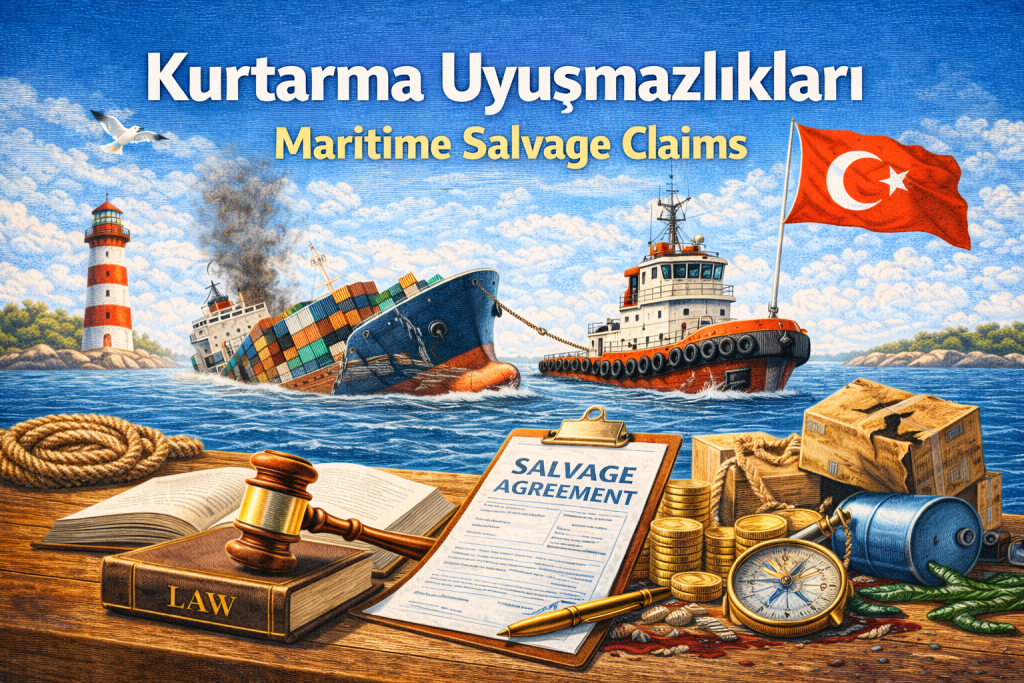
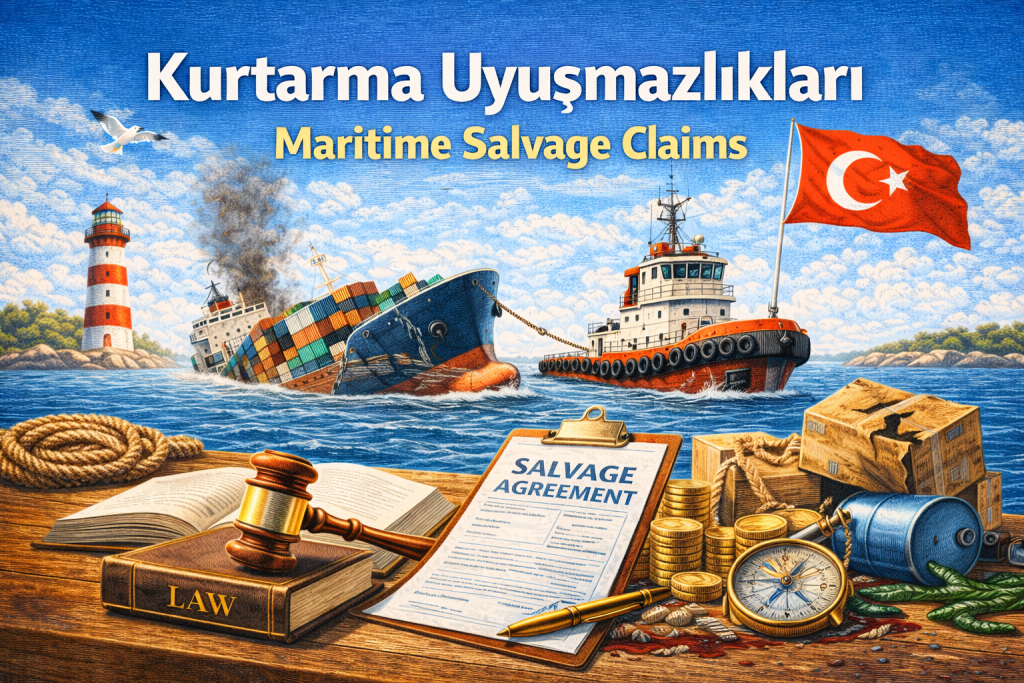
Maritime salvage (salvage) refers to salvage remuneration and compensation claims arising from interventions made for the purpose of protecting vessels, cargo, or the marine environment in danger at sea. In maritime commercial law, salvage operations constitute an important legal field in terms of both ensuring maritime safety and protecting commercial interests.
As a result of salvage operations, the salvor or company has the right to claim salvage remuneration if certain conditions are met.
Maritime salvage refers to operations performed to save a vessel, cargo or the marine environment from danger at sea, giving rise to salvage remuneration and compensation claims. Salvage law plays a significant role in maritime safety and commercial protection. Salvors may claim remuneration when certain legal conditions are met.
Legal Basis of Salvage Claims (Legal Basis of Salvage Claims)
Claims related to salvage remuneration are evaluated within the framework of the provisions of the Turkish Commercial Code, principles of international maritime law, and maritime practices. For salvage operations to have legal consequences, the following conditions must be met:
Existence of a real and serious maritime danger
The performance of a salvage intervention
The salvage operation concluding successfully or providing a benefit
The salvage operation being performed voluntarily
In the presence of these conditions, the salvaging party may claim a salvage fee.
Salvage claims are governed by the Turkish Commercial Code and international maritime law principles. A valid salvage claim generally requires a real maritime danger, voluntary intervention, successful outcome or beneficial result, and salvage operations performed without prior contractual obligation.
Determination of Salvage Reward (Determination of Salvage Reward)
Various criteria are taken into account in determining the salvage reward. These include:
Value of the salvaged vessel or cargo
Degree of danger
Success of the salvage operation
Labor and time spent in the salvage activity
Equipment and technical facilities used
Risks arising during salvage
These criteria directly affect the amount of salvage reward and the parties’ liability.
Salvage remuneration is determined based on factors such as the value of the salvaged property, degree of danger, success of the operation, time and effort spent, equipment used and risks involved. These factors directly affect the amount of salvage reward.
Salvage Contracts and International Practice (Salvage Contracts and International Practice)
In the maritime sector, salvage operations are often carried out under special salvage contracts. These contracts regulate the scope of the salvage operation, the method of fee calculation, and the liabilities of the parties.
Salvage contracts in international maritime trade can give rise to multi-party legal relationships between insurance companies, shipowners, and salvage companies.
Salvage operations are often conducted under specific salvage agreements that regulate the scope of operations, calculation of remuneration and liability allocation. International salvage contracts frequently involve insurers, shipowners and professional salvage companies.
Disputes Arising from Salvage Operations (Salvage Disputes)
The main disputes arising from salvage operations are:
Disagreement over the amount of salvage remuneration
Degree of success of the salvage operation
Interpretation of the salvage contract
Determination of cost and expense items
Damages incurred during salvage
Insurance coverage and liability allocation
The resolution of these disputes requires technical and legal expertise.
Common salvage disputes include disagreements over remuneration, success of the operation, interpretation of salvage contracts, cost allocation, damages during operations and insurance liability. Resolution requires both technical and legal expertise.
Salvage Disputes in Istanbul Ports (Salvage Claims in Istanbul Ports)
Istanbul is one of Turkey’s busiest maritime traffic regions, and due to intense vessel movement in the ports of Ambarlı, Haydarpaşa, and Zeytinburnu, salvage operationsi and related legal disputes frequently arise.
2M Hukuk Law Firm provides legal services to domestic and foreign clients in maritime accidents, salvage operations, and salvage remuneration disputes occurring in Istanbul ports.
Istanbul is one of Turkey’s busiest maritime traffic zones, where salvage operations and related disputes frequently arise. 2M Hukuk Law Firm provides legal services in salvage claims and maritime incidents in Istanbul ports.
Salvage Operations in Tuzla, Kocaeli, and Yalova Region (Salvage Operations in Tuzla, Kocaeli and Yalova)
Tuzla Shipyards Region, Kocaeli İzmit Gulf ports, and Yalova/Altınova shipyards are centers with intense ship maintenance, repair, and maritime activities. Due to maritime accidents and technical failures occurring in these regions, salvage operations and salvage remuneration disputes frequently come to the fore.
Tuzla-based 2M Hukuk Law Firm provides rapid legal intervention, evidence determination, and management of compensation processes in these regions.
Tuzla Shipyards Region, Kocaeli Gulf ports and Yalova shipyards are major maritime activity centers where salvage operations frequently occur due to maritime incidents and technical failures. 2M Hukuk Law Firm provides rapid legal intervention and claim management from its Tuzla-based office.
International Salvage Disputes and Insurance Processes (International Salvage Claims and Insurance Issues)
In international maritime trade, salvage operations often involve insurance companies, P&I clubs, and international shipping companies. The applicable law, liability regime, and insurance coverage play a decisive role in the resolution of disputes in these processes.
2M Hukuk Law Firm provides legal consultancy in Turkish and English in international salvage disputes.
International salvage claims often involve insurers, P&I clubs and global maritime operators. Applicable law, liability regime and insurance coverage play a decisive role in dispute resolution. 2M Hukuk provides bilingual legal services in international salvage matters.
Why Choose 2M Hukuk Law Firm?
2M Hukuk Law Firm is a Tuzla-based, TR/EN bilingual maritime dispute resolution office that operates along the Istanbul–Kocaeli–Yalova port and shipyard line, taking rapid action in maritime accidents and salvage disputes. We provide legal consultancy and representation services to shipowners, operators, insurance companies, and maritime firms.
2M Hukuk Law Firm is a Tuzla-based maritime law office providing rapid legal action in maritime incidents and salvage disputes across the Istanbul–Kocaeli–Yalova corridor.
Legal Assistance for Salvage Claims
You can contact 2M Hukuk Law Firm to get legal assistance regarding maritime accidents, salvage operations, or salvage remuneration claims.
For legal assistance regarding maritime salvage and compensation claims in Turkey, contact 2M Hukuk Law Firm