SEAFARER CLAIMS / MLC 2006 / PORT STATE CONTROL PROCESSES (Seafarer Claims, Maritime Labour Convention and Port State Control in Turkey)
What Are Seafarer Claims? (What Are Seafarer Claims?)
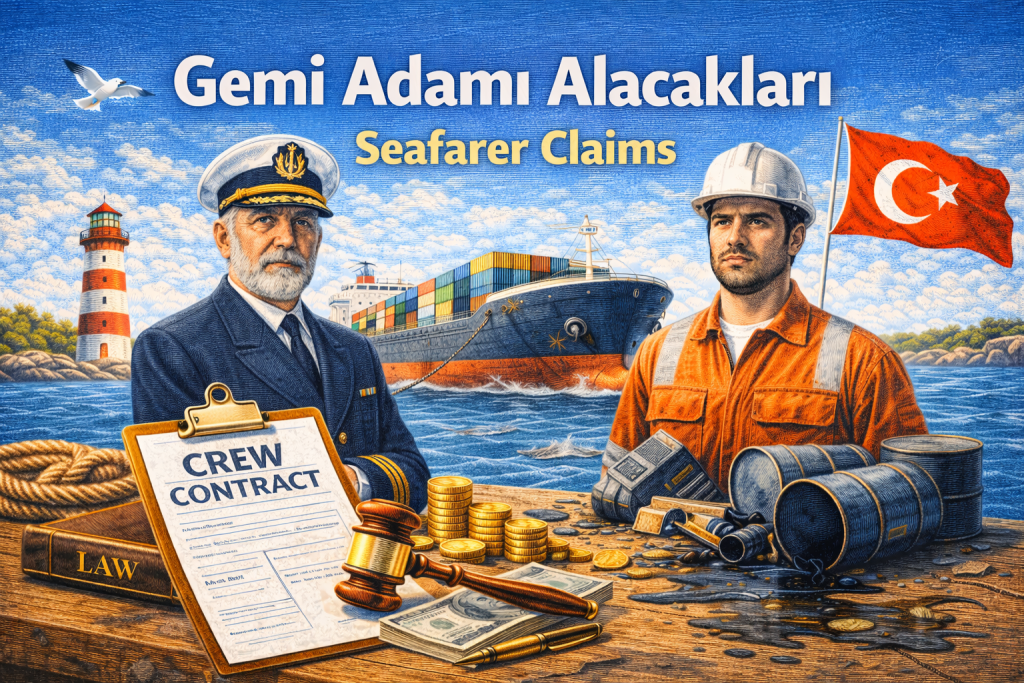
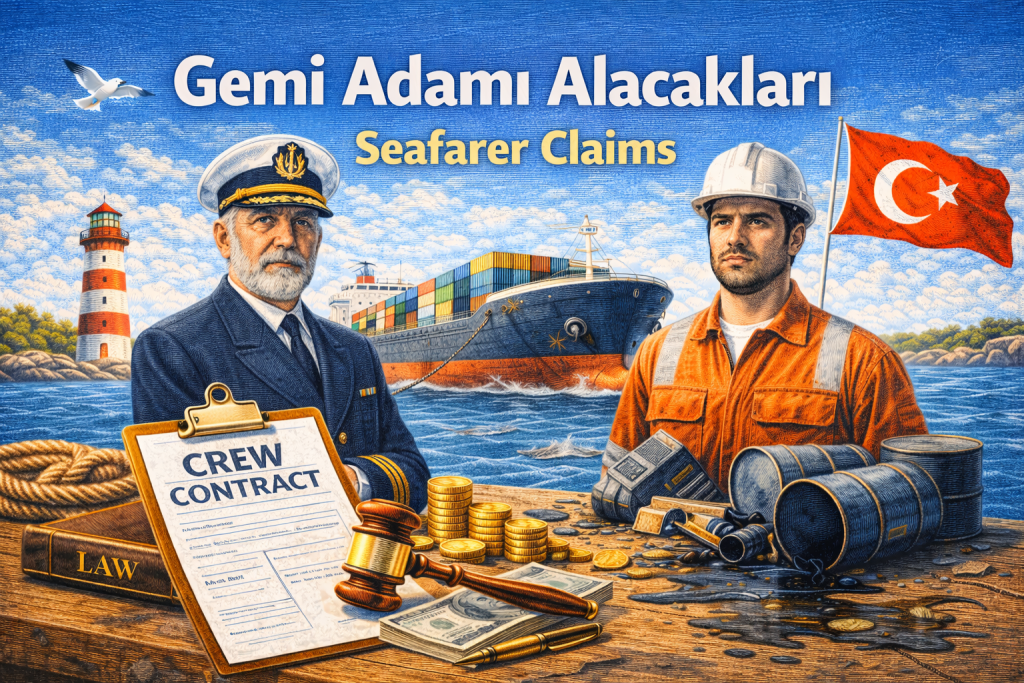
Seafarer claims refer to the rights of crew members working on board, arising from wages, overtime, compensation, working conditions, and their employment contract. In maritime commercial law, seafarers’ rights are protected under national legislation, international maritime law regulations, and particularly within the scope of the Maritime Labour Convention 2006 (MLC 2006).
Seafarers’ claims regarding wage entitlements and working conditions often qualify as maritime claims and can be subject to strong legal protection methods such as ship arrest.
Seafarer claims relate to crew members’ rights arising from employment on board, including wages, overtime, compensation and working conditions. These rights are protected under national maritime law and international regulations, particularly the Maritime Labour Convention 2006 (MLC 2006). Crew wage claims may qualify as maritime claims and can be secured through ship arrest.
Seafarer Wage Claims (Seafarer Wage Claims)
Seafarers’ most fundamental right is their wage entitlement. In cases of non-payment, underpayment, or delayed payment of wages, the crew has the right to claim their entitlements.
Regarding seafarer wage claims:
Wage and overtime claims
Compensations arising from the employment contract
Work accident and damage claims
Violations of working conditions
Wrongful termination of contract
may be subject to legal claim.
The most fundamental right of seafarers is wage payment. Crew members may claim unpaid wages, overtime, employment compensation, workplace injury claims, contractual violations and wrongful termination.
Protection of Seafarers in Maritime Commercial Law (Protection of Seafarers Under Maritime Law)
The protection of seafarers in the maritime sector is one of the fundamental principles of international maritime law. Seafarers’ wages, working hours, rest periods, health conditions, and living conditions must comply with international standards.
In case of violation of these rights, the ship operator or employer may face legal liability.
Protection of seafarers is a fundamental principle of maritime law. Crew working conditions, rest periods, health standards and living conditions must comply with international standards. Violations may result in legal liability for shipowners or operators.
Rights Under Maritime Labour Convention 2006 (MLC 2006)
MLC 2006 is the fundamental regulation that sets international standards regarding seafarers’ working and living conditions. Under this convention, shipowners and operators:
Ensure the payment of crew wages
Comply with working and rest periods
Provide health and safety conditions
Protect the living conditions of the crew
Must act in accordance with employment contracts.
MLC violations can lead to serious sanctions, including the detention of the ship in port.
The Maritime Labour Convention 2006 establishes international standards for seafarer working and living conditions. Shipowners must ensure wage payment, compliance with working hours, health and safety standards and contractual obligations. Violations may lead to serious sanctions, including vessel detention.
Port State Control (PSC) Inspections and Ship Detention
Port State Control (PSC) inspections are controls carried out by the port state to verify the compliance of foreign-flagged vessels with international maritime standards. During PSC inspections, seafarers’ working conditions, wage payments, and living conditions are examined.
In case of MLC 2006 violations, safety deficiencies, or serious breaches of working conditions, the ship may be subject to detention in port.
Port State Control inspections are conducted to verify compliance with international maritime standards. Crew conditions, wage payments and safety standards are examined. Violations may result in vessel detention.
Ship Arrest for Seafarer Claims
Since seafarer claims are maritime claims, they can be secured through ship arrest. If crew claims are not paid, the vessel’s departure from port can be prevented, and the claim can be collected.
In this process, rapid legal intervention is of great importance.
Crew wage claims qualify as maritime claims and may be secured through ship arrest. The vessel may be detained until the crew’s claims are satisfied.
Seafarer Disputes in Istanbul Ports (Seafarer Disputes in Istanbul Ports)
Istanbul is one of Turkey’s busiest maritime traffic regions, where disputes regarding seafarer wage claims, PSC inspections, and working conditions frequently arise in the ports of Ambarlı, Haydarpaşa, and Zeytinburnu.
2M Hukuk Law Firm provides legal services concerning seafarer claims and PSC processes in Istanbul ports.
Istanbul is one of Turkey’s busiest maritime hubs where seafarer claims and PSC-related disputes frequently arise. 2M Hukuk Law Firm provides legal services in crew claims and PSC matters in Istanbul ports.
Seafarer Disputes in Tuzla, Kocaeli and Yalova Region (Seafarer Claims in Tuzla, Kocaeli and Yalova)
Tuzla Shipyards Region, Kocaeli Izmit Gulf ports, and Yalova/Altınova shipyards are centers where ship maintenance, repair, and maritime activities are intense. In these regions, legal processes arising from seafarer claims, employment contract disputes, and PSC inspections are frequently encountered.
2M Hukuk Law Firm, based in Tuzla, provides rapid legal intervention in these regions.
Tuzla Shipyards Region, Kocaeli Gulf ports and Yalova shipyards are major maritime centers where crew claims and PSC-related disputes frequently occur. 2M Hukuk provides rapid legal intervention from its Tuzla-based office.
International Crew Disputes
Due to the international nature of maritime activities, seafarer disputes may involve citizens of different countries, foreign-flagged vessels, and international contracts. This situation requires special consideration regarding the applicable law and competent court.
2M Hukuk Law Firm provides legal consultancy in Turkish and English for international seafarer disputes.
Seafarer disputes often involve foreign nationals, foreign-flagged vessels and international contracts, requiring careful jurisdictional analysis. 2M Hukuk provides bilingual legal services in international crew disputes.
Why Choose 2M Hukuk Law Firm?
2M Hukuk Law Firm, based in Tuzla and operating along the Istanbul–Kocaeli–Yalova port and shipyard line, is a TR/EN bilingual maritime law firm that takes swift action in seafarer claims, PSC processes, and maritime commercial disputes. We provide legal consultancy and representation services to shipowners, operators, crew, and international shipping companies.
2M Hukuk Law Firm is a Tuzla-based maritime law office providing rapid legal action in seafarer claims and maritime disputes across the Istanbul–Kocaeli–Yalova corridor.
Legal Assistance for Seafarer Claims
To receive legal support regarding seafarer claims, PSC inspections, or MLC violations, you can contact 2M Hukuk Law Firm.
For legal assistance regarding seafarer claims and maritime labour disputes in Turkey, contact 2M Hukuk Law Firm.